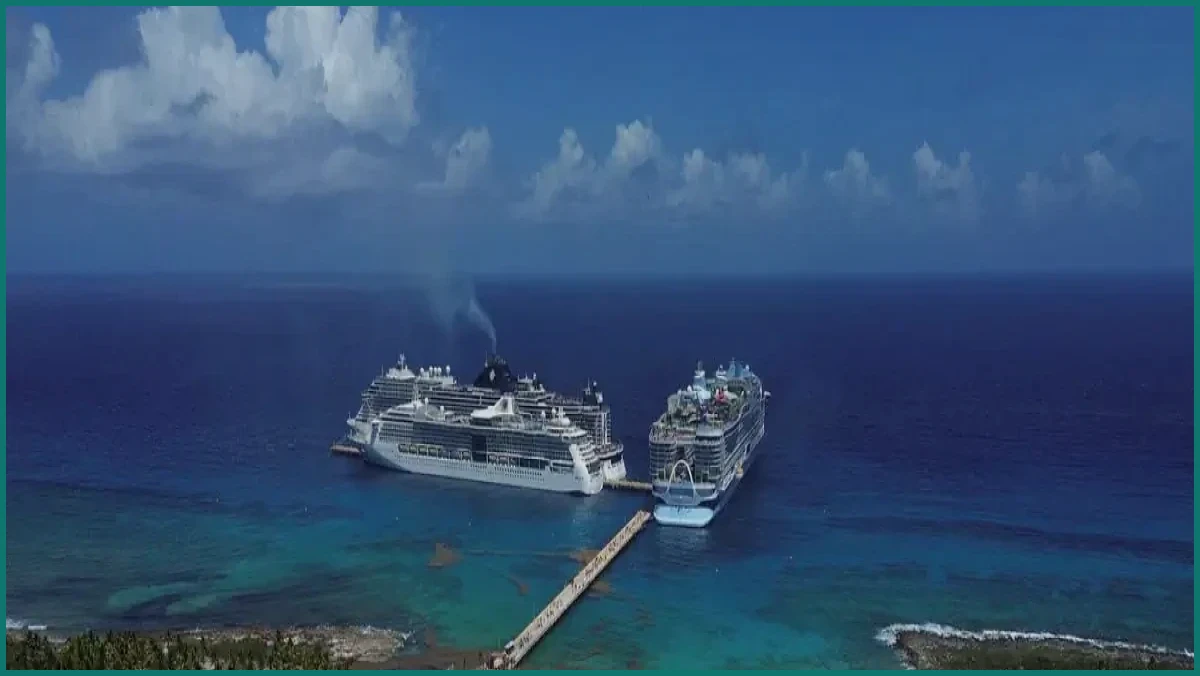
A significant surge in ship capacity combined with economic pressures on middle-class vacationers is creating a rare booking window for travelers eyeing Caribbean cruises.
Cruise operators launched numerous new vessels in 2026, driving an approximate 9% year-over-year increase in industry-wide supply, according to analyst Scholes. Some major lines, such as Norwegian Cruise Line, have actively repositioned their fleets to the Caribbean. MSC Cruises also shifted its massive, 6,700-plus passenger MSC World Europa to the Caribbean for the winter season, moving it away from the Middle East following the outbreak of war with Iran in February. This giant vessel replaces the nearly 5,100-passenger MSC Seaview, which MSC Cruises is redeploying to South America.
At the same time, the typical household earning between $70,000 and $120,000 annually—the core demographic for mainstream cruise lines—is facing flat wage growth alongside rising costs for gasoline and insurance. Because cruise lines have high fixed operating costs, including fuel, loan interest, and staff contracts lasting three to nine months, they cannot easily scale back operations during slower periods. Scholes noted that operators must constantly push to fill their vessels to maximum capacity.
To fill these cabins, mainstream brands are leaning heavily into promotional offers rather than direct price cuts. Those could include complimentary specialty dining or bundled gratuities. Mainstream cruise lines automatically add gratuities to guests’ onboard accounts, but guests can adjust them before disembarkation. In contrast, luxury and river cruise segments remain highly successful and unaffected by these pricing pressures, Scholes observed, noting that luxury is performing phenomenally across both cruises and hotels.
Travel advisor Goldberg-Glazer recently quoted a Royal Caribbean cruise at $15,000 for six guests in two balcony cabins, highlighting that prices remain very high during peak times like school breaks. However, she noted that lower rates are available for close-in sailings through the end of the year, excluding holidays. For example, Expedia listings show November Caribbean cruises ranging from three to nine nights starting as low as $189 per person for a four-night Carnival cruise. Goldberg-Glazer explained that mainstream brands drop prices on underperforming sailings, particularly during challenging off-peak weeks like early December—between Thanksgiving and Christmas—and various periods in the fall after children return to school.
Despite these deals, the current imbalance is primarily driven by supply outpacing demand in the mass-market sector. Among those mass-market brands, though, Scholes said supply is generally outpacing demand. Scholes emphasized that while the industry is not facing a catastrophic drop like during the COVID-19 pandemic, the 9% overall supply growth presents a clear challenge to the pricing power of mainstream cruise lines.
That doesn't necessarily mean every cruise is going to cost less, though. Here’s what travelers should know before making their reservations.
“It’s not COVID. Nothing's falling off the cliff. You know, if there was no new supply, you would probably get some pricing power. But you’ve got 9% supply (overall). That's a challenge.”
Related Articles

Mr. Udoy is a professional Web Developer and Blogger with 7+ years of experience in the tech world. He specializes in web architecture and digital storytelling. As the driving force behind worldincidents.com, he focuses on delivering high-quality, well-researched content to a global audience.