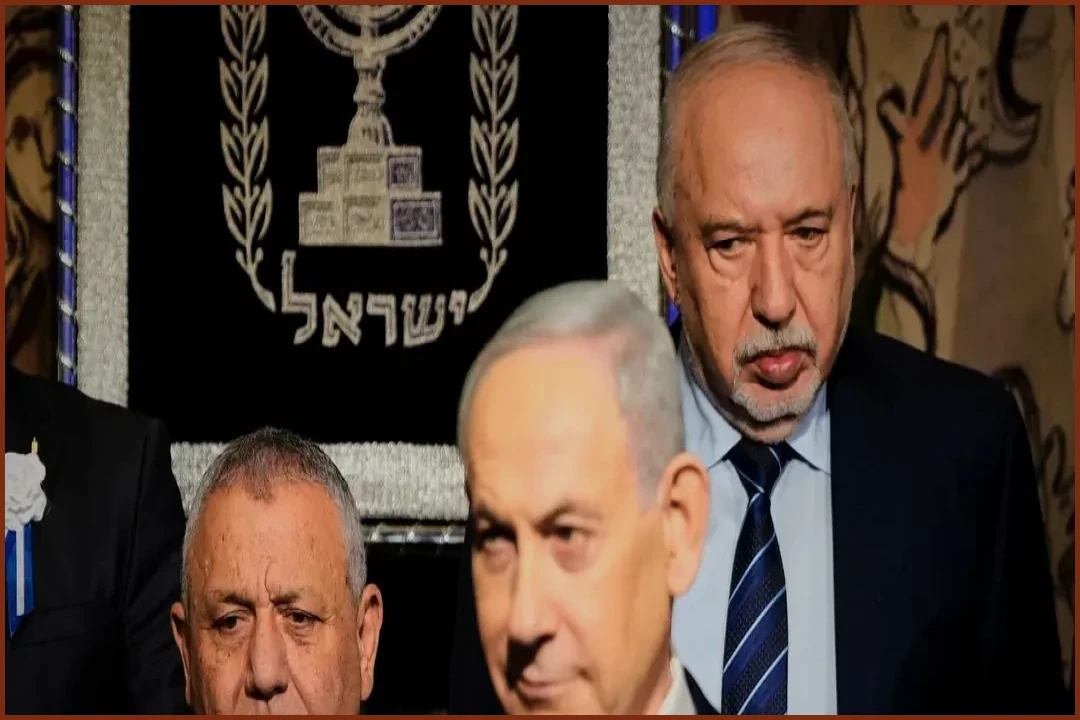
Negotiating teams representing Gadi Eisenkot's Yashar party, Naftali Bennett's Together party, and Benjamin Netanyahu's Likud have concluded a round of exploratory unity talks. The meeting, held in Herzliya, followed a public appeal by caretaker Prime Minister Benjamin Netanyahu for unity discussions without preconditions, while simultaneously stipulating that he would reject any parliamentary reliance on Arab factions.
Eisenkot, who was tasked with forming a government on November 8, swiftly dismissed the overture as a political "bluff." He characterized the move as a strategy designed to stall the government formation process and ensure Netanyahu’s political survival. The current parliamentary arithmetic reflects a deeply deadlocked Knesset: Netanyahu's right-wing bloc holds 53 seats, Eisenkot's change-seeking bloc controls 48, and Arab parties command 19 seats. Due to deep mutual recriminations, partner vetoes, and significant public opposition, analysts view the formation of a unity government as highly improbable.
Allies of Eisenkot have expressed fierce opposition to partnering with the Likud. Avigdor Lieberman’s Yisrael Beiteinu party confirmed on Sunday that it would refuse to serve under Netanyahu. MK Rafi Ben Shitrit criticized the Likud, stating, "The Likud has an entire book full of suckers Netanyahu has led down the garden path. The people of Israel need a stable government that works for the benefit of the country's citizens, not for political survival." Yair Golan, leader of the Democrats, also urged Eisenkot to avoid Likud, engage with Arab factions, and "stop letting Netanyahu and his poison machine decide who is legitimate." Outside the meeting, activists from the Darkenu movement displayed screens reading: "Gadi, you don't do business with scorpions. Voters gave 67 seats for change."
In response to the talks, Eisenkot challenged Netanyahu and Finance Minister Bezalel Smotrich to prove their sincerity by supporting Yashar's Matan Kahana in the upcoming Tuesday vote for Knesset speaker, remarking, "Nice try, but these tricks don't work on me."
Tensions were further heightened by a Channel 12 investigation alleging that Netanyahu's office fed deceptive intelligence to police on the eve of the October 27 elections, purportedly to facilitate the arrest of three United Arab List (Ra'am) activists without valid warrants. The report claimed that Ido Norden, Netanyahu's chief of staff, coordinated the complaint, which was later used to allege that Arab factions were stealing the vote. The probe further indicated that Shin Bet chief David Zini requested authorization to wiretap five Arab lawmakers on election day, a move blocked by Attorney-General Gali Baharav-Miara.
Eisenkot condemned these revelations, declaring that Netanyahu poses a "direct and immediate threat" to democracy. He pledged to establish a formal commission of inquiry, stating, "As long as he is in office, there will no longer be fair and lawful elections in Israel." Eisenkot maintains an initial 28-day mandate to assemble an alternative majority.
Related Articles

Meet Md. Rubel Rana
As a core contributor to Worlddincidents.com, Rubel Rana brings a unique perspective to the world of journalism. Whether it’s deep-diving into historical trivia or covering the latest global headlines, Rubel Rana is committed to delivering high-quality, high-impact articles. Their writing blends meticulous research with a compelling voice, helping readers stay informed and curious about the world around them.