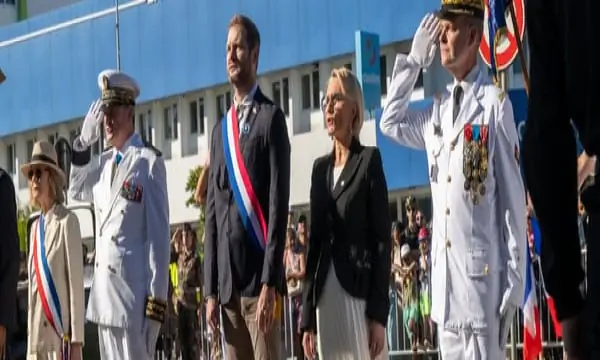
The French overseas territory of New Caledonia has officially inaugurated a new government, though the region remains starkly polarized between pro-independence and loyalist factions. Following elections held on June 28, Virginie Ruffenach, the leader of the pro-France Rassemblement (The Rally) Party, was elected president of the New Caledonia Congress on July 10. Her victory was secured through a coalition agreement with the centrist, Polynesian Islander-led Eveil Océanien (Oceanian Awakening) Party, providing the majority needed to govern.
In her inaugural address, Ruffenach emphasized the necessity of unity to navigate the territory's recent history of social tension and economic instability. "Our ambition is clear: to put our territory back on the path to recovery. We must rebuild our economic tools, repair our social fabric and restore trust," she stated. She noted that institutional instability has hindered public action, making it difficult for society to look toward the future.
New Caledonia, home to more than 290,000 people, faces a deep-seated divide: approximately 41 percent of the population are Kanak islanders, while 24 percent identify as having European heritage. This demographic split mirrors a historical political divide between Indigenous-led movements seeking self-determination and loyalists who argue that security and economic stability are best maintained under French oversight. While the capital, Noumea, displays signs of French-style prosperity, many Kanak islanders reside in informal settlements characterized by high unemployment and economic hardship.
The new governing coalition includes The Rally and the Caledonian Republicans, with the Oceanian Awakening party acting as a critical power broker. Sonia Backès, leader of the Caledonian Republicans, explained the coalition's pragmatism, noting that while the parties hold differing views on the territory's institutional future, they have agreed to prioritize everyday concerns to help the region move forward. This focus on domestic issues follows intense unrest two years ago, sparked by a French proposal to expand the electoral roll, which many pro-independence supporters viewed as a threat to their political influence. Although the riots caused an estimated $1 billion in damages, the French government later suspended the electoral reforms.
Economic recovery remains a primary challenge, with France providing 2 billion euros (US$2.2 billion) in aid earlier this year. However, independence activists, including Doriane Nonmoira of the Union of Francophone Women of Oceania, have expressed concern that the territory is becoming increasingly dependent on French fiscal support rather than achieving true economic independence. Meanwhile, the recent election utilized a modestly expanded voter roll, including 10,500 additional residents born in the territory since the 1998 Noumea Accord. Despite the stakes, voter turnout was low at 63.7 percent, which some attribute to political frustration and logistical barriers.
In the Congress, the loyalist bloc—comprised of Les Loyalistes and The Rally—holds 24 seats, primarily representing the prosperous South Province. Conversely, pro-independence parties, including the UC-FLNKS and the National Union for Independence (UNI-PALIKA), control 26 seats, maintaining a slight majority in the assembly. This reflects a long-term trend of growing political representation for independence movements over the last quarter-century.
The path forward remains uncertain as French and local leaders attempt to negotiate the territory's political future. Previous attempts to resolve these issues, including the 2025 Bougival Accord, have stalled due to a lack of consensus and political deadlock within the French National Assembly. Undeterred by the deadlock, French Prime Minister Sébastien Lecornu is calling for talks to resume with the territory’s new leaders as a priority with the optimistic goal of achieving an agreement by the end of this year, though experts like Dr. Pierre-Christophe Pantz suggest that major progress may be delayed until after the 2027 French presidential election. Compromise will remain a major ingredient of any future discussions. Yet, the call for independence is also unlikely to dissipate. Even with evidence of some progress in development in the outer provinces, inequalities in Kanak communities are still marked. The employment rate for Kanaks, for instance, is still 49 percent, compared to 70 percent for non-Kanaks. And economic inequality is a grievance, among others, that is being wielded by youth activists. You have reached the limit of 2 free articles this month.

Md. Kazi Bijoy is a dedicated tech enthusiast and content creator with a passion for digital innovation. With years of experience in the tech industry, he specializes in breaking down complex topics into easy-to-understand guides. When he isn’t writing, he explores the latest gadgets and researches emerging trends in the digital world.
2 thoughts on “New Caledonia Elects Pro-France Leader Amid Ongoing Political Divisions”