Twenty-five years have passed since 16 journalists were taken into Eritrea’s prison system on 18 September 2001, an event remembered as “Black Tuesday.” As the authoritarian state shut down every newspaper in the country that day, these individuals were swept into detention, leaving their families and colleagues without any confirmation of whether they are still alive today.
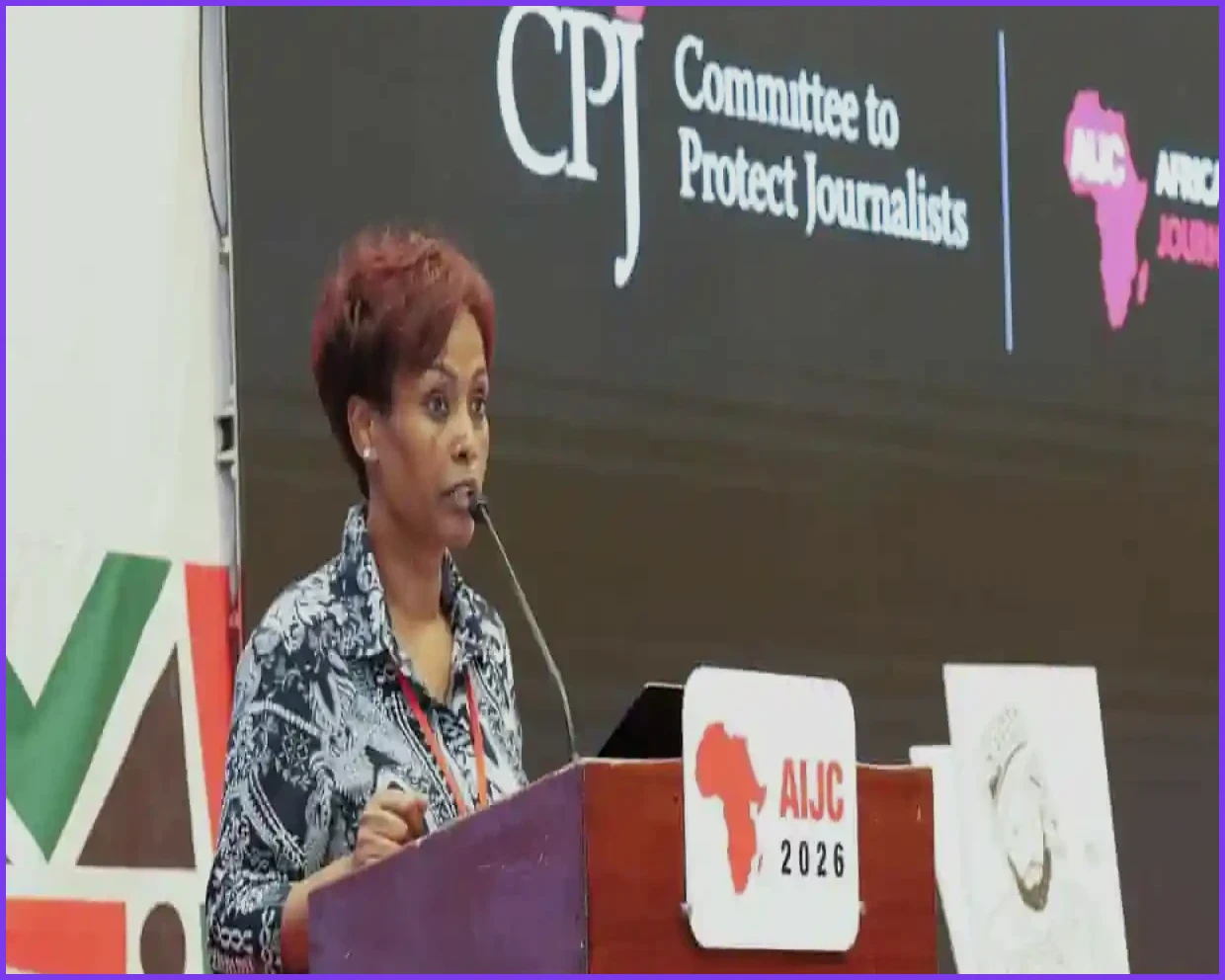
During the Carlos Cardoso memorial lecture at the African Investigative Journalism Conference in Nairobi, Fisseha Yirgalem, an Eritrean writer who spent six years in military prisons before fleeing in 2018, offered a poignant tribute to Amanuel Asrat. Asrat, a poet, writer, and founder of the Zemen newspaper, was a mentor and friend to Yirgalem. In a letter read to a silent audience, Yirgalem reflected on her final memory of Asrat—standing outside a police station with a cigarette—and imagined the grim realities of his potential life in confinement. She described the physical toll of years spent sitting in a cell, the silence of isolation, and the despair of waiting for a release that has yet to come.
The Committee to Protect Journalists (CPJ) has continued to press Eritrean authorities to disclose the status and location of the group, which ranks among the world’s longest-detained journalists. In August, the CPJ announced that the Eritrea 16 would receive an International Press Freedom award in recognition of their sacrifice. The group includes Amanuel Asrat, Dawit Habtemichael, Dawit Isaak, Ghebrehiwet Keleta, Hamid Mohamed Said, Idris Said, Jimi’ie Kimeil, Mattewos Habteab, Medhanie Haile, Said Abdelkader, Saleh Aljazeeri, Sahle Tsegazeab, Seyoum Tsehaye, Temesgen Ghebreyesus, Tesfay Ghebreab, and Yusuf Mohamed Ali. They are to be honored in absentia at a ceremony in New York on 19 November.
Jodie Ginsberg, chief executive of the CPJ, stated that while the award honors their courage, it cannot replace justice or the truth for their families. She emphasized that the case serves as a global warning that silencing journalists with impunity threatens press freedom everywhere. Beilula Sium, the daughter of Seyoum Tsehaye, shared the pain of her family’s experience, recalling the only time she saw her father after his arrest—a brief encounter through prison bars when she was a young child.
The crackdown in 2001 extended beyond the media. Eritrea has also held 12 writers incommunicado and imprisoned hundreds of conscientious objectors, including 64 Jehovah’s Witnesses, some of whom are over 80 years old. None of these individuals have been formally charged or tried in court. United Nations human rights experts have noted that these systematic arbitrary detentions and enforced disappearances may constitute crimes against humanity. Despite these calls, the Eritrean government rarely provides a response.
Muthoki Mumo, CPJ programme coordinator in Africa, urged the international community not to become indifferent to the passage of time. Yirgalem echoed this sentiment, calling on her peers to use their platforms to ensure the journalists are not forgotten. “Imagine asking yourself, every single day, ‘Does anyone still remember me?’ Let’s make sure they are not forgotten,” she said.
She says the 16 journalists, who are among 335 imprisoned around the world, deserve recognition for their journalism and not only for their decades of disappearance: “Their case is a warning to the world – when journalists can be silenced with impunity, press freedom everywhere is at risk.”
“Two months after his arrest, my mother begged the [prison] wardens to let him see his child,” she says. “Surprisingly, the warden agreed and we were able to enter for a brief moment, enough time that he could see me through the bars of the prison. It was the first and last time that I’ve been able to be near my father.”
Related Articles
Mr. Udoy is a professional Web Developer and Blogger with 7+ years of experience in the tech world. He specializes in web architecture and digital storytelling. As the driving force behind worldincidents.com, he focuses on delivering high-quality, well-researched content to a global audience.