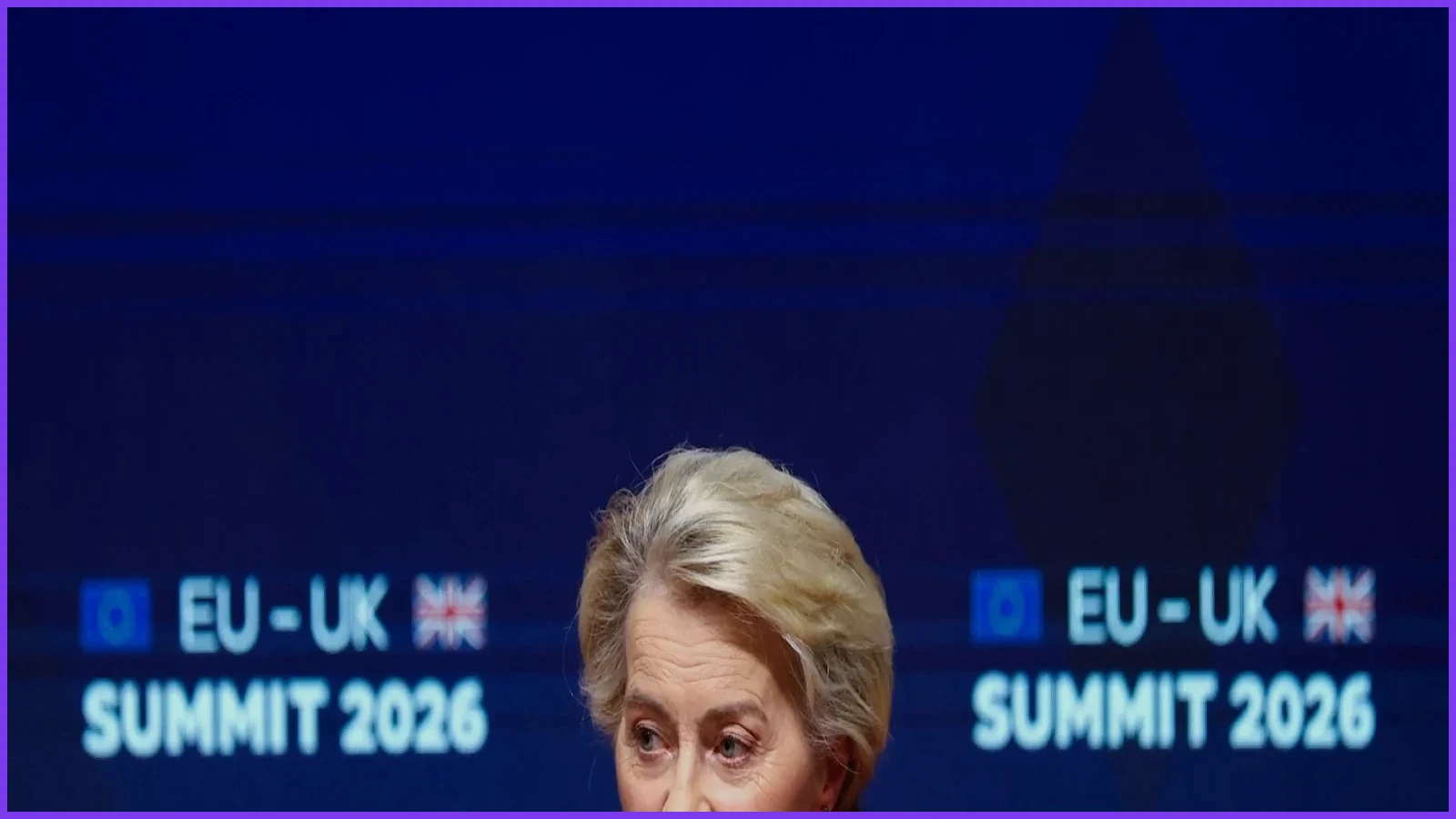
The European Commission has put forward a new set of sanctions against Russia designed to restrict the Kremlin’s war financing, aiming measures at dozens of financial institutions, digital asset platforms, shadow fleet vessels, and sports participation.
Under the proposals announced Monday by Commission President Ursula von der Leyen, 60 Russian banks would be disconnected from the Swift messaging system used for global financial transactions. The measures also seek to restrict cryptocurrency platforms and establish a dedicated crypto sanctions task force, with von der Leyen noting that third countries assisting Moscow in dodging existing restrictions could be affected by the new digital asset rules.
Explaining the rationale behind the package, von der Leyen stated that the European Union will be “striking harder at Russia’s way to finance its war by targeting its banks and crypto platforms,” while also “shutting the door to its participation to European sports and cultural events.”
The proposed regulations extend significantly into the maritime and corporate sectors. The commission aims to sanction 70 additional vessels belonging to Russia’s shadow fleet, which Moscow utilizes to transport illicit oil, alongside a total ban preventing all such oil tankers from docking at European ports. Furthermore, European citizens would be prohibited from holding senior leadership roles or top posts within Russian companies.
Security concerns regarding military personnel returning from the front lines are also addressed in the package through a proposed ban on visas for Russians who have fought in the war against Ukraine. “Russian ex-combatants pose a security risk to Europe,” von der Leyen emphasized. “They cannot be allowed to wander freely across our countries. Therefore, entry into the European Union will be off limits.” In tandem with the travel restrictions, the commission is seeking an explicit ban on displaying Russian symbols during any cultural or athletic competitions held within the bloc.
To take effect, the full sanction package requires unanimous approval from all 27 EU member states. European officials anticipate that the negotiation and endorsement process could take several weeks, during which the proposed terms are likely to undergo modifications.
The latest effort to maintain economic pressure comes nearly five years after Moscow initiated its full-scale invasion of Ukraine. To date, the EU has sanctioned over 4,700 individuals and entities, including Russian President Vladimir Putin and numerous major energy firms. These new proposals follow a separate measure introduced just over a month ago, which marked the bloc's largest single sanction listing to date by targeting nearly 1,600 Russian officials and military-industrial companies, particularly those involved in producing missile and drone components.
Related Articles

Meet Md. Rubel Rana
As a core contributor to Worlddincidents.com, Rubel Rana brings a unique perspective to the world of journalism. Whether it’s deep-diving into historical trivia or covering the latest global headlines, Rubel Rana is committed to delivering high-quality, high-impact articles. Their writing blends meticulous research with a compelling voice, helping readers stay informed and curious about the world around them.