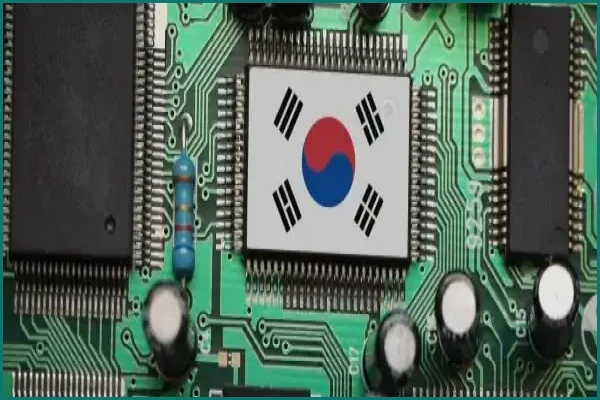
South Korea has emerged as a primary beneficiary of the global artificial intelligence boom, with its semiconductor industry driving a significant rise in national income, corporate profits, and overall exports. However, this rapid success has highlighted an acute vulnerability: the nation’s economy is becoming increasingly dependent on a single global technology cycle. Merchandise exports in the first 10 months of 2026 surged by more than 60 percent year-on-year to $930 billion, with semiconductors accounting for nearly 43 percent of that total. This performance prompted the International Monetary Fund to raise its 2026 growth forecast for South Korea to 3.9 percent last week, up from 1.9 percent in January.
This upturn is fueled by massive investments in AI data centers, which have spiked demand for advanced high-bandwidth memory (HBM) chips where South Korean manufacturers currently hold a competitive edge. Despite this, the economic benefits remain unevenly distributed. The chip industry requires heavy capital investment but generates limited employment opportunities, concentrating wealth among leading firms and skilled workers while leaving smaller businesses and service providers behind. Although increased spending by semiconductor employees and suppliers can support local consumption, the gap between the chip industry and the rest of the economy remains substantial. Furthermore, the country faces significant risks if the AI sector experiences a bubble collapse. The Economist has estimated that AI would need to generate $3 trillion in annual revenue by 2030 to justify current infrastructure investments.
External pressures, including U.S. regulatory scrutiny regarding data center electricity and water consumption, could potentially slow AI investment. The Bank of Korea projects that a U.S. investment slowdown in 2027 could reduce South Korean semiconductor exports by up to $100 billion, potentially lowering the nation's GDP growth by 0.4 percentage points. Trade tensions also loom, as South Korea’s merchandise trade surplus hit $295 billion in the first ten months of 2026, including a $102 billion surplus with the United States, making it a target for potential tariffs under the administration of U.S. President Donald Trump.
Geopolitical risks are further complicated by the U.S.-China rivalry. With major manufacturers like Samsung and SK Hynix operating facilities in China, Washington's efforts to restrict Chinese access to advanced technologies threaten to disrupt supply chains and factory maintenance. The recent scandal involving Nvidia’s ousted-then-reinstated CEO, Jensen Huang, has added momentum to these export controls, which have already forced Samsung and TSMC to suspend some shipments to Chinese customers. While South Korean firms currently maintain a technological advantage, China’s drive to develop its own domestic chip sector poses a long-term competitive threat. To mitigate these structural risks, experts argue that South Korea must translate its current semiconductor success into broader productivity gains by prioritizing AI adoption across other sectors such as logistics, health care, and finance, while maintaining fiscal buffers and labor-market flexibility.
You have reached the limit of 3 free articles this month.
Related Articles

Mr. Udoy is a professional Web Developer and Blogger with 7+ years of experience in the tech world. He specializes in web architecture and digital storytelling. As the driving force behind worldincidents.com, he focuses on delivering high-quality, well-researched content to a global audience.