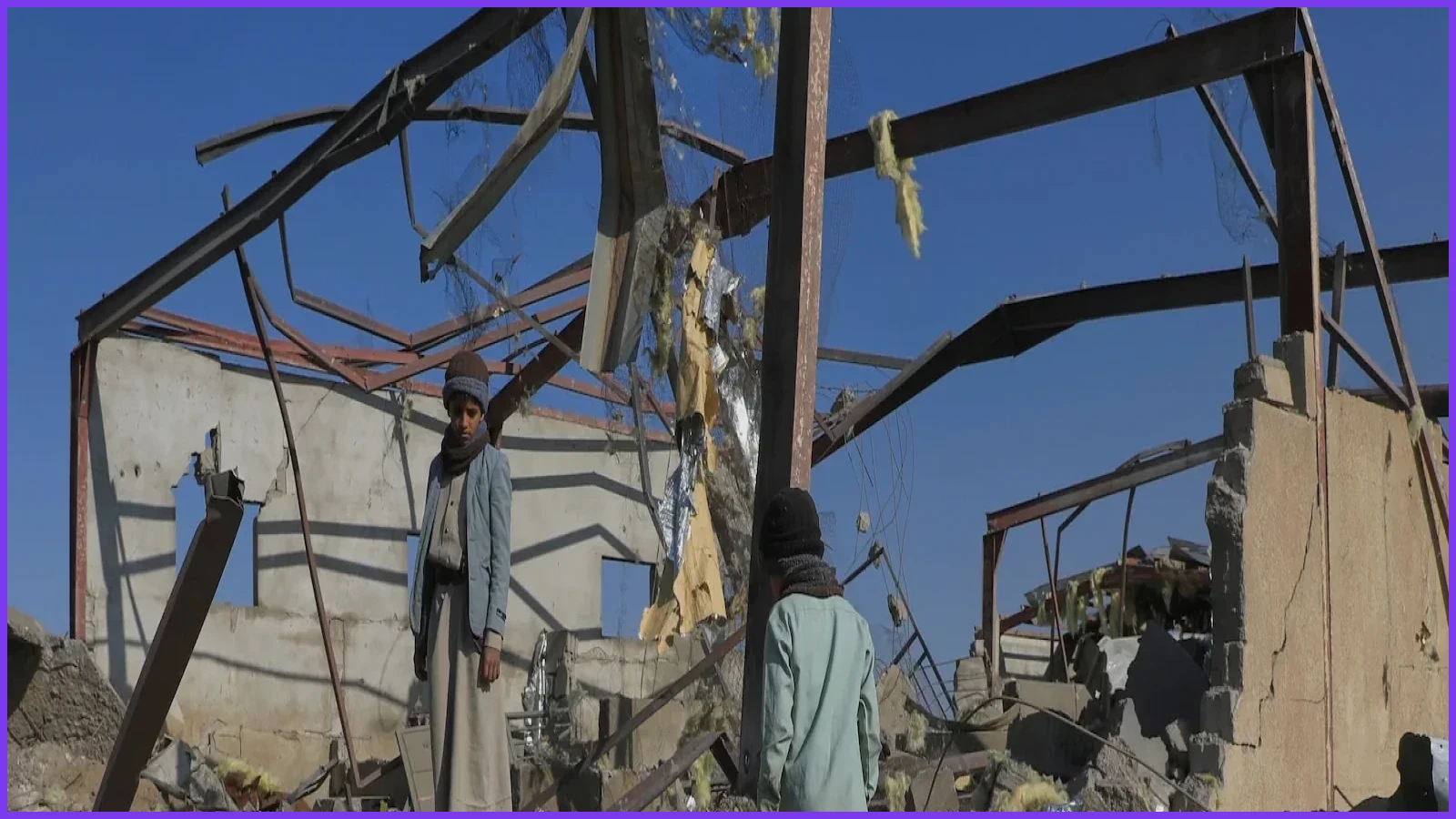
Iran-backed Houthi rebels have pushed to within roughly 60 kilometers (40 miles) of Aden, prompting Yemeni military forces to establish a fortified defensive line north and west of the southern port city to block their advance, military officials said Tuesday. The rebel progression toward the seat of Yemen’s internationally recognized government followed the withdrawal of government-aligned troops from positions along the strategic Bab el-Mandeb Strait, allowing the Houthis to solidify control over territory surrounding the vital Red Sea shipping route.
Speaking during a virtual briefing, Yemeni army spokesman Col. Majed al-Nuzaily explained that the forces previously pulled back from the western coast have been repositioned to reinforce positions surrounding Aden. “Aden is a red line. It was a red line in 2015, when the Houthis came to the city and its people drove them out,” al-Nuzaily said, emphasizing that the new defense line was constructed specifically to halt the rebel progression.
During the same briefing, Marwan al-Noman, an official with the Yemeni Foreign Ministry, urged the United States and other Western powers to assist the country's coast guard in stopping arms smuggling to the Houthis, while also providing training to ground forces combatting the insurgents. “The Houthis are a terrorist organization. They threaten Yemenis first, and then every nation whose ships cross the Red Sea,” al-Noman stated.
Meanwhile, violence persisted elsewhere in southwestern Yemen's Taiz province, where shelling killed three civilians—including a child—and wounded two other children, according to Yemen's government-aligned Interior Ministry, which cited local police reports from Tuesday and blamed the Houthis for the strike. Both Houthi rebels and Saudi-backed coalition forces continue to trade accusations over civilian casualties in their respective territories.
Across the border in Saudi Arabia, the coalition fighting the Houthis reported Tuesday that 11 people were injured after a tower in the financial district of the capital, Riyadh, was hit in what officials called a “terrorist attack.” The incident marked the second strike on Riyadh's financial hub in less than a week.
Although no group immediately claimed responsibility, the Houthis have routinely launched strikes against Riyadh—including last week's attack—stating they are reacting to Saudi military strikes in Yemen. Addressing the escalations on Tuesday, Saudi Crown Prince Mohammed bin Salman affirmed that the kingdom will not “tolerate any infringement” of its sovereignty and is prepared to “defend its resources with all our strength and resolve.”
In related regional friction, top Iranian officials took a hardline stance against Washington. Mohammad Bagher Qalibaf, Iran’s parliament speaker and chief negotiator, stated on Iranian state television Tuesday that Tehran will refuse to engage in talks with the United States “until Iran’s seven conditions are met.” While Iranian authorities have not formally published the list of demands, state media reported that they include lifting sanctions, terminating the U.S.
naval blockade of Iranian ports, and unfreezing seized Iranian assets. Qalibaf also warned that Iran is prepared to “shift the geographical scope of the conflict should the enemy make a mistake.” Additionally, the naval force of Iran's Revolutionary Guard announced on Telegram that three oil tankers hit naval mines and caught fire in the Strait of Hormuz after entering “unauthorized routes” and violating maritime warnings.
The Guard asserted that the vessels were “engulfed in flames” despite receiving U.S. aerial protection and escorts, declaring that the strategic strait “is not a place to test unauthorized routes or to disregard maritime warnings.”
In Gaza, local officials reported that at least nine Palestinians were killed during four separate Israeli strikes executed late Monday night and Tuesday morning. Among the dead was Na’im Abu Nahl, director-general of the internal security service within the Hamas-run Interior Ministry, who was killed in a strike west of Gaza City on Tuesday.
Israeli Prime Minister Benjamin Netanyahu confirmed the targeted killing, reiterating that Israel will maintain strikes against Hamas security personnel. Hospital officials across Gaza confirmed eight additional fatalities, including a child killed in central Gaza on Tuesday and three police officers killed in Khan Younis.
While Israel's military did not immediately comment on the Khan Younis strike, Israeli forces have repeatedly targeted police facilities since last year's ceasefire, characterizing the police force as an arm of Hamas rule. Hamas maintains that its police forces are necessary to preserve public order amid ongoing instability and supplies shortages.
According to the Hamas-led Health Ministry in Gaza—whose records are considered generally reliable by UN agencies and independent experts without distinguishing between civilians and combatants—at least 74,746 Palestinians have been killed over the course of the three-year war.
Related Articles

Mr. Udoy is a professional Web Developer and Blogger with 7+ years of experience in the tech world. He specializes in web architecture and digital storytelling. As the driving force behind worldincidents.com, he focuses on delivering high-quality, well-researched content to a global audience.