
Tehran has launched a new wave of strikes targeting sites in Kuwait, Jordan, and Iraq, according to state-linked media, marking a further escalation after a second consecutive night of military exchanges with the United States. This comes amidst reports of a “dramatic” drop in the number of ships navigating the crucial Strait of Hormuz.
The US military stated it struck 90 Iranian military targets, some located near the Strait, as part of efforts to “further degrade Iran’s ability to attack commercial shipping and innocent civilian mariners.” These targets included air defense systems and military logistics infrastructure along Iran’s coastline. Iran’s Foreign Ministry reported that US attacks on 8 and 9 July targeted five provinces, resulting in 14 deaths and 78 injuries, with 47 people still hospitalized.
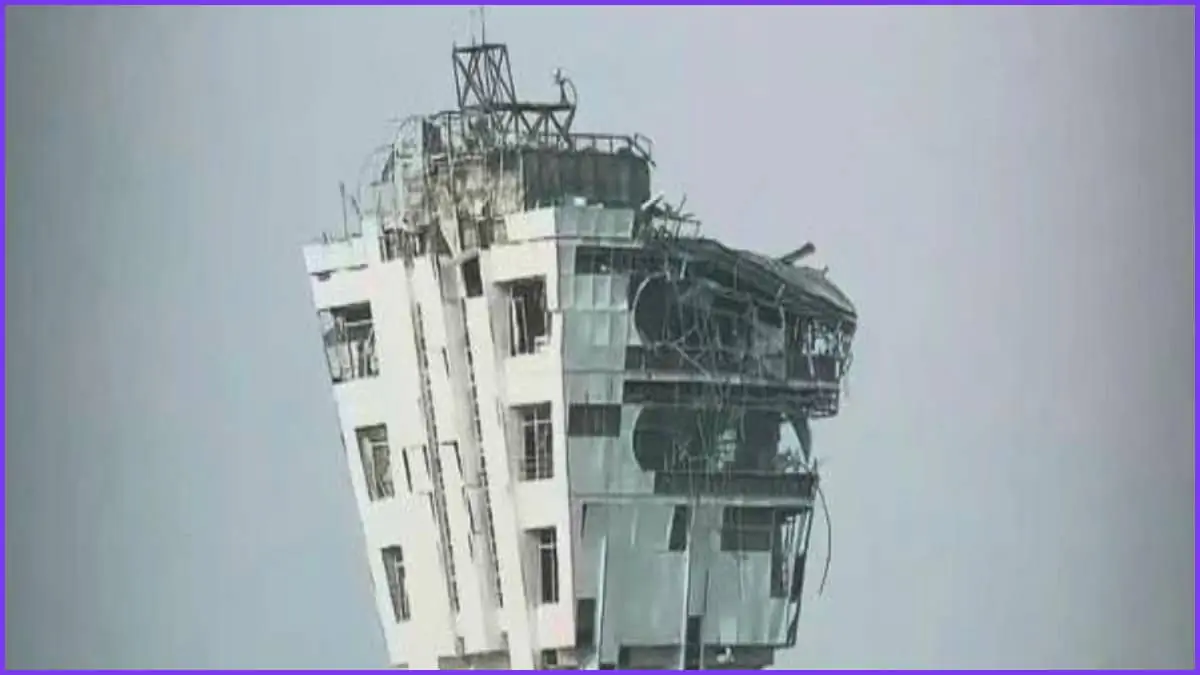
Verified videos show damage to the control tower at the major port of Chabahar in southeastern Iran following US strikes. Iranian state TV also reported eight explosions in Bandar Abbas, with two missiles hitting the ports of Sirik and Jask in southern Iran. Additionally, two projectiles reportedly struck Abu Musa island, which is subject to a longstanding ownership dispute between Iran and the United Arab Emirates. Air defense systems were activated in Bandar Abbas, and Iranian media reported power cuts in Chabahar and a fire at an Islamic Revolutionary Guard Corps (IRGC) barracks in Bushehr, though two of three power lines in Chabahar were quickly restored.
In response, Iran said it targeted US assets in Kuwait, Bahrain, and Qatar. The Islamic Revolutionary Guard Corps (IRGC) confirmed launching retaliatory strikes on US military bases in Kuwait and Bahrain overnight, describing them as the “first phase of the punitive response against the American treaty-breakers.” Gulf nations reported Iranian attacks, including explosions in Bahrain’s capital Manama, Kuwait intercepting missiles and drones, and Qatar issuing a security alert.
The escalating hostilities have severely impacted maritime traffic. Phil Belcher, marine director at Intertanko, an international organization for independent tanker owners, noted that the number of ships using the Strait’s southern route had fallen to “single figures.” This is a significant decrease from approximately 30 ships daily, 70 a week ago, and well below the normal pre-war figure of 130 ships. Belcher told BBC Radio 4’s Today programme that an “exuberance of optimism” following last month’s memorandum of understanding between Iran and the US has now shifted to a mood where this “cycle of violence… is having an enormous impact both on business [and] on the seafarers themselves.”
US Central Command (Centcom) had earlier on Wednesday held Iran accountable for “recent unjustified aggression against commercial shipping and civilian crews freely navigating a vital international waterway.” On Tuesday, the US military had launched “powerful” strikes in response to attacks on three tankers in the strait.
The political rhetoric has intensified, with US President Donald Trump declaring the ceasefire agreement signed last month with Iran “over” and viewing further talks as “a waste of time.” Iran’s parliamentary speaker Mohammad Bagher Ghalibaf, also the country’s chief negotiator, stated on X that America “still hasn’t learned that bullying and breaking promises are no longer cost-free,” adding, “if you strike, you’ll get hit,” and that the Strait of Hormuz would only open under Iranian arrangements. Iran’s Foreign Minister Abbas Araghchi responded to Trump’s comments on X, saying, “We do not answer vulgarity with vulgarity, but with action: fearlessly and with great valour.” The 60-day period for negotiations has not yet concluded.
These developments unfold as huge crowds gather for the burial of Iran’s late supreme leader, Ayatollah Ali Khamenei, in Mashhad, following six days of funeral events. Khamenei was killed on 28 February during the initial hours of US and Israeli strikes against Iran. The foreign ministry also reported damage to bridges and a railway route connecting Tehran to Mashhad, where the funeral is being held. Some mourners in Mashhad were pictured holding signs with death threats directed at US President Donald Trump.
Big fall in oil, gas and cargo ships taking US-backed Hormuz route after new strikes
How Iran's new regime is very different to what came before

2 thoughts on “Tehran Launches New Strikes as US-Iran Tensions Escalate”