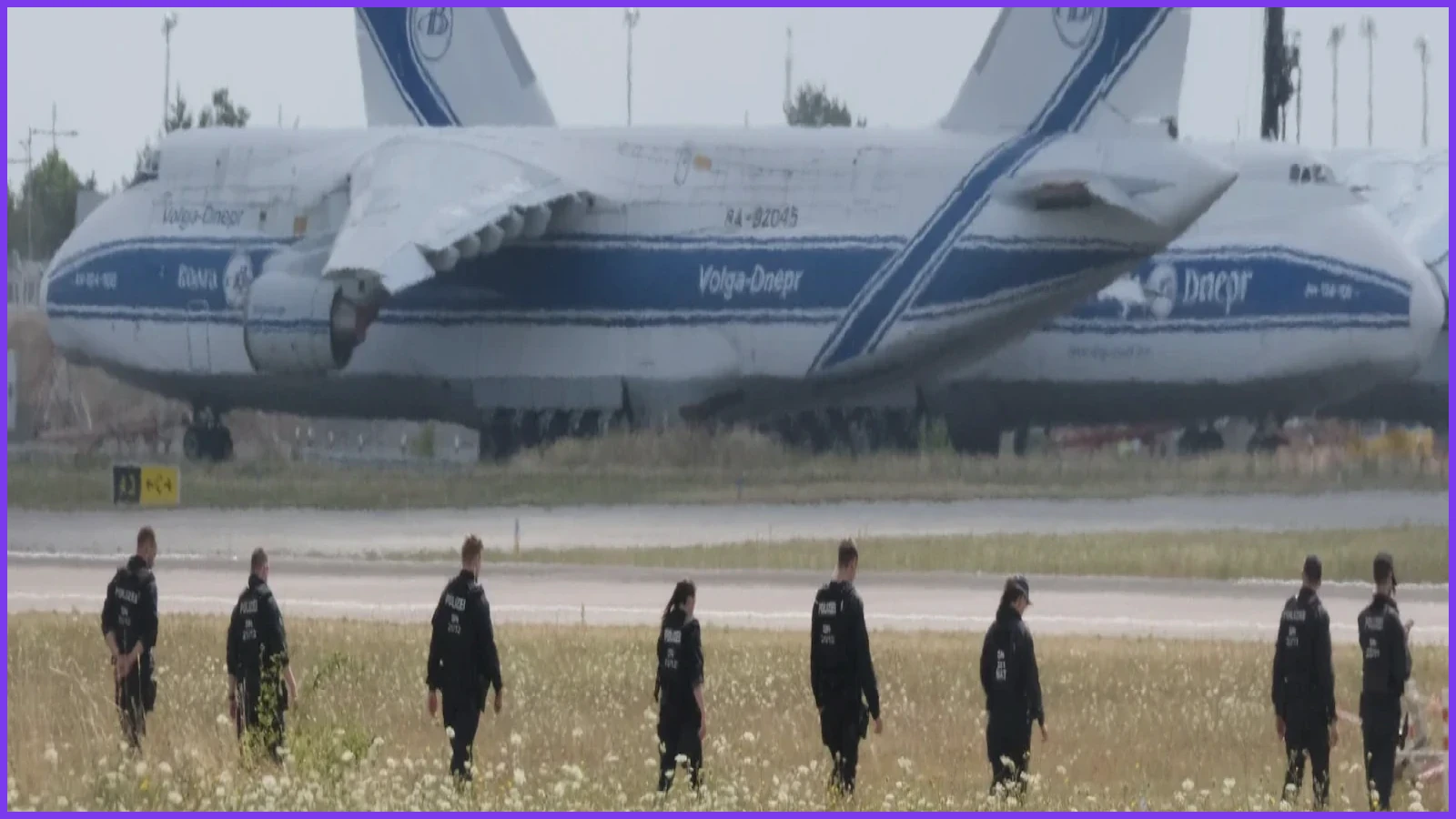
The European Union is grappling with how to respond to an attempted explosive drone attack at a German airport blamed on Russia, highlighting the bloc's struggle to counter escalating hybrid threats without triggering a direct military conflict. During discussions on Wednesday, European diplomats weighed potential countermeasures, though they faced difficulties in finding new ways to meet the challenge without resorting to military means.
The German government announced on Tuesday that Russia was responsible for the failed August 4 attack at Leipzig/Halle Airport. The incident involved a drone laden with explosives that was discovered and defused near a Ukrainian cargo plane. Because the airport serves as a major international freight hub used to provide logistical support to Ukraine, the nature of the incident and its direct attribution to Moscow have set a dangerous new benchmark for hybrid warfare in Europe.
In response to the foiled plot, Germany announced it would shut down a Russian consulate among other retaliatory measures. Meanwhile, French Foreign Minister Jean-Noël Barrot revealed that France had summoned Russia’s envoy to protest the incident strongly. Barrot expressed a desire to impose sanctions on more ships belonging to the Kremlin’s "shadow fleet," which is used to bypass oil export caps. "We won’t allow an act of such gravity without consequences," Barrot said.
To date, the EU has imposed nearly two dozen packages of sanctions against Russia since the invasion of Ukraine, targeting more than 3,000 officials, oligarchs, banks, energy companies, and drone manufacturers. The bloc is currently preparing to levy travel bans and asset freezes on an additional 1,600 individuals, according to EU foreign policy officials. Hundreds of shadow fleet vessels illicitly transporting Russian oil to fund the war effort have also been targeted, and Russian diplomats have been routinely summoned or expelled across Europe.
Despite these measures, European leaders face the delicate challenge of responding effectively without crossing red lines. Many EU member states, which are also NATO allies, remain deeply cautious about being drawn into an open military confrontation with nuclear-armed Russia. While Germany insisted it is "not at war," Berlin officials emphasized that the country has become a "daily target" of the Kremlin’s hybrid campaigns.
Russian President Vladimir Putin dismissed the accusations, claiming that Berlin is manufacturing the crisis to distract from domestic political failures and voter dissatisfaction. Putin asserted that any evidence presented by German authorities "has been planted." However, German Foreign Minister Johan Wadephul stated that Berlin had carefully prepared its diplomatic response, adding that "now Russia must live with these consequences." Wadephul called on Moscow to demonstrate that it is ready for reasonable negotiations, particularly concerning the war in Ukraine.
Western officials have long accused Moscow of orchestrating a multi-year campaign of sabotage and disruption to undermine European support for Ukraine and destabilize the region. The attempted attack in Germany is part of a series of suspicious incidents across Europe, including a recent fire at a major drone-manufacturing plant in Poland, as well as drone incursions in Estonia and Latvia linked to the ongoing war.
The hybrid threat also extends to the Mediterranean. Spain has publicly accused both Russia and Israel of deploying disinformation campaigns to incite migrants to cross from Morocco into its North African exclave of Ceuta. Spanish Foreign Minister José Manuel Albares criticized some of his EU partners for repeating this false information, warning that external actors are actively trying to weaken and divide the union. Albares stressed that the land borders along the EU's southern flank are just as critical to collective security as those on the eastern border.
British Foreign Secretary Ed Miliband attended the EU meeting alongside representatives from Ukraine, Canada, Norway, Switzerland, and Iceland. Miliband condemned the Kremlin's actions, stating that Russia's efforts to divide Europe and deter support for Ukraine would fail. "This attempt will fail because we will stand up to Russian aggression," Miliband said, promising that allies will stand shoulder to shoulder with Ukraine for as long as it takes to prevail.
Related Articles

Md. Kazi Bijoy is a dedicated tech enthusiast and content creator with a passion for digital innovation. With years of experience in the tech industry, he specializes in breaking down complex topics into easy-to-understand guides. When he isn’t writing, he explores the latest gadgets and researches emerging trends in the digital world.
1 thought on “EU Debates Response to Foiled Russian Drone Plot in Germany”