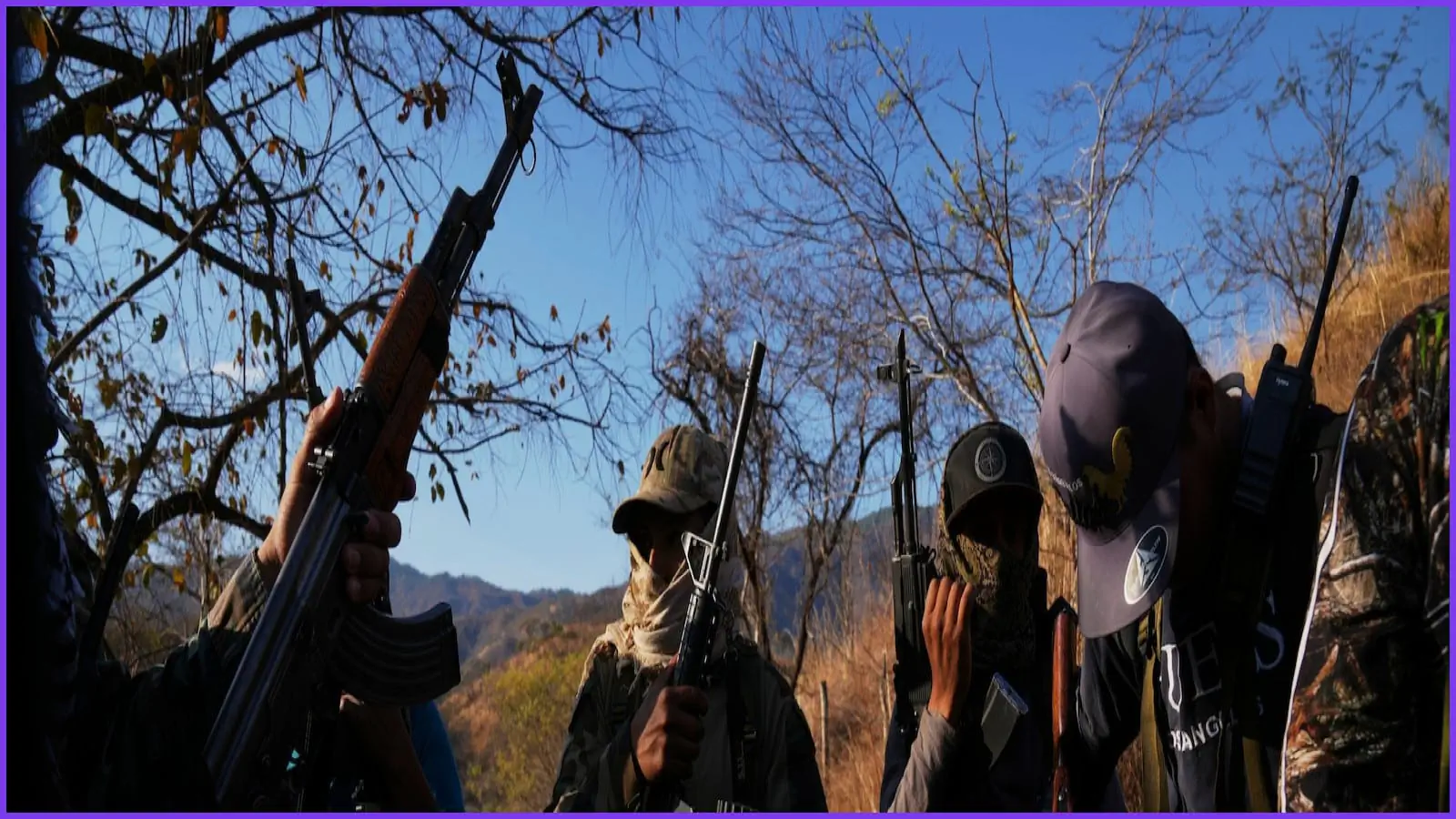

A cluster of rural communities known as Guajes de Ayala in Mexico’s Guerrero state came under siege on Wednesday morning, experiencing drone attacks and gunfire from the encroaching La Nueva Familia Michoacana cartel. The bombs began raining down at 6 a.m., just as the sun rose over the central Mexican mountains.
Twenty-four-year-old Marilu Solorio, along with 70 other women, children, and elderly residents, sought refuge in a nearby abandoned medical clinic, hoping for an end to the constant drone explosions and the firefight between the cartel and the community’s vigilante group. Solorio lamented the situation, stating, “While some are celebrating goals, others are getting massacred by drones carrying bombs. Instead of protecting people in the places where they’ve been playing the World Cup, (Mexico’s government) should be protecting people like us, who have never done anything wrong.”
For weeks, the communities in Guajes de Ayala had warned law enforcement in Guerrero of the mounting threats, even sharing videos of cartel drones hovering overhead and the locations of fighters inching closer to their homes on social media. They expressed fears of an impending attack, but their calls for help went unheeded as World Cup celebrations engrossed major hubs like Mexico City, Guadalajara, and Monterrey.
Mexican authorities initially denied the attacks in violence-struck Guerrero, despite livestreamed videos from locals showing gunfire and smoke billowing from mountain lookouts established by residents to monitor cartel presence. After the Associated Press inquired about the incidents, Mexico’s Security Cabinet posted on X, stating that “events described in news articles have been ruled out” by authorities, but added that state security forces “are heading to the area to verify the situation, strengthen institutional presence, and provide security to the population.” However, the AP recently visited the region and found no state presence near the communities, despite previous denials by authorities that they had abandoned them.
The attacks occurred as Mexican President Claudia Sheinbaum has spent months grappling with endemic criminal violence. While killings have sharply decreased under her administration, pressure intensified over the past year as Mexico aimed to project security and stability ahead of the World Cup, especially after a burst of violence in Guadalajara, one of the host cities, in February. Compounding these challenges were threats from U.S. President Donald Trump to take military action against cartels, alongside other internal political ruptures.
In response, Mexico doubled down on security in the World Cup hubs, deploying 100,000 security forces largely to Mexico City, Monterrey, and Guadalajara to safeguard the tournament. The Mexican leg of the competition, which concluded on Sunday, ended without major security incidents. However, while soccer fans celebrated in key cities, violence persisted in many other parts of the country.
Mexican security analyst David Saucedo attributed attacks like those in Guajes de Ayala to the government’s World Cup security strategy. He explained, “There was heavy security in Mexico City, Guadalajara, Monterrey. Lots of military and National Guard officers from other states were transferred to fortify World Cup hosts. But in doing that, they also left a number of regions that weren’t host cities unprotected.”
This vulnerability was evident in other recent incidents: weekend clashes in northern Sinaloa left a naval officer and 10 suspected gang members dead. The week prior, in southern Veracruz, the local government reported finding the body of a kidnapped journalist, allegedly killed by criminal groups. On Wednesday, in the southern state of Chiapas, which has been overshadowed by violent cartel power struggles in recent years, eight bodies were discovered in a pile alongside cartel messages.
The La Nueva Familia Michoacana, which was declared a foreign terrorist organization last year by the Trump administration, along with other Mexican cartels and Central and South American gangs, has been pushing into Guerrero for years. In response to these attacks and what the community described as an absence of security authorities, hundreds have fled their homes. In recent years, men in the community formed a vigilante group to fight back, armed by rival cartels vying for territory with La Nueva Familia Michoacana, and utilizing military-grade weapons smuggled from the U.S., grenades, and drones to monitor the encroaching cartel. For a region like Guerrero, marked by decades of warring criminal factions, locals have long maintained that it was not a question of if they would face another attack, but when.
On Wednesday morning that came to a head. Marilu Solorio, who had sought refuge in the clinic, stated that no one helped them.
While Solario and her group sought refuge from the firefight in the abandoned clinic, others elsewhere sheltered in churches.

1 thought on “Mexican Village Endures Cartel Drone Attacks Amid World Cup Security Focus”