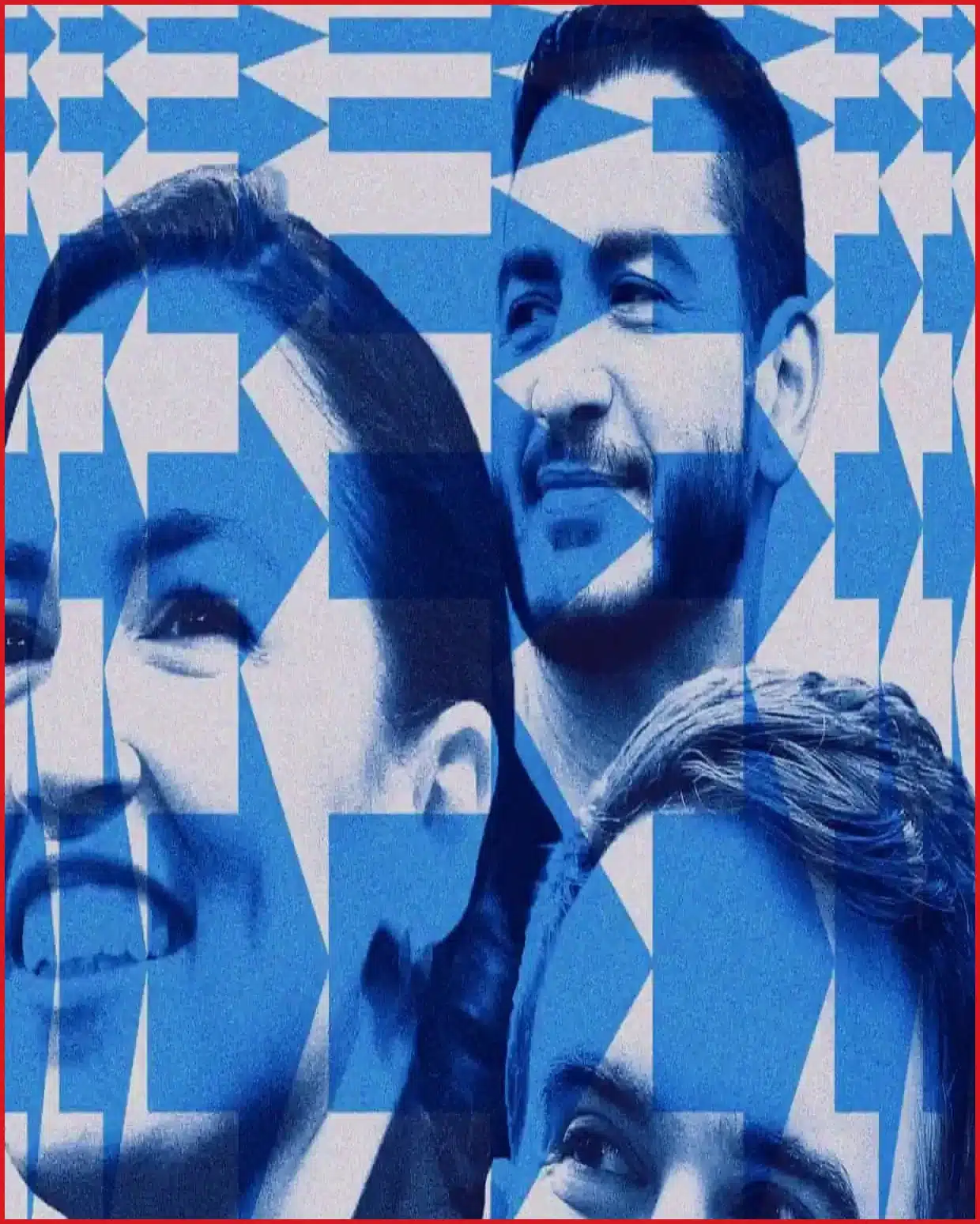
Standing before the landmark bronze Spirit of Detroit statue in the early hours of a Wednesday morning, Abdul El-Sayed channeled the spirit of boxing legend Muhammad Ali. "We shook up the world," the 41-year-old former public health official declared to his supporters.
El-Sayed had just delivered a major upset to the Democratic establishment, defeating US Representative Haley Stevens to secure the party's nomination for the US Senate in the critical swing state of Michigan. Running on a progressive platform that includes universal healthcare, a halt to US military aid to Israel, and comprehensive campaign finance reform, El-Sayed overcame massive financial opposition. Stevens, a moderate centrist, had benefited from $60 million in outside group spending, which included $30 million from the American Israel Public Affairs Committee (Aipac) and its affiliate organizations.
The victory has highlighted a deep-seated tension within the Democratic Party. Matt Duss, executive vice-president of the Center for International Policy and a former foreign policy adviser to Senator Bernie Sanders, noted that the result reflects a widespread rejection of the political establishment. "It’s dissatisfaction with the status quo," Duss said. "Voters are fed up with an elite establishment that is simply not delivering for them, that doesn’t feel their pain, that doesn’t seem to know or care about their struggles, and that’s part of why Abdul succeeded."
While American politics has been heavily shaped by rightwing populism over the past decade, leftwing populism has grown along a parallel track since Bernie Sanders' insurgent 2016 presidential campaign. Duss referred to that 2016 run as the "Big Bang" for the rebirth of the American progressive left, paving the way for new leaders. Among them was Alexandria Ocasio-Cortez, a former bartender and Sanders campaign organizer who pulled off a major upset in New York’s 14th district in 2018 to become the youngest woman ever elected to the House of Representatives, alongside the progressive group of lawmakers known as "the Squad."
Although Sanders lost the 2020 primary to Joe Biden, his movement heavily influenced the progressive policy goals of the Biden administration. However, the political events of 2024—including Biden's withdrawal from the presidential race, Kamala Harris's nomination, and Donald Trump's return to office—exposed a persistent divide between party leaders and grassroots organizers.
This divide has fueled the "Mamdani effect." Last November, democratic socialist Zohran Mamdani, running on a platform centered on affordability, defeated establishment favorite Andrew Cuomo to become the first Muslim mayor of New York City. Mamdani subsequently backed three insurgent candidates to primary victories in New York, helping spark a wave of progressive wins that has since touched Colorado, Illinois, Michigan, New Jersey, Pennsylvania, Washington state, Wisconsin, and Washington DC.
Analysts point to several factors driving this progressive momentum, including frustration with Trump, the rising cost of living, corporate influence in politics, and the war in Gaza. According to Reuters/Ipsos polling, Israel's favorability among Democrats fell from 59% in 2018 to just 22% in May 2026, making large-scale Aipac campaign donations increasingly controversial among younger voters.
In Michigan, which holds the nation's highest percentage of Arab Americans relative to its population, El-Sayed accused Israel of committing genocide and centered his campaign on ending unconditional US military assistance. This stance drew a sharp contrast with Stevens, who defended the US-Israel relationship. El-Sayed's primary victory, alongside wins for progressives Will Lawrence and Donavan McKinney in Michigan state House races, has challenged the political assumption that leftwing populists cannot win competitive races outside traditional progressive strongholds.
Larry Jacobs, director of the Center for the Study of Politics and Governance at the University of Minnesota, believes the party is experiencing a structural break. He cited the "staleness" of establishment leaders like Senate Majority Leader Chuck Schumer and House Minority Leader Hakeem Jeffries, both strong supporters of Israel. "Gaza and Israel has become a lightning rod for all the other issues," Jacobs said, adding that Trump's political presence has catalyzed this internal Democratic revolt. "Donald Trump has radicalised the Democratic party. This revolt within the party would not have happened without Donald Trump."
The rise of groups like the Democratic Socialists of America (DSA) comes during a period of self-reflection for centrist Democrats. Joseph Geevarghese, executive director of Our Revolution, argued that moderates are often perceived as timid because of their reliance on corporate donors. "Because some of their funding depends on corporate donors, moderates have to pull punches," Geevarghese said. "You’ve got progressives who are able to call out the corporate class and the corruption of our politics."
However, establishment Democrats do not plan to yield ground easily. Norman Solomon, director of RootsAction, expressed concern about a potential backlash from corporate factions that have guided the party since the rise of the Democratic Leadership Council (DLC) in the early 1990s. The DLC, founded by Al From in 1989, famously selected Bill Clinton to lead the party toward the center, establishing the "Third Way" movement that influenced global politics, including Tony Blair's leadership in Britain.
From defended the centrist model, arguing that while strategies must adapt to the modern era, the core principles remain sound. "The democratic socialists want a different system," From said, criticizing their platform. "They want to get rid of the Senate, the presidency, the supreme court; they want ownership of business; they want to get rid of police; they don’t want to fund the military."
The ultimate test of El-Sayed's political appeal will occur in November, when the Rhodes scholar and physician faces Republican Mike Rogers in a general election matchup that could decide control of the Senate. Following the competitive primary, El-Sayed and Stevens quickly moved to project unity, emphasizing their shared goals over their differences.
While both wings of the party are expected to cooperate during the midterms to counter Republicans—who, along with House Speaker Mike Johnson, have sought to label democratic socialists as "radical Marxists"—the battle for the party's future will likely intensify ahead of 2028. Political strategist Donna Brazile believes the two factions can govern together on economic issues, but the centrist group Third Way is already planning a $15 million campaign to counter democratic socialism before the next presidential election cycle.
As speculation begins for the 2028 presidential race, progressives are looking for a candidate to lead their platform. While Congressman Ro Khanna of California is frequently mentioned, significant attention remains focused on Ocasio-Cortez, who is currently 36. Henry Olsen, a senior fellow at the Ethics and Public Policy Center, suggested that the timing could be ideal for her. "If I were AOC’s advisers, I would look her in the eye and say, 'Do you want to be president? If you want it to be president, the time is now,'" Olsen said. "Why not a 39-year-old AOC?"
Related Articles
Md. Kazi Bijoy is a dedicated tech enthusiast and content creator with a passion for digital innovation. With years of experience in the tech industry, he specializes in breaking down complex topics into easy-to-understand guides. When he isn’t writing, he explores the latest gadgets and researches emerging trends in the digital world.