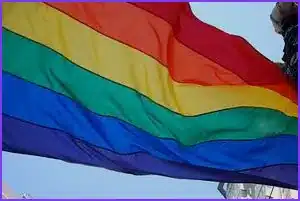
In Indonesia, transgender women are facing an escalating wave of violence and systemic repression as vigilante mobs carry out targeted attacks and the government moves to codify anti-LGBTQ+ attitudes into federal law.
A series of violent, transphobic incidents occurred between July 14 and 16 of this year, specifically targeting transgender women across the country. In one severe instance in the West Java city of Bogor, a mob attacked more than 15 transgender women. The victims were doused with urine, forced to strip naked, and physically beaten. The entire assault was recorded and subsequently shared on social media, where the footage attracted further hostility from Indonesian netizens who used slurs and called for additional violence against transgender people.
While Indonesia lacks explicitly anti-LGBTQ+ laws, several existing legal frameworks indirectly discriminate against queer people. Social stigma remains highly prevalent, largely driven by conservative Muslim forces. Currently, transgender individuals in Indonesia are only permitted to change their legal gender if they undergo sex reassignment surgery and subsequently receive judicial approval. Meanwhile, same-sex sexual activities are vulnerable to criminalization under moral laws. The westernmost province of Aceh, which is the only Indonesian region governed by syariah law, remains the most conservative, punishing homosexual acts with public flogging, fines, or prison sentences.
Against this backdrop, President Prabowo's October 2025 decree represents a significant step toward codifying anti-LGBTQ+ discrimination into federal law. The government has framed the decree using the language of national security, presenting the policy as a necessary measure to preserve the peace, unity, and safety of the country. According to Febi Ramadhan, a lecturer and researcher in social anthropology at Universitas Indonesia, this political shift is not surprising. His research on anti-LGBTQ+ discrimination in Indonesia's political leadership highlights that hostile attitudes have hardened significantly over the last ten years.
Febi noted that periods of economic turmoil frequently drive homophobia and transphobia in Indonesia, as queer people are often demonized to divert public attention from issues the government wishes to avoid. The legacy of the nationwide 2025 protests, which saw widespread public unrest triggered by a stagnating economy and a sinking currency, has played a key role in the current climate. "At the same time, we have seen a shrinking of civil spaces across Indonesia, as a result of various laws restricting freedom of speech and assembly," Febi added. "The community is facing the same crises again and again, but with diminishing resources, meaning we’re fighting several issues on many fronts at the same time."
Among the laws restricting freedom of speech, the Broadcasting Bill has had a major impact on public discourse. Following a government-led moral panic in 2016, the Indonesian Broadcasting Commission issued circulars explicitly banning television and radio stations from broadcasting LGBTQ+ content, under the guise of protecting public morality and shielding children.
Rifki Lafayette, a queer Indonesian journalist, explained how these restrictions have allowed the government to further amplify anti-LGBTQ+ attitudes among the general public. "Professionally, there is a constant chilling effect: pitching a story addressing LGBTQ+ persecution will likely be killed by editors afraid of government reprisal or backlash from religious hardliners," he said. Rifki noted that many journalists choose to self-censor to avoid backlash, which reinforces a culture of silence and taboo around queer issues. Furthermore, the normalization of state-backed anti-LGBTQ+ rhetoric has emboldened public vigilantes, making field reporting highly hazardous. Journalists who are perceived to fit queer stereotypes face immediate verbal harassment, slurs, and physical intimidation from crowds in public spaces.
Cornelius Prabhaswara, a public policy student and human rights activist with the online advocacy group Social Justice Indonesia (SJI), echoed these concerns. SJI, which Cornelius joined in 2023, focuses on social media campaigns to raise awareness on sensitive issues, including the death penalty and LGBTQ+ rights. The nonprofit aims to connect civil society with younger Gen Z activists, having previously mobilized resources for student activists during the 2025 anti-government protests.
Cornelius pointed out that the nature of the threat has shifted dangerously. "During the 2016 moral panic, attacks came primarily from religious authorities and political leaders, but today those attacks are perpetrated by random individuals, which makes it hard for us to know who we are up against," he said. To adapt to these challenges, SJI has partnered with legal NGOs to manage online discourse and protect queer individuals from being doxxed. As shown by the online reactions to the Bogor attack, public mobs threaten transgender individuals both on the streets and in their homes via social media platforms.
Despite the online hostility, digital platforms remain essential for grassroots organizing. In the wake of the Bogor attacks, transgender women turned to Twitter (now X) and Instagram to coordinate crowdfunding campaigns to support the victims. Cornelius explained that mutual aid has become a core part of community organizing, particularly after U.S. President Donald Trump defunded USAID last year. This decision caused thousands of international NGOs worldwide to lose their funding. "Many gender and sexuality advocacy groups received funding from either USAID or UNAIDS, both of which have now dried up entirely, forcing those groups to think of new ways to provide for the community," Cornelius said.
Nevertheless, Cornelius praised younger Indonesians, many of whom have become more comfortable openly expressing their identity despite the hostile social climate. "We are seeing more young LGBTQ+ come forward asking how to help and mobilize, including people who were never involved in activist circles before this," he said, emphasizing the importance of new advocates joining the movement as activism shifts online.
Social media has ultimately become a double-edged sword for Indonesia's queer community. While it exposes victims of hate crimes to doxxing and prolonged online abuse, platforms like TikTok and X also allow younger generations to find community, accept their identities, and coordinate mutual aid. As state-backed hostility and vigilante actions continue to loom, the mobilization capabilities of Indonesia's LGBTQ+ population will remain vital. As Febi Ramadhan concluded: "LGBTQ+ people feel that [we] have no one but [ourselves], so [we] have to fight even harder on our own."
You have reached the limit of 2 free articles this month.
Several transphobic incidents took place during July 14-16 of this year, all of which involved mobs attacking trans women specifically. In one particular instance in the West Java city of Bogor, over 15 trans women were doused with urine, forced to strip naked, and physically beaten in an incident that was recorded and
Related Articles

Meet Md. Rubel Rana
As a core contributor to Worlddincidents.com, Rubel Rana brings a unique perspective to the world of journalism. Whether it’s deep-diving into historical trivia or covering the latest global headlines, Rubel Rana is committed to delivering high-quality, high-impact articles. Their writing blends meticulous research with a compelling voice, helping readers stay informed and curious about the world around them.