The maritime conflict between the United States and Iran has escalated sharply with a series of retaliatory strikes on shipping vessels, just a day after US President Donald Trump dismissed the ongoing hostilities as "small potatoes." President Trump has not yet commented on the latest round of attacks, which mark a significant flare-up in the six-month-old conflict.
US Central Command (Centcom) announced that it has "permanently disabled" two Iran-linked oil tankers and "completely destroyed" a third. One of the targeted tankers was located near Kharg Island, while another strike occurred in the Gulf of Oman. According to Centcom, which oversees US military operations in the Middle East, these vessels were part of a multi-billion-dollar shadow network used to fund the Islamic Revolutionary Guard Corps (IRGC) and its regional proxies.
Iranian state media outlet Irib confirmed the American attacks, stating that the crew members of the two tankers targeted in the Gulf of Oman were successfully evacuated to shore via lifeboats. One of these tankers was empty, while the other was carrying a load of crude oil. No casualties were reported from the strike near Kharg Island, which serves as Iran's primary oil export terminal, handling approximately 90 percent of the country's crude transported via mainland pipelines.
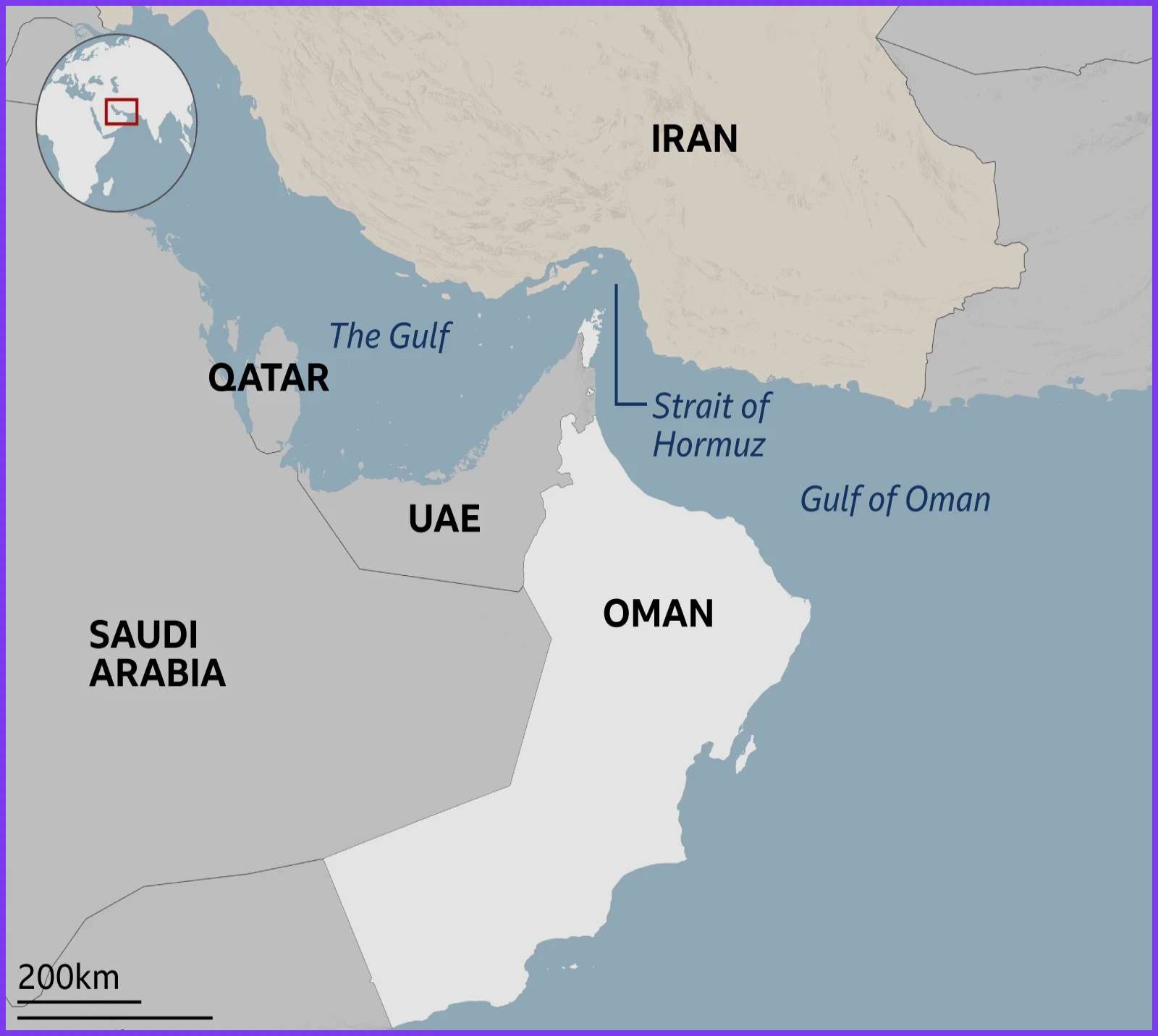
In response to the US operations, the IRGC launched retaliatory strikes against six vessels in the region. These included three oil tankers traveling through the Strait of Hormuz and three other ships affiliated with the United States in other areas. Iranian state media asserted that the three tankers in the Strait of Hormuz were targeted for using "unauthorised" routes, and issued warnings to other maritime traffic against doing so.
The latest exchange of fire followed an earlier incident on Saturday in which Iranian forces targeted two US warships. Centcom reported that it "successfully evaded" multiple IRGC attacks aimed at an American aircraft carrier and a guided-missile destroyer, confirming that no US military personnel were injured in the encounters.
This flare-up comes amid a broader conflict that began on February 28 when the US and Israel launched wide-ranging strikes on Iran, leading to Iranian counterattacks on Israel, US bases, and Gulf allies. Since the war's onset, the crucial Strait of Hormuz—which previously carried 20 percent of the world's liquefied natural gas and oil supplies—has been effectively closed, giving Tehran significant leverage. Despite Iran's efforts to control the waterway and its history of targeting ships in Omani waters, President Trump has insisted the strait remains open, with the US military actively assisting commercial vessels along a southern route.
The current hostilities resumed last Sunday when US forces struck two rocket launchers to prevent them from being used to deploy naval mines in the strait. On Tuesday, Trump described a subsequent US action as a "very heavy attack," though he predicted the renewed fighting would not last "too long." Iran responded to those strikes by targeting US installations in the United Arab Emirates, Kuwait, Bahrain, and Jordan.
The escalation has also brought severe humanitarian allegations. On Thursday, US Vice-President JD Vance addressed Iranian claims that a US strike on Tuesday killed at least four civilians, including two children, at a wedding ceremony in the southern Iranian town of Sirik. While Vance expressed extreme skepticism regarding the reports, he confirmed that the US military would investigate the incident, which the Iranian Red Crescent Society blamed on missile shrapnel and which Tehran has labeled a war crime.
Diplomatic efforts to resolve the conflict remain stalled after a 60-day ceasefire formally expired last month. Following the expiration, Trump announced tougher economic measures targeting Iran and any nations doing business with it. Despite the ongoing violence, Trump reiterated on Friday that he does not view the situation as a full-scale war, calling it an "intermittent" "military conflict" that is "small potatoes for us."
However, the prolonged conflict is having a tangible economic impact in the United States ahead of the November midterm elections. Global energy prices have surged due to the disruption in the Strait of Hormuz, putting pressure on the Trump administration over rising costs. On Friday, the average price of diesel in the US reached $5.85 per gallon, a significant increase from $3.71 per gallon recorded a year ago.
Related Articles

Mr. Udoy is a professional Web Developer and Blogger with 7+ years of experience in the tech world. He specializes in web architecture and digital storytelling. As the driving force behind worldincidents.com, he focuses on delivering high-quality, well-researched content to a global audience.