During a high-profile international tour spanning the United States, Canada, and the United Kingdom, Mohan Bhagwat, the chief of India's Rashtriya Swayamsevak Sangh (RSS), repeatedly preached messages of unity, dignity, and universal love. Addressing a "Universal Oneness Celebration" at Madison Square Garden in New York on August 29, Bhagwat asserted that to call oneself Hindu, one must believe that all paths lead to the same destination and that every human possesses equal dignity. Days later, on September 6 in London, he marked the centenary of the RSS by declaring that "pure and divine love" is the very basis of the organization's work, rejecting accusations that intense hatred drives their agenda.
However, on the ground in the eastern Indian state of West Bengal, which has been governed by Prime Minister Narendra Modi's Bharatiya Janata Party (BJP) since the state elections in May 2026, a starkly different reality unfolded. Throughout late August and September, activists belonging to various RSS-linked organizations, collectively known as the Sangh Parivar, launched a series of violent disruptions, harassment campaigns, and physical attacks targeting Christian prayer gatherings and institutions.
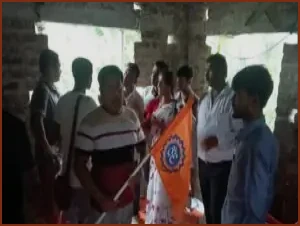
A prominent incident occurred on August 26 in Ranichak village, located in the rural Sutahata region of West Bengal. Around 50 people had gathered at the residence of Goutam Bera for a house fellowship involving Bible study and prayer. Many of those in attendance were local Hindus who were friends and acquaintances of the Bera family. Having caught wind of the gathering, members of Hindu supremacist organizations mobilized. One of the men broadcasted a live video on Facebook while traveling to the home, claiming they had heard a Christian priest was converting Hindus and stating, "Let's see what they are up to."
Upon reaching Bera's home, the intruders barged inside, verbally abused the attendees, threw people out of the house, and allegedly manhandled those who remained. Carrying saffron flags, the attackers loudly ordered the prayer participants to chant "Hare Krishna, Hare Ram" and "Jai Shree Ram." In videos recorded during the incident, intruders can be heard shouting about recovering a Bible and questioning how Hindus could allow a Christian priest into their home. Police eventually arrived and transported 17 prayer attendees, including Pastor Joy Kumar Ghughu, to the Sutahata block primary health center for medical check-ups and treatment before taking them to the police station for interrogation. Their mobile phones were searched, and they were released around 8 p.m.
Pastor Ghughu stated that the victims chose not to lodge a formal police complaint because Jesus teaches forgiveness. However, he questioned the opposition to their gathering, citing Article 25 of the Indian Constitution, which guarantees all citizens the right to freely profess, practice, and propagate their religion. He emphasized that no one was being paid to convert to Christianity.
The intruders identified themselves as members of the Shree Ram Janmotsab Samity, a committee that openly maintains ties with the RSS and its affiliates, such as the Vishwa Hindu Parishad (VHP). On social media, members of the group shared videos of the confrontation, with one individual instructing viewers to beat the organizers with brooms whenever they see them, calling them "worse than terrorists." The youth wing of the VHP, the Bajrang Dal, also uploaded video footage identifying their Chaitanyapur unit and warning that severe consequences would face anyone spreading religious propaganda under the guise of "God the Father."
Senior BJP leader Amit Malviya downplayed the Sutahata confrontation and two other incidents, describing them as "isolated local objections to prayer gatherings" that were "peacefully resolved by the police." However, the sequence of events across West Bengal during this period points to a broader pattern of coordinated hostility.
On August 23, a mob vandalized a church prayer room in Uluberia, Howrah district, and attacked several attendees, while Bajrang Dal activists shut down a house prayer ceremony in Baniberia, South 24 Parganas. On August 30, Bajrang Dal members thrashed a lawyer for hosting Christian prayers at his home in Baripur, while separate prayer venues were stormed and vandalized in Jagatballabhpur and Hingalganj.
The disruptions continued into September. On September 1, the Hindu Jagran Manch, another RSS affiliate, locked up a Christian-run school in Hasnabad Rupomari bazar, protesting that the walls featured photos of Jesus instead of Hindu deities. On September 7, activists from the VHP and Bajrang Dal interrupted a makeshift church gathering in Bally, declaring that preaching Christianity would not be permitted. Similar confrontations, involving aggressive questioning and threats to organizers, occurred in Mograhat on September 9 and September 11. On September 12, VHP activists in Taldi ordered a house prayer gathering to stop permanently and demanded that they tear up all photographs of Jesus. The following day, a viral video showed a mob violently abusing prayer gatherers and tearing apart books on the Christian faith, demanding to know why they were not reading the Gita or chanting Hare Krishna.
The escalation has drawn sharp criticism from political opponents. Samirul Islam, a member of parliament from the Trinamool Congress, which lost power to the BJP in May 2026 after 15 years of state rule, accused the attackers of violating the constitutional rights of Christians. He stated that the targeted violence represents an direct affront to the constitutional spirit of unity in diversity in India.
Related Articles
Mr. Udoy is a professional Web Developer and Blogger with 7+ years of experience in the tech world. He specializes in web architecture and digital storytelling. As the driving force behind worldincidents.com, he focuses on delivering high-quality, well-researched content to a global audience.