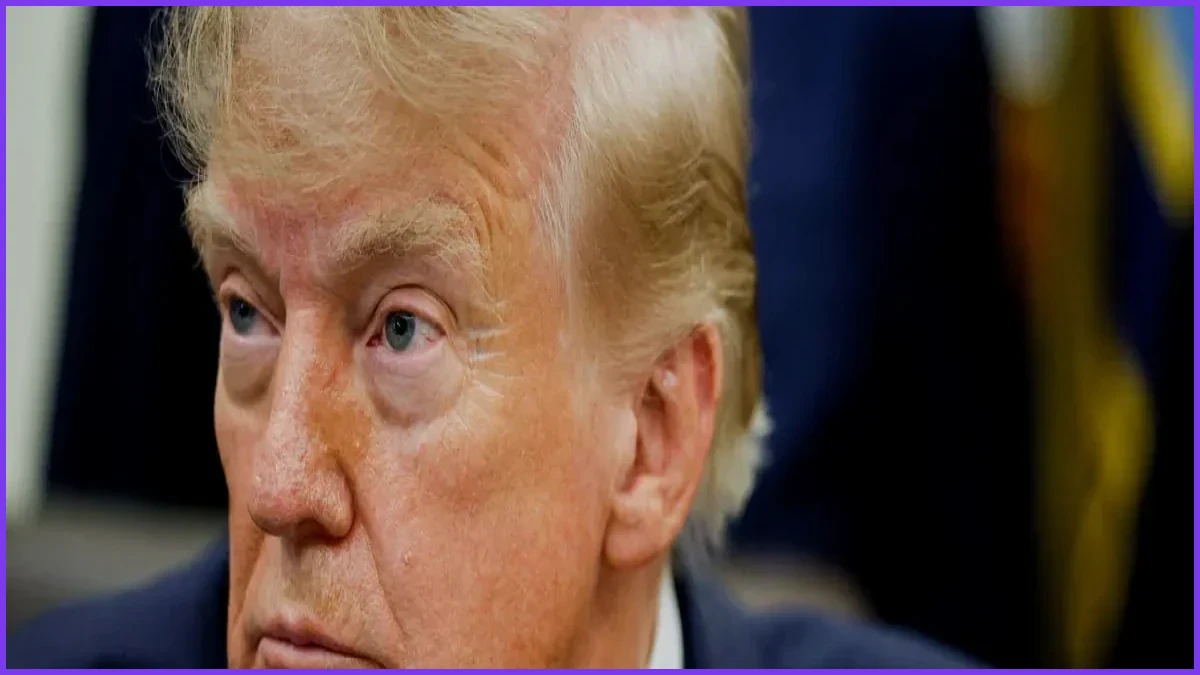
President Donald Trump revealed in a September 20 interview with Fox News that he is currently deciding whether to escalate the ongoing United States conflict with Iran. Speaking with reporter Trey Yingst, Trump questioned the timing of potential catastrophic action while warning the Islamic Republic to change its behavior.
"My question is, if and when do I blow the entire nation up? They better behave," Trump said during the broadcast. He added that "very big things" are set to occur in the conflict, though he declined to provide specific details on what those actions would entail. Despite the aggressive rhetoric, Trump noted that he remains open to a potential meeting with Iranian President Masoud Pezeshkian during this week's United Nations General Assembly in New York.
This is not the first time Trump has threatened significant military action since the conflict was initiated by U.S. and Israeli strikes on February 28. Though he has repeatedly suggested major escalations, he has yet to implement them. The September 20 remarks follow a similar threat made in April, when Trump warned that "a whole civilization will die tonight, never to be brought back again."
In response to the rhetoric, Iran's military central command warned that any fresh offensive would provoke sustained retaliation against American bases and interests in the region. The Iranian military also declared that Washington's regional allies would be treated as active parties to the conflict, claiming they possessed undisclosed intelligence that an attack was actively being prepared. Meanwhile, Iranian Parliament Speaker Mohammad Baqer Qalibaf stated that Iran must continue both its military resistance and diplomatic efforts to push back adversaries and secure its strategic gains.
The intensifying exchange of threats comes as the conflict continues to destabilize U.S. allies in the Gulf. On September 19, Yemen's Iran-backed Houthi rebels launched a series of missile and drone strikes targeting the Saudi capital of Riyadh, following rapid military advances in Yemen's reignited civil war earlier this month. Video footage showed massive plumes of black smoke rising near Riyadh's main international airport after overnight explosions. The Houthi advances along the Red Sea coast have positioned their forces at the critical Bab el-Mandeb Strait, granting them greater control over maritime traffic between Asia and the Red Sea.
With Iran already blockading the majority of shipping in the Strait of Hormuz, energy exports from the oil-rich Gulf region have been virtually cut off from international markets, driving global oil and diesel prices to record highs. Despite the severe economic fallout, there are no signs of reviving the interim ceasefire established in June, which collapsed in July over disputes regarding its terms.
The protracted war has placed a heavy financial and human toll on the United States. According to an update provided by U.S. Central Command to congressional national security committees, the conflict has cost the U.S. military at least $43.6 billion as of September 3. This figure is widely considered an undercount, as it excludes the cost of repairing U.S. military installations damaged or destroyed by Iranian strikes, such as the U.S. Navy's logistics hub in Bahrain.
The Pentagon estimates it has spent $28.1 billion solely on replacing depleted munitions, including bombs and air defense interceptors. Military experts warn that the extended Middle East conflict has created a critical shortage of munitions, potentially leaving the United States vulnerable in other theaters, such as the Indo-Pacific. Since the conflict began, at least 18 Americans have been killed and more than 800 have been wounded.
Related Articles

Meet Md. Rubel Rana
As a core contributor to Worlddincidents.com, Rubel Rana brings a unique perspective to the world of journalism. Whether it’s deep-diving into historical trivia or covering the latest global headlines, Rubel Rana is committed to delivering high-quality, high-impact articles. Their writing blends meticulous research with a compelling voice, helping readers stay informed and curious about the world around them.