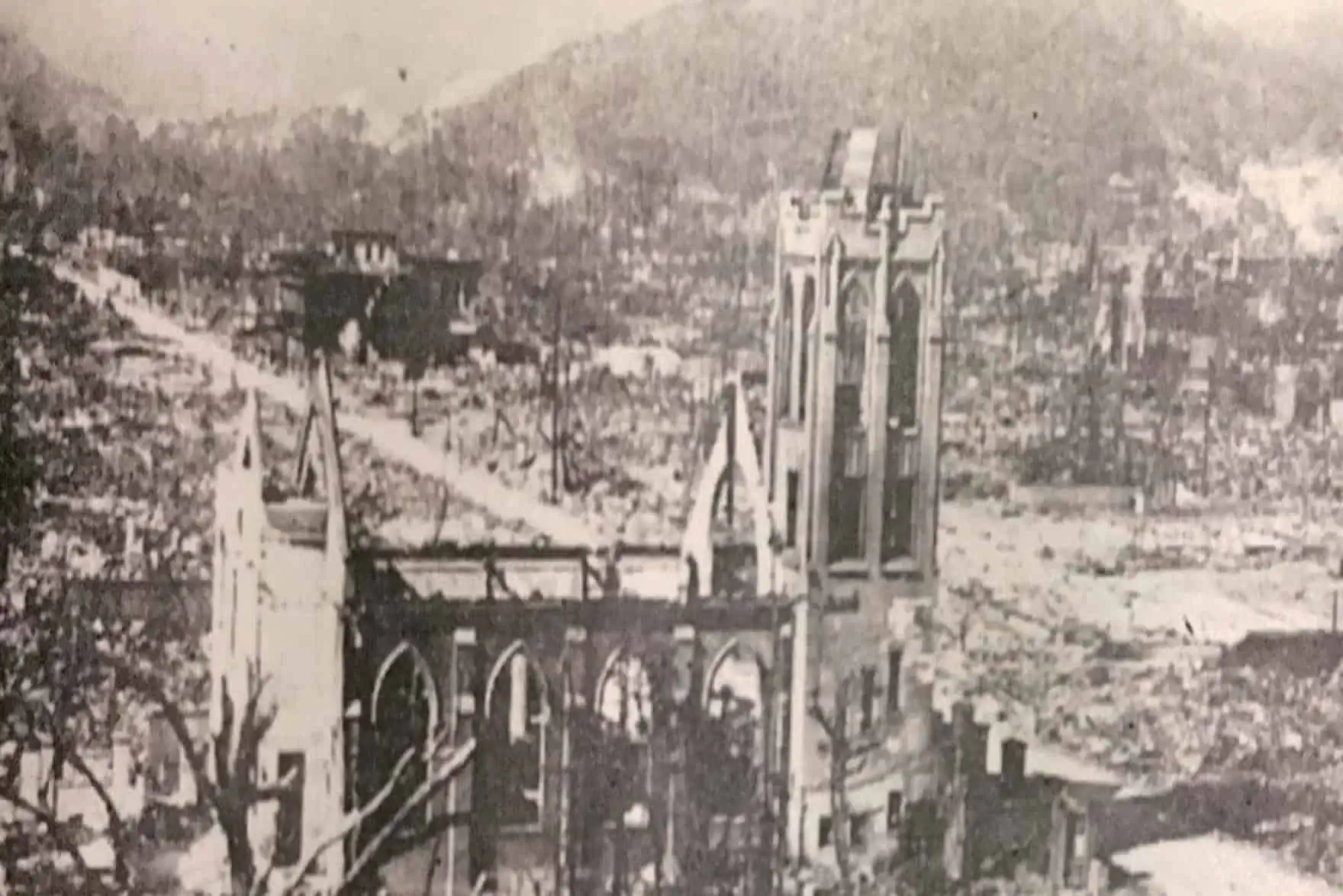
A newly unearthed memoir written by Kiyoshi Tanimoto has provided a devastating and deeply personal account of the immediate aftermath of the atomic bomb drop on Hiroshima. The exclusive extract details Tanimoto’s terrifying journey across the ruined city as he desperately sought to find his wife and infant child amid overwhelming destruction. His narrative captures the sudden, silent horror that befell the city's residents, many of whom never heard an explosion but were instantly thrust into a landscape of fire and ruin.
According to Tanimoto’s writings, most people in Hiroshima neither saw nor heard any aircraft before the blast. Instead, they experienced only a strange, brilliant flash in the open daylight or felt its intense reflection. The force of the explosion, however, was immense. Tanimoto recounts the experience of the parents of Mr. Konda, a member of his church, who had been waiting for a train at Yokogawa station, located about two kilometers (one and a quarter miles) from the center of the detonation. The couple observed a B-29 bomber and a parachute descending through the air before suddenly falling unconscious. They had no memory of sound or light, but awoke to find themselves lying on the ground, badly burned and stripped of their clothing, surrounded by flattened houses. Along with others on the Koi highway, they fled toward the suburbs in a state of shock.
As Tanimoto made his way into the city, crossing the Koi and Fukushima bridges, he entered an area about one kilometer from the epicenter of the blast. While houses in the outer suburbs remained standing despite heavy damage, those closer to the center were completely flattened, looking like toy buildings crushed by a hammer. From beneath the collapsed structures, painful cries of "Tasukete!"—meaning "Help!"—echoed through the air. Tanimoto, who had previously assisted with the clearing of houses, realized the impossibility of rescuing the trapped victims alone, noting that it was an incredibly difficult task to pull even a single log from a collapsed house. Nothing whatsoever could be done, with the strength of only one person, to help the people beneath those houses. Yet there were people buried here and there—everywhere.
Overwhelmed by the sight of people buried everywhere, Tanimoto was suddenly struck by the realization that his own wife, baby, and neighbors might be trapped in the same horrific conditions. As the neighborhood defense coordinator, he was responsible for the lives of 120 residents. Driven by duty and panic, he ran through the wreckage in tears, crying out apologies to those he could not save. During his frantic run, he encountered Mr. Matsuo at the Fukushima bridge, who had been with him when the bomb exploded. Out of breath, Tanimoto apologized to him as well, citing his urgent responsibilities, and continued running.
Avoiding the intense fires, Tanimoto followed the bank of the Fukushima River toward Nakahiromachi, a northern neighborhood characterized by farm fields and fewer houses. There, he encountered countless severely injured people lying helplessly in the streets. The deeper he went into the city, the more casualties he encountered. In a gesture of grief and survivor's guilt, Tanimoto threw his panama hat to the ground, silently begging for forgiveness because he had escaped physical injury while so many others suffered. He feared his family was already dead or buried beneath their collapsed home.
To reach his neighborhood of Noboricho, Tanimoto initially planned to cross the Misasa Bridge over the Ota River toward central Hiroshima and head to Hakushima. However, both the bridge and the Hakushima district were engulfed in flames. Seeing that the Ushita district on the opposite bank appeared untouched by the fire, he decided to swim across the swift-flowing river. In a determined manner, he plunged into the river, not because he had confidence in his swimming ability, but because there were no other means of reaching his goal. The Ota River varies in water level according to the tides, and while there was not much water, the stream was swift. Naturally, he lost control of his limbs, as he had already run continuously for about an hour and was dead tired. Praying to God to preserve his life so he could save his family and neighbors, he shed his remaining shoe, coat, and gaiters, eventually managing to swim to safety.
After passing through the deserted and ruined Ushita district, where he checked on the collapsed home of his church treasurer, Tanimoto finally reunited with his wife. She stood quietly with tears in her eyes, holding their baby, Koko. She explained that she had been talking to a neighbor, Mrs. Takaki, at their doorstep when the house suddenly collapsed, burying them both. Trapped under heavy wooden beams and struggling to breathe, she had started to lose consciousness when the loud screams of Koko, who was still in her arms, revived her. Fighting with all her strength, she managed to widen a small hole in the attic ruins, push Koko through to safety, and eventually extricate herself. With the neighboring house on fire and smoke thickening, she had been unable to rescue Mrs. Takaki or return to their home, eventually fleeing to the Sentei gardens with the baby.
The parents of Mr Konda, one of our church members, had been waiting for a train at Yokogawa station, located 2km [one and a quarter miles] away from the centre of the bomb’s explosion. They saw a B-29 and a parachute dropping through the air. Before they had time to wonder at the sight, they fell unconscious. Afterwar

Md. Kazi Bijoy is a dedicated tech enthusiast and content creator with a passion for digital innovation. With years of experience in the tech industry, he specializes in breaking down complex topics into easy-to-understand guides. When he isn’t writing, he explores the latest gadgets and researches emerging trends in the digital world.
2 thoughts on “Unearthed Memoir Details Kiyoshi Tanimoto’s Hiroshima Devastation”