An active debate is unfolding over the effectiveness of U.S. policy in the Pacific Islands. While some analysts argue that Washington has been largely absent from the region, others point to a highly active period of engagement, citing a detailed policy inventory of announced U.S. initiatives recently published by the Heritage Foundation. However, a major breakdown in military infrastructure negotiations in the region suggests that Washington's increased attention and funding are failing to achieve their desired outcomes due to a lack of genuine, trust-based local relationships.
On June 29, 2026, Admiral Samuel Paparo, the commander of U.S. Pacific Command (PACOM), wrote a letter to Wesley Simina, the president of the Federated States of Micronesia (FSM). In the letter, Paparo warned that due to a breakdown in negotiations, U.S. PACOM intends to assess alternative locations across the region to meet Pacific defense needs. This letter serves as a sharp indication of deteriorating relations, threatening a planned $2 billion U.S. Department of Defense (DoD) infrastructure investment on the main island of Yap State, of which $1.4 billion was specifically designated by the National Defense Authorization Act.
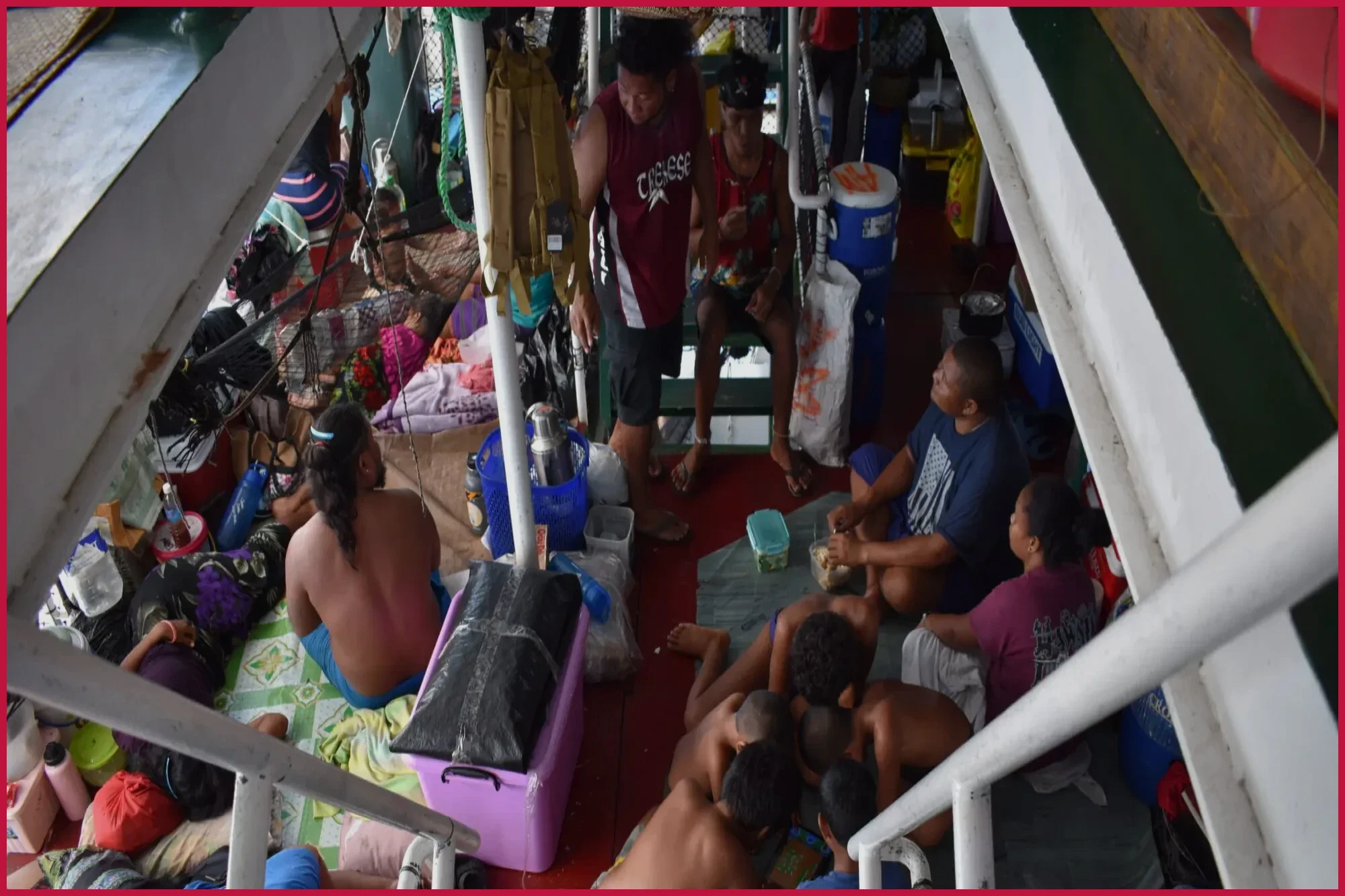
The diplomatic friction stands in stark contrast to China's quiet and highly coordinated local engagement. In May 2025, regional analyst Cleo Paskal traveled along the Yap island chain to Woleai atoll inside the FSM on a China-donated cargo ship. The vessel, which serves as the only regular transport along the chain, carried several hundred Micronesian families alongside five Chinese construction workers. Passengers slept on the deck and shared communal facilities during the days-long journey. Paskal returned from the trip suffering from lice, parasites, and a leg wound that required military-grade salve to heal, highlighting the harsh realities of local travel that U.S. officials rarely experience.
While U.S. defense officials assured their superiors that regional plans were on track, Paskal discovered a major Chinese development underway on Woleai. Shortly after arriving at the atoll, FSM President Wesley Simina arrived for what his official schedule described as a high school graduation. However, Simina also attended a groundbreaking ceremony for a runway reconstruction project on Woleai, located just over 640 kilometers from Guam. The project was being executed by a Chinese state-owned company using rows of Chinese heavy machinery on a cracked airfield originally built by Imperial Japan during World War II. Key figures in the U.S. government were reportedly caught by surprise by the development, indicating that their regional advisors had failed to monitor the situation accurately.
The failure of U.S. diplomats and military negotiators to anticipate these obstacles stems from their neglect of established local networks and long-term American residents who understand the region. For example, Dolly Parton's Tennessee-based charity, the Imagination Library, successfully delivers free books monthly to children on remote atolls like Woleai, including a local boy named Tasur. This complex logistical feat is managed by Neil Mellen and the team at Habele, an educational non-governmental organization founded and funded by former Peace Corps volunteers. Habele also maintains a comprehensive online Wiki containing historical materials on Yap, which U.S. military negotiators apparently overlooked.
Furthermore, U.S. policymakers have stopped regularly consulting Father Francis X. Hezel, an American Jesuit priest who has lived in the region since the early 1960s and has written extensive histories of Micronesia. Although PACOM's Joint Task Force – Micronesia is based in Guam, where Father Hezel currently resides, officials have not sought his counsel. Similarly, Father Rich McAuliff, another long-serving American Jesuit, remains on Yap managing the Micronesia Seminar Library, a physical archive of regional history and culture that could provide vital context to visiting officials.
The U.S. government has also failed to engage with the local American business community. Mark Hartman, a local businessman, drafted a brief for Habele ahead of the U.S.-Pacific Investment Summit detailing the complexities of local financing, land rights, human resources, and regulatory frameworks on Yap, which has a population of only 7,000. These basic economic realities are routinely ignored by visiting negotiators from the State, Defense, and Interior departments.
Another vital resource is Pacific Mission Aviation (PMA), a missionary airline that has provided free medical evacuations and search-and-rescue operations in Yap for more than 50 years. PMA pilots, who are almost all American, are the only operators regularly flying into the Woleai airfield and possess unparalleled knowledge of local runways and reefs. The deep trust PMA holds is reflected in local events; at last year's Ulithi high school graduation, President Simina served as the opening act, while PMA pilot Amos Collins delivered the keynote address. Brock Welge, PMA's director of maintenance, noted in an interview that building relationships in these communities takes a long time, sometimes lifetimes, adding that he was only beginning to feel integrated after working there since 2019.
Despite the massive scale of the planned $2 billion investment, there is no permanent U.S. government presence on Yap. The U.S. Army's Oceania Engagement Team maintains just two personnel on the island, but frequent rotations have prevented them from building meaningful relationships. This minimal presence may give Washington a false sense of security and understanding.
Meanwhile, Beijing is entrenching its influence. The same Chinese state-owned company rebuilding the runway on Woleai is now constructing a bridge and secondary roads on Yap's main island. A Chinese operator also attempted to take over PMA's flight routes connecting Yap and Palau. While Washington has struggled to identify key local entities that provide human security, Beijing has actively targeted them for displacement. Analysts suggest that U.S. policy will only begin to succeed when American officials step out of their offices, travel alongside locals on regional transport ships, and consult the right people on the ground to build genuine, lasting trust.
Then the woods opened up, exposing the cracked runway first built by the Japanese, rows of Chinese heavy machinery, and a stage announcing the imminent groundbreaking.
That may just be a negotiation tactic. But the fact the situation has deteriorated to the point that a threat was deemed necessary is one indication that, in spite of the serious attempt by the Trump administration to work more – and better – with the Pacific Islands, it is not necessarily achieving the desired outcomes.
Related Articles

Meet Md. Rubel Rana
As a core contributor to Worlddincidents.com, Rubel Rana brings a unique perspective to the world of journalism. Whether it’s deep-diving into historical trivia or covering the latest global headlines, Rubel Rana is committed to delivering high-quality, high-impact articles. Their writing blends meticulous research with a compelling voice, helping readers stay informed and curious about the world around them.