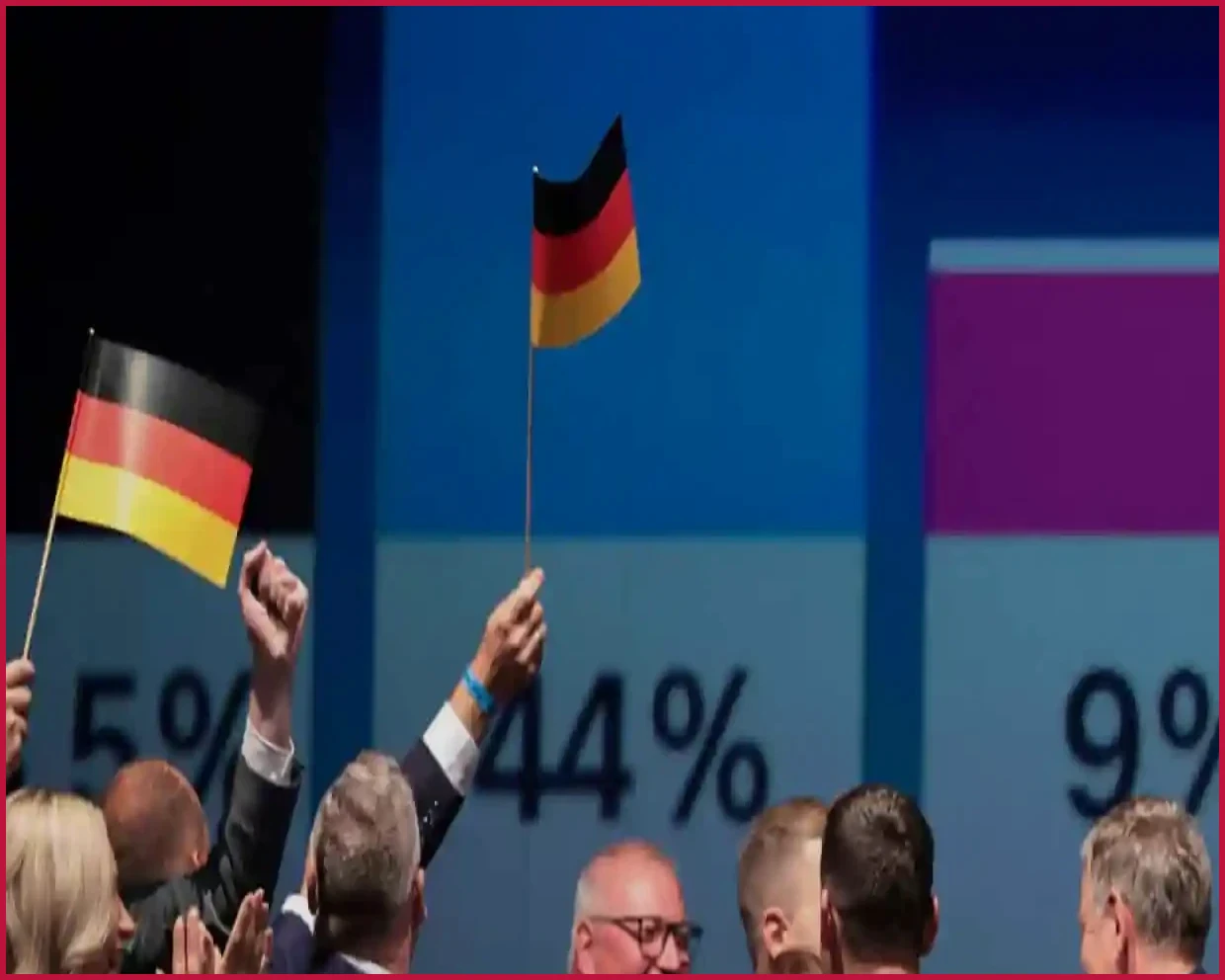
The Alternative for Germany (AfD) party’s massive surge in the Saxony-Anhalt state elections serves as a stark warning that liberal democratic parties across Europe must urgently overhaul their political strategies, according to political scientist Cas Mudde.
Although the AfD narrowly missed securing an outright majority, preventing them from automatically forming the first far-right state government in Germany since the Nazi era, Mudde warns against any complacency. The party still captured a landslide 44% of the vote in the small eastern German state—a remarkable jump from the 20% it received in the 2021 state election. This massive share for a party officially classified as "extreme right" represents a dark day for European democracy.
According to Mudde, a professor of international affairs at the University of Georgia, the trend in Saxony-Anhalt is not an isolated incident but reflects a broader European pattern. Currently, far-right parties average roughly 25% of the vote across Europe. With upcoming elections in Mecklenburg-Vorpommern in two weeks and France next year, Mudde argues that no nation is immune, and no far-right politician is too extreme to achieve political success, as demonstrated in the United States.
Across Europe, the rise of the far right has decimated traditional dominant parties and fragmented party systems. To keep the far right out of power, mainstream democratic parties are increasingly forced into broad, ideologically diverse coalitions. However, Mudde points out that these coalitions are often inefficient and unstable, which ultimately feeds public dissatisfaction and drives even more support toward the far right.
Furthermore, Mudde criticizes the current strategy of mainstream politicians who rely on "lesser evil" arguments to mobilize voters against the far right. He warns that this approach is unsustainable. If democratic parties fail to present inspiring, positive manifestos detailing what they want to achieve, liberal democratic voters will eventually stay home, allowing the far right to win majorities even if they only represent a minority of the population.
To counter this, Mudde calls for realism from politicians, media, and voters. In fragmented political landscapes, no single party will be able to implement most of its preferred policies, as there are currently no majorities for social democratic, Christian democratic, or Green parties and policies. Instead, the primary objective must be to protect and strengthen liberal democratic institutions and values, such as the judiciary and social media regulation, while promoting inclusion and tolerance.
Additionally, mainstream politicians must address the concerns of the majority who do not vote far-right. Rather than focusing solely on crime and immigration, democratic leaders need to champion issues like increasing housing provision, boosting public spending, tackling economic and income inequality, combating the climate crisis, and deepening European integration.
Mudde warns that time is running out, pointing to Hungary and the U.S. as examples of how the democratic struggle becomes significantly harder and less fair once the far right takes power. He emphasizes that neither banning nor normalizing the far right will solve the crisis, nor can democracy be strengthened in isolation or through the politics of fear. Instead, today's key fight is for democracy itself, requiring collective realism, resilience, and restraint from politicians, citizens, and journalists alike.
Cas Mudde is the author of "The Far Right Today" and is the Stanley Wade Shelton UGAF professor of international affairs at the University of Georgia.
Related Articles

Md. Kazi Bijoy is a dedicated tech enthusiast and content creator with a passion for digital innovation. With years of experience in the tech industry, he specializes in breaking down complex topics into easy-to-understand guides. When he isn’t writing, he explores the latest gadgets and researches emerging trends in the digital world.