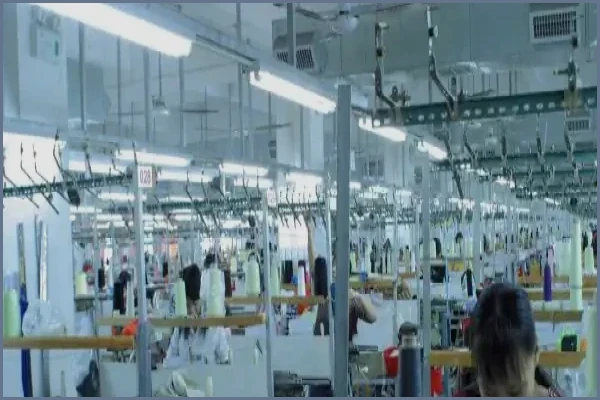
Efforts to eliminate labor rights abuses and promote corporate sustainability through voluntary initiatives began over two decades ago. The United Nations Global Compact was established in 2000 and became the key force behind the 2007 Geneva Declaration on corporate responsibility. The initiative urged multinational corporations to voluntarily collaborate to protect human, labor, and environmental rights across complex international supply chains. Other industry efforts emerged alongside it, such as the World Benchmarking Alliance's corporate human rights benchmark and the Consumer Goods Forum (CGF) Human Rights Coalition. Corporations including Cargill, Google, Airbus, and Coca-Cola published strict policy commitments, while Microsoft declared that "suppliers must comply fully with all employment laws, share its commitment to respect all human rights… and take effective measures to remedy any adverse human rights impacts."
Despite more than 20 years of voluntary guidelines, the practical impact remains uncertain. While a select group of companies improved their monitoring and sourcing practices, widespread abuses persist across manufacturing hubs in the Global South, particularly in Asia. Research conducted by watchdog groups—including the Business and Human Rights Resource Center (BHRRC), Human Rights Watch, Somo, The Breakthrough Institute, and Walk Free—shows that most businesses fail to fulfill their commitments. "With voluntary guidelines, the key issue is the gap between commitment and real life implementation," said Johannes Blankenbach, a researcher with the BHRRC.
Blankenbach noted that accountability remains the primary structural weakness in voluntary frameworks. Organizations like the U.N. and the CGF rarely conducted routine monitoring of member compliance. Instead, non-profits like the BHRRC and investigative journalists exposed failures to meet standards, with public shaming serving as the primary penalty. "In the voluntary system, there is no central or reliable oversight. Some was done by NGOs, but due to limited resources, that was not comprehensive, and there was no way to sanction companies that weren’t complying," Blankenbach explained, adding that "for things like the Global Compact, strongest enforcement would be, maybe, an exclusion of a member." Furthermore, ethical businesses face severe cost disadvantages when competing against rivals in non-regulated markets such as China or Vietnam, where consumer sustainability demands are lower and quarterly investor pressures discourage due diligence investments. "Under current market conditions, it may be a short-term economic or financial disadvantage to invest in due diligence," Blankenbach noted.
To address these shortcomings, major consumer markets in the United States, Canada, and Europe are expanding mandatory regulations. Under pressure from potential U.S. tariff threats, manufacturing nations like Vietnam and India are enacting new forced labor legislation this year. Mandatory due diligence laws place legal obligations on corporations to eliminate coercion, forced labor, and social violations from their supply chains, transferring enforcement powers to governments and subjecting non-compliant companies to financial and legal sanctions while standardizing rules across competitors.
While incoming regulatory shifts will most directly impact countries like China, where state-mandated forced labor of Uyghurs has been well-documented, the entire Asia-Pacific region needs to pay attention or face similar restrictions on foreign market access. The leading example of mandatory regulation is the 2022 U.S. Uyghur Forced Labor Prevention Act (UFLPA), which focuses specifically on China's Xinjiang region. Since at least 2018, Uyghurs and other Turkic Muslim minorities have suffered severe humanitarian abuses, including internment in concentration camps that housed up to 3 million people at their height, as well as the destruction of historic neighborhoods, cemeteries, shrines, and mosques. Elfidar Iltebir, a Uyghur American and president of the Uyghur American Association, stated, "The Uyghur people are facing a humanitarian crisis, and countries around the world must treat it with the urgency it deserves."
For global supply chains, business risks escalated due to irrefutable evidence that mass-scale, state-sanctioned forced labor of Uyghurs is integrated into regional farms and factories, introducing tainted goods into international markets across major sectors such as cotton, tomatoes, and solar panels. Dean Pinkert, a special advisor at the Corporate Accountability Lab, explained that two unique factors distinguish Xinjiang from other forced labor environments: the direct role of the state in coercing Uyghurs and other minorities into forced labor, and an overwhelming surveillance state that renders independent audits or analysis impossible. "The only due diligence you can conduct in this context is to determine if your supply chain is linked to a region where state-imposed forced labor is occurring or to a company that relies upon state-imposed forced labor," Pinkert said. "Companies should simply extricate themselves from these kinds of situations."
Enforced over the past three years, the UFLPA blocked at least $1.3 billion in Xinjiang-linked shipments from entering the U.S. in its first year alone. However, advocates point out that banned items are frequently diverted to third-country markets lacking comparable statutory protections, including Europe, Mexico, Canada, and Southeast Asia. Pinkert noted that rather than severing ties with sanctioned suppliers, some Chinese enterprises simply bifurcate their operations. "Companies may decide we can’t sent certain goods to the U.S. market, so we’ll send those to the third countries, and send goods not connected to labor abuses to the U.S.," Pinkert stated. "They’re not actually cleaning up the supply chain, they are reorganizing it."
A recent report by non-profit China Labor Watch highlighted this issue regarding fast fashion retailer Shein. Qiang Li, founder of China Labor Watch, wrote that "open-source evidence indicates Shein has partnered with industrial parks linked to Xinjiang textile firms, including companies sanctioned under the UFLPA." Li added that "while Shein denies sourcing from Xinjiang for U.S. markets, it has made no such commitment for the U.K. or global markets." Shein has consistently denied all accusations of human rights violations or forced labor ties in Xinjiang.
Addressing trade diversion requires expanding binding legislation into broader global jurisdictions and diverse industry sectors. The European Union is currently considering its Corporate Sustainability Due Diligence Directive (CSDD) to introduce rigorous mandatory compliance requirements, with similar regulatory mechanisms under evaluation in South Korea, Colombia, and other countries. "Over the last couple of years, there is a trend towards mandatory rules, which is positive and necessary," Blankenbach stated. "I hope this trend is here to stay, and continue in other parts of the world."
Related Articles

Md. Kazi Bijoy is a dedicated tech enthusiast and content creator with a passion for digital innovation. With years of experience in the tech industry, he specializes in breaking down complex topics into easy-to-understand guides. When he isn’t writing, he explores the latest gadgets and researches emerging trends in the digital world.