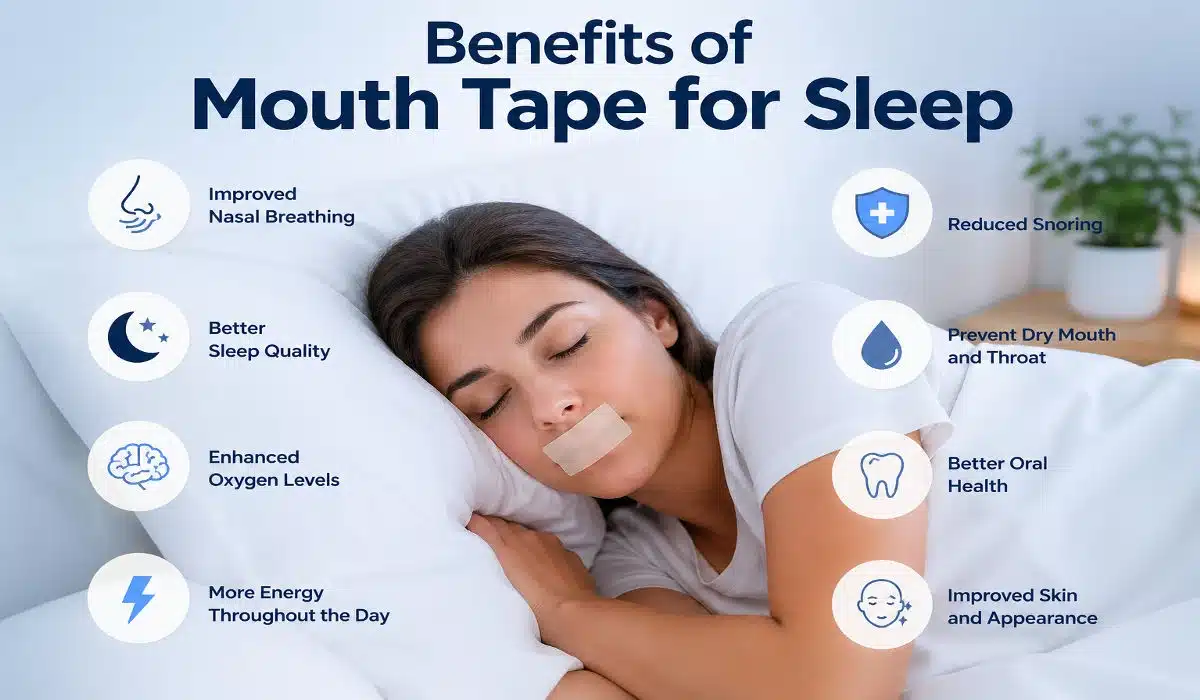
For many, the idea of placing a small piece of adhesive over the lips before bed sounds restrictive. However, as more people prioritize high-performance recovery, the benefits of mouth tape for sleep have become undeniable. By forcing the body to breathe through the nose rather than the mouth, sleepers can unlock a range of physiological advantages that were previously ignored by traditional sleep science.
Promoting Obligate Nasal Breathing
The primary benefits of mouth tape for sleep stem from the transition to nasal breathing. The nose acts as a sophisticated filtration and humidification system. Unlike mouth breathing, which introduces cold, dry air directly to the lungs, nasal breathing warms and filters the air, reducing irritation in the respiratory tract. In 2026, sleep experts emphasize that nasal breathing is the “anatomical default” we should all strive for.
Significant Reduction in Snoring
One of the most immediate benefits of mouth tape for sleep is the reduction—or total elimination—of snoring. Snoring often occurs when the mouth falls open, causing the soft tissues in the throat to vibrate. By keeping the lips sealed, mouth tape ensures the airway remains stable, leading to a quieter night for both the sleeper and their partner.
Boosting Nitric Oxide Production
Nasal breathing is the only way the body can efficiently produce nitric oxide (NO). One of the hidden benefits of mouth tape for sleep is that NO acts as a vasodilator, helping to lower blood pressure and improve oxygen transport throughout the body. When you breathe through your nose at night, you are essentially providing your cells with a “performance boost” that mouth breathing simply cannot offer.
Preventing “Mouth Dryness” and Dental Issues
Waking up with a “cotton mouth” is a sign of nighttime mouth breathing. One of the long-term benefits of mouth tape for sleep is the preservation of oral health. Mouth breathing dries out protective saliva, leading to an acidic environment where bacteria thrive, causing cavities and bad breath. Using mouth tape keeps the oral microbiome balanced and hydrated.
Improving Deep Sleep and REM Cycles
In 2026, wearable sleep trackers (like the Oura Ring Gen 5 or Apple Watch Series 11) have made it easy to see the benefits of mouth tape for sleep on data. Users frequently report an increase in Deep Sleep and REM percentages after starting the practice. Nasal breathing triggers the parasympathetic nervous system (the “rest and digest” mode), allowing the brain to enter deeper restorative states more quickly.
Addressing Mild Sleep Apnea and UARS
While severe sleep apnea requires medical intervention like a CPAP machine, many people with Upper Airway Resistance Syndrome (UARS) find relief through the benefits of mouth tape for sleep. By preventing the tongue from falling back into the throat, mouth tape helps maintain a patent airway, reducing the number of micro-awakenings throughout the night.
Enhanced Facial Structure and Jawline Health
Though more common in pediatric discussions, “mouth breathing face” is a concern for adults too. Consistent nasal breathing, facilitated by the benefits of mouth tape for sleep, encourages proper tongue posture (resting against the roof of the mouth). Over time, this can help maintain the integrity of the jawline and prevent the sagging of facial muscles associated with chronic mouth breathing.
Read More: The National Guard Use in Domestic Policy 2026
Enhancing CO2 Tolerance for Calmer Sleep
One of the sophisticated benefits of mouth tape for sleep is its ability to help regulate carbon dioxide (CO_2) levels in the blood. Chronic mouth breathing often leads to “over-breathing,” which flushes out too much CO_2. By using mouth tape to enforce nasal breathing, you maintain a healthy balance of CO_2, which is necessary for oxygen to be released from the blood into your tissues (known as the Bohr Effect). This leads to a calmer nervous system and reduces the “tossing and turning” associated with metabolic restlessness.
Accelerating Athletic Recovery
In 2026, elite athletes have widely adopted mouth taping as a recovery tool. The benefits of mouth tape for sleep in a sports context revolve around improved oxygenation. By increasing nitric oxide and optimizing breathing efficiency during the night, athletes experience faster muscle repair and lower morning resting heart rates. Many professionals now view “sleep taping” as just as important as their nutrition or physical therapy sessions.
Strengthening the Diaphragm and Core
Nasal breathing forces the body to use the diaphragm more effectively than mouth breathing. One of the anatomical benefits of mouth tape for sleep is the passive “workout” it gives your primary breathing muscle. Over time, this strengthens the diaphragm and improves core stability, as the diaphragm plays a double role in both respiration and spinal support. Waking up with better posture and a more “engaged” core is a common long-term result.
Cognitive Clarity and Focus
If you struggle with morning brain fog, the benefits of mouth tape for sleep may be the solution. Research in 2026 suggests that the increased oxygen delivery to the prefrontal cortex during nasal-breathing sleep enhances executive function the following day. By ensuring your brain stays properly oxygenated for 7–9 hours, you improve your ability to focus, memorize, and manage stress in high-pressure environments.
Natural Defense Against Respiratory Infections
Your nose is your first line of defense against pathogens. The benefits of mouth tape for sleep include utilizing the nose’s natural cilia (tiny hairs) and mucus membranes to trap viruses and bacteria before they reach your lungs. Furthermore, the nitric oxide produced in the nasal passages has potent antimicrobial properties, effectively “sanitizing” the air you breathe while you sleep.
Supporting Healthy Facial Development in Young Adults
While primarily discussed for children, even young adults in their “growth phase” can see aesthetic benefits of mouth tape for sleep. Chronic mouth breathing can lead to a receding chin and a narrow upper jaw—often called “mouth breathing face.” By keeping the mouth closed and the tongue positioned against the roof of the mouth at night, you support the natural structural harmony of the jawline and mid-face, potentially leading to a more defined profile.
FAQ
Q1: Is mouth taping safe?
Ans: For most healthy adults, yes. However, ensure you use a tape specifically designed for the skin (like Hostage Tape or Myotape) and avoid it if you have a severe cold, nasal congestion, or have consumed alcohol.
Q2: How long does it take to see the benefits of mouth tape for sleep?
Ans: Many users report feeling more “refreshed” after the very first night. However, it usually takes 7–14 days for the body to fully adapt to consistent nasal breathing at night.
Q3: Can I use regular scotch tape?
Ans: No. It is vital to use medical-grade, hypoallergenic tape to avoid skin irritation or accidental ingestion.

Mr. Udoy is a professional Web Developer and Blogger with 7+ years of experience in the tech world. He specializes in web architecture and digital storytelling. As the driving force behind worldincidents.com, he focuses on delivering high-quality, well-researched content to a global audience.