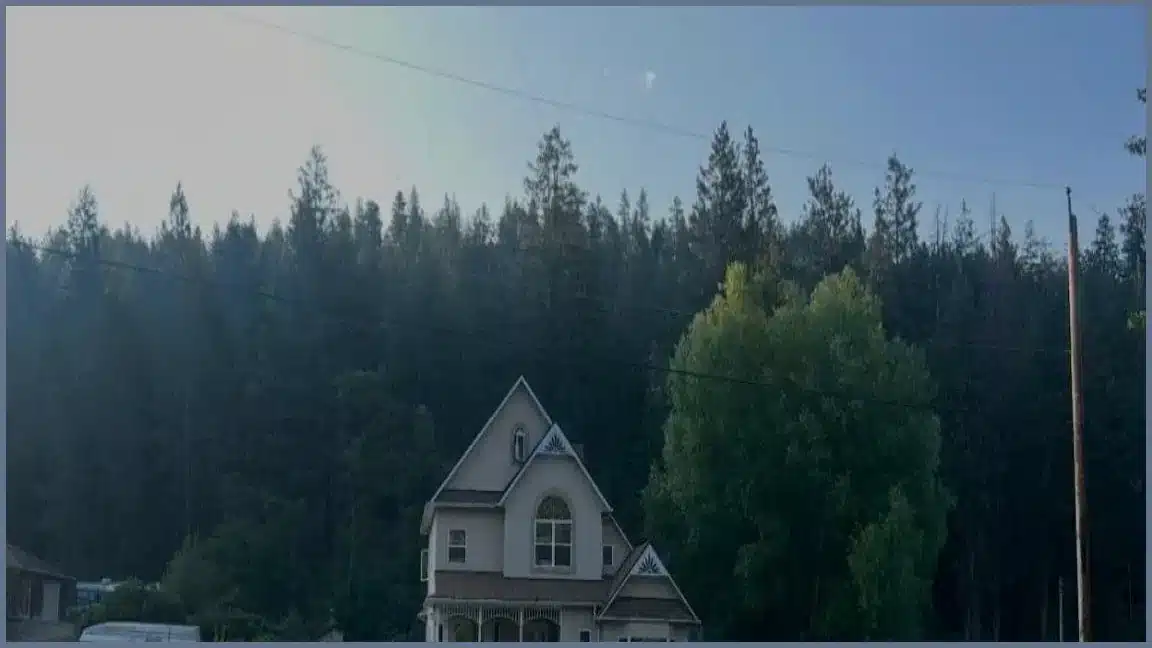
An out-of-control wildfire raging in British Columbia has forced thousands of residents to flee their homes, leaving behind scenes of absolute devastation. The Bald Range wildfire, which erupted on Friday, rapidly expanded within hours to cover 53 square miles (136 square kilometers) near Okanagan Lake. As of Monday, emergency officials are still working to determine the full extent of the property damage, while more than 12,000 people remain under mandatory evacuation orders.
The fast-moving blaze has already claimed a life. Police confirmed on Sunday that an 80-year-old woman died while attempting to escape the wildfire. With high temperatures, strong winds, and dry lightning in the forecast, authorities warned on Monday that the threat remains high and new fires could easily ignite.
For long-time residents of the picturesque Okanagan region, which is famous for its world-renowned vineyards, the scale of this disaster is unprecedented. Earl Kurz and his wife have lived in Peachland, a town overlooking the lake, for three decades. While they have grown accustomed to wildfire threats over the last ten years, this is the first time they have been forced to evacuate. Surveying the aftermath, Kurz described the scene as total incinerated destruction, noting that hot spots have left nothing but barren ground covered in a foot of ash.
Just south of Peachland, in the town of Summerland, 18-year-old Keegan Radomski experienced a similarly terrifying escape. Her family home was built by her grandmother in 1996. Although they were familiar with evacuation alerts, the sheer speed of the Bald Range fire caught them completely off guard. While eating dinner on Friday evening, the family spotted smoke in the distance. Less than four hours later, Radomski was rushing to evacuate her family as flames began consuming a hill on their property. She managed to escape with her mother's ashes just before the fire breached the property, but she remains uncertain if the house survived.
Summerland Mayor Doug Holmes acknowledged on Monday that homes have been lost, though the exact number remains unconfirmed. He cautioned the community to prepare for difficult news, stating that almost everyone in the area is likely to know someone who has lost their home.
The sudden evacuations also forced many local farmers to leave their animals behind. Kaz Nowlin, a volunteer who has been rescuing stranded animals in the Okanagan area since fires began last month, has been working with a group of volunteers to bring livestock to safety. The team has already rescued dozens of animals, including 57 horses. Nowlin is currently seeking a permit to enter Summerland to rescue an additional 14 alpacas and eight horses still trapped in the active fire zone, emphasizing that the animals do not deserve what is happening to them.
British Columbia Premier David Eby declared a provincial state of emergency over the weekend, urging residents to strictly obey evacuation orders as the fires continue to advance with extreme speed. The Bald Range fire is just one of more than 100 wildfires active across British Columbia, with 70 of those igniting within the last week alone. The region has been suffering from severe drought; by July, Okanagan Lake had dropped to its lowest level since 1992.
The current crisis follows another major blaze in the area, the Bradley Creek fire, which is believed to have destroyed more than 200 homes before firefighting crews managed to hold it. Drought-fueled wildfires are also wreaking havoc south of the border in Washington state, where over 65,000 people have been displaced. Globally, devastating summer fires have also hit Europe, with France experiencing its worst blazes in two decades and Madrid officials reporting the worst fires in their region's history.
While wildfires are a natural part of Canada's boreal forest ecosystem, experts point out that climate change has driven hotter, drier weather, making these events far more frequent and intense. Last year, Canada recorded its most destructive wildfire season in history in terms of total burned area.
"It's total incinerated destruction," Kurz said. "The hot spots are just barren areas of nothing except 12 inches of ash."
'Not afraid to stay': The Canadians who want to change how wildfires are fought
Related Articles

Mr. Udoy is a professional Web Developer and Blogger with 7+ years of experience in the tech world. He specializes in web architecture and digital storytelling. As the driving force behind worldincidents.com, he focuses on delivering high-quality, well-researched content to a global audience.