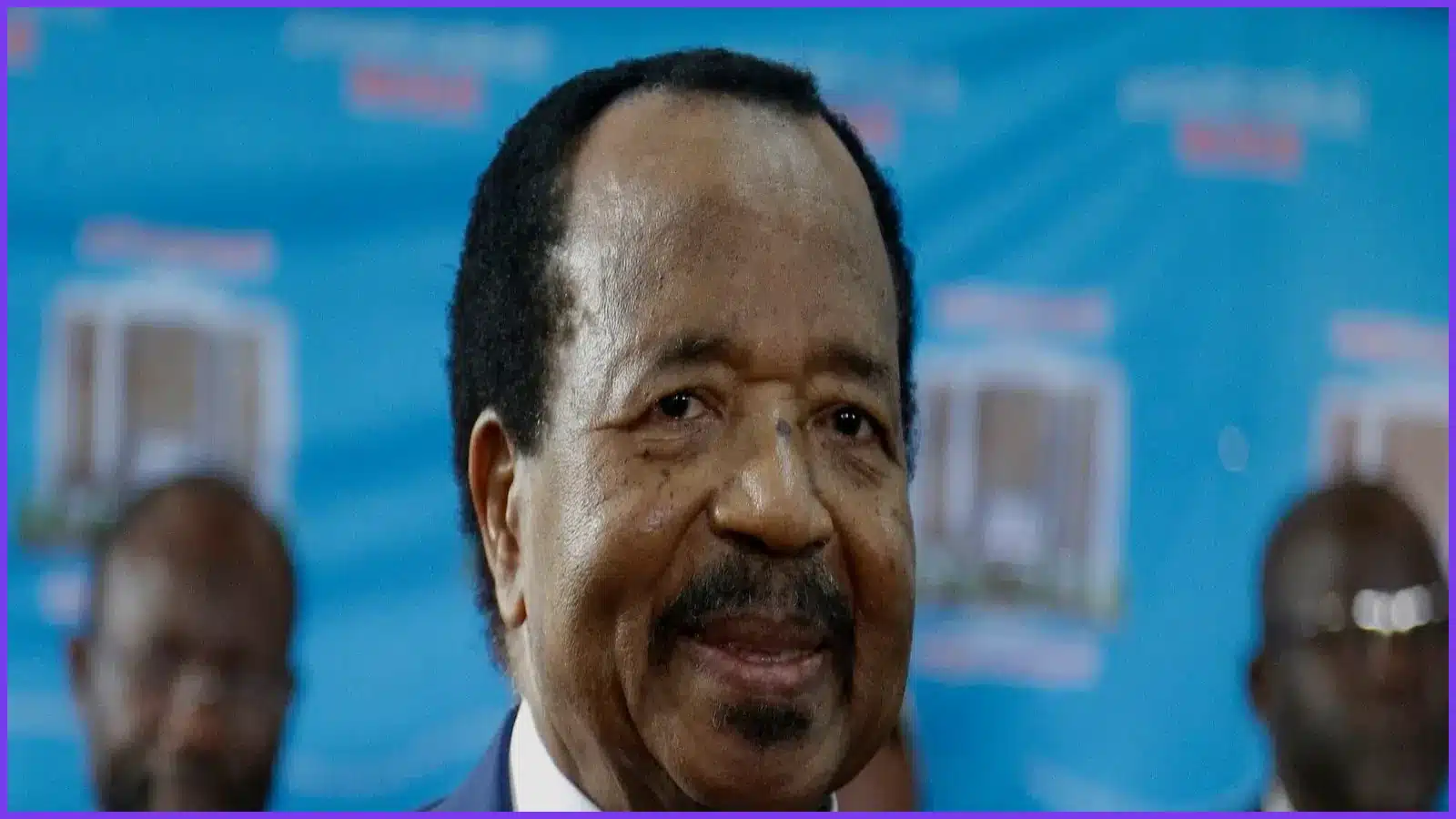
Cameroon President Paul Biya reached a significant milestone on Thursday, marking two consecutive months since he was last inside the borders of his country. This extended absence has ignited widespread concerns regarding the 93-year-old leader's health and sparked intense criticism about the potential emergence of a power vacuum in the Central African nation.
Biya, who has served as president since 1982, began his eighth term in office following a November election that was widely disputed. He departed Cameroon on June 7 for what his office officially characterized as a brief private stay in Europe. This trip has since become one of his longest overseas absences, a pattern that has long fueled speculation regarding his physical well-being. The president frequently spends significant periods in Switzerland and France, often delegating governance responsibilities to key party officials and family members during these times.
While Cameroon’s constitution does not explicitly prohibit a president from remaining abroad for months at a time, the lack of a vice president—a position over which Biya maintains full control—has led opposition figures to describe the current state of governance as operating on autopilot. Issa Tchiroma Bakary, the opposition leader who placed second in the November presidential race and was once an ally of Biya, stated on Thursday that there is a pervasive perception among citizens that all is not well with the president. Tchiroma, speaking from exile in The Gambia, argued that the prolonged stay in Switzerland only serves to aggravate questions about Biya’s legitimacy and his attempts to retain power.
The political climate in the country remains strained, with Biya’s nearly half-century tenure marked by mixed results. The nation faces ongoing challenges, including armed insurgencies by Boko Haram in the north and separatists in the west, alongside a stagnant economy that has left much of the youth population disillusioned. Wilson Tamfuh, a professor of public and international law at the University of Dschang, described the current state of Cameroon as being like a human body that is seriously sick. Tamfuh noted that even if Biya appears strong at his age, his health challenges are clearly affecting his leadership, adding that cabinet reshuffles over the last 15 years have merely recycled the same individuals across ministries.
Tensions between the aging leadership and the country’s predominantly young population—nearly 70% of the 30 million citizens are under 35—were further highlighted by protests following the 2025 reelection, which resulted in at least four deaths. In a recent move on Monday, Biya reshuffled the top military leadership, replacing commanders in four of the country’s five joint military regions and promoting several senior officers. No official explanation was provided for the changes, although it was noted that one commander had died and another had retired.
Biya originally assumed power following the 1982 resignation of Ahmadou Ahidjo, the nation’s first president. Following a 2008 constitutional amendment that removed term limits, Biya has remained in office longer than the lifespan of most of his citizens. If he completes his current term, he will be nearly 100 years old.
Related Articles

Meet Md. Rubel Rana
As a core contributor to Worlddincidents.com, Rubel Rana brings a unique perspective to the world of journalism. Whether it’s deep-diving into historical trivia or covering the latest global headlines, Rubel Rana is committed to delivering high-quality, high-impact articles. Their writing blends meticulous research with a compelling voice, helping readers stay informed and curious about the world around them.