For Donald Trump, Brazil’s presidential election was intended to represent the crest of the “orange wave”—a three-year surge of right-wing triumphs that has reshaped Latin American politics in the US president’s tangerine-hued image. The far-right candidate, Flávio Bolsonaro, was expected to claim the presidency on Sunday, bringing the region’s largest democracy and economy into Trump’s orbit. This expectation followed a string of right-wing victories in Argentina, Bolivia, Chile, Colombia, Costa Rica, Honduras, Ecuador, and Peru, as well as the capture of Venezuela’s government following an invasion in January.
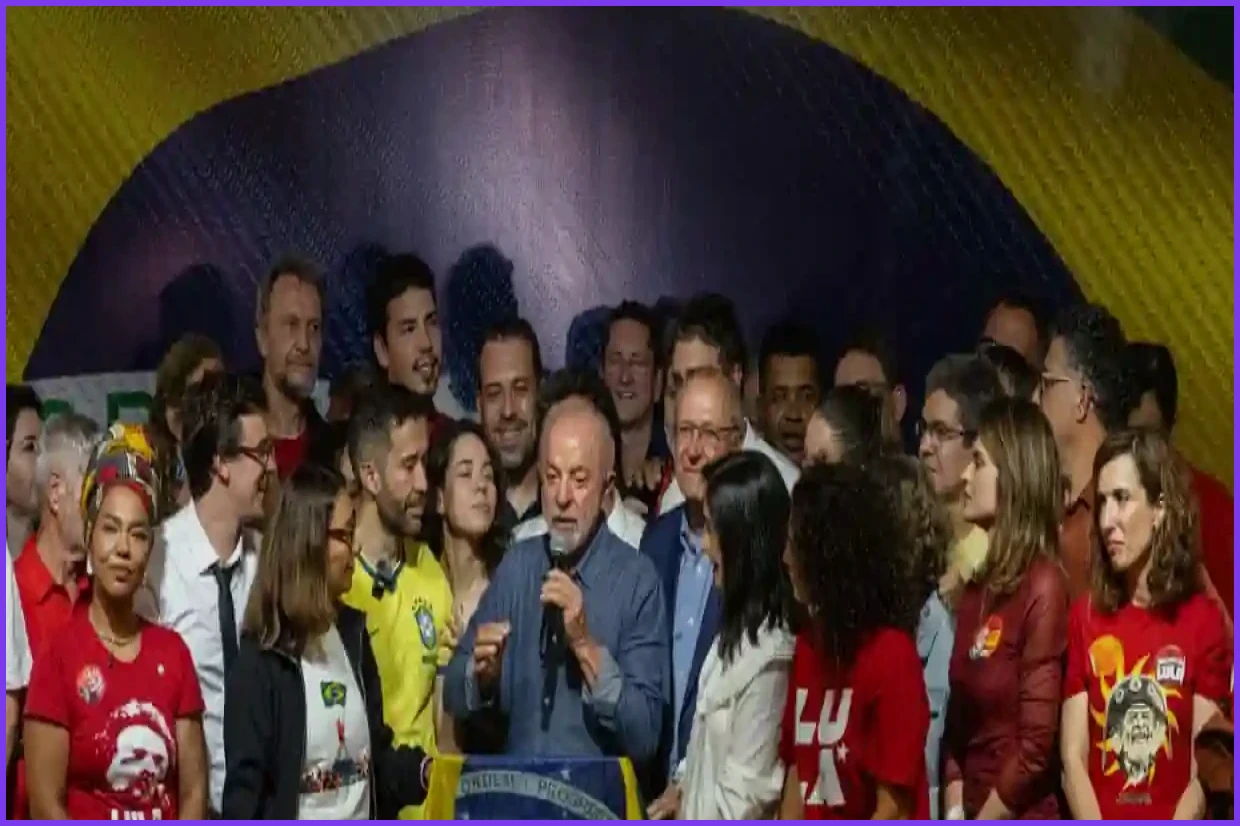
However, Brazilian voters rejected the pro-Trump populist, turning out in massive numbers to return the left-wing incumbent, Luiz Inácio Lula da Silva, to power. On Tuesday, as Lula celebrated his 81st birthday to the sound of samba in Brasília, Bolsonaro fled to Miami on a private jet. Benjamin Gedan, director of the Stimson Center’s Latin America programme and a former White House South America adviser, described the defeat as a significant blow to Trump’s regional strategy. Gedan noted that Trump had been perceived as steamrolling through South America, and this defeat flies in the face of the image of a successful foreign policy.
The US setback was celebrated in China, whose growing influence in Latin America Trump has attempted to combat with his “Donroe doctrine” of regional domination. Hu Xijin, a prominent Beijing propagandist, enthused on X that Lula had effectively thwarted Trump’s strategy for the region, noting that Trump failed to bring Brazil under his sway. Trump responded to his ally’s failure by halfheartedly querying the election, which Lula won by 4.3 million votes. “I think the election was really strange… It’s so terrible to see,” he told reporters, adding, “But I wasn’t involved,” despite a months-long campaign of economic and diplomatic pressure intended to boost Bolsonaro.
Michael Paarlberg, a former Latin America adviser to Bernie Sanders, suggested that Trump’s tendency to distance himself from political losers would likely prevent him from following the advice of figures like Steve Bannon, who urged the US to sever relations with Brazil. Trump himself expressed a fondness for Lula, stating, “I like Lula, I get along with him very well.” Paarlberg noted that while Trump favors ideological allies, he will drop them if the “stink of loserdom” begins to waft over them.
Following his defeat, Bolsonaro fled to Florida after briefly declaring himself Brazil’s “true president-elect.” Brazilian social networks mocked the politician, who had vowed to stay and lead the opposition. One joke featured a parody of his movement’s slogan, “God, Homeland, and Family,” reading: “Goodbye, Homeland and Family.” Lula, at his birthday party, remarked that the Bolsonaro family’s first homeland is “licking the boots of the US.”
Lula’s chief foreign policy adviser, Celso Amorim, claimed the movement founded by the candidate’s father, former president Jair Bolsonaro, was dead in the water, despite the 59.8 million votes secured. Amorim predicted a more reasonable conservative movement would replace the “extremist” one, calling the loss “the last gasp of a radical, irrational, lying right wing.” While Amorim indicated Brazil would not join Trump’s “Shield of the Americas” counter-cartel coalition, he signaled that Lula would pursue pragmatic ties with Washington, seeking balanced relations without being needlessly hostile.
“I think Bolsonarismo was defeated once and for all,” Amorim said, recalling how the movement had lost two successive elections to Lula, in 2022 and 2026.
Related Articles

Meet Md. Rubel Rana
As a core contributor to Worlddincidents.com, Rubel Rana brings a unique perspective to the world of journalism. Whether it’s deep-diving into historical trivia or covering the latest global headlines, Rubel Rana is committed to delivering high-quality, high-impact articles. Their writing blends meticulous research with a compelling voice, helping readers stay informed and curious about the world around them.