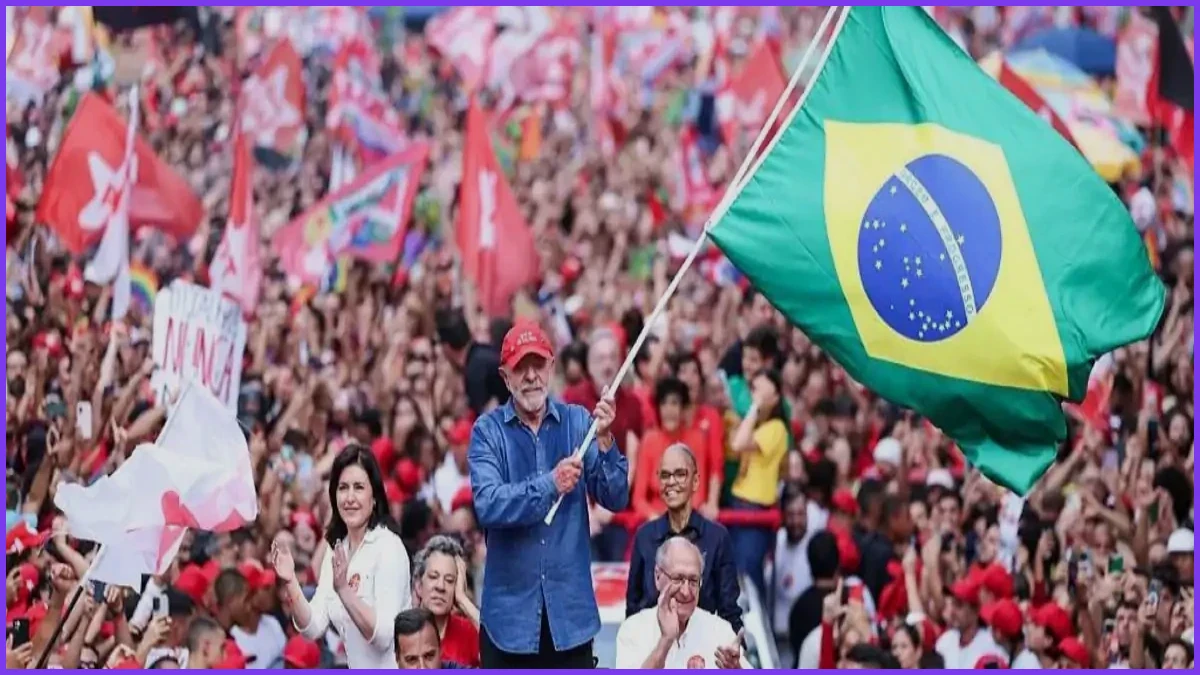
Following his presidential election victory, left-wing Brazilian President Luiz Inácio Lula da Silva sent a direct message to Washington, declaring in his victory speech that "Brazil will not accept being anyone's backyard." Lula turned his defiance of alleged United States interference in domestic affairs into a powerful campaign tool, channeling a patriotic message that aligned with his background as a former union leader accustomed to confronting powerful figures.
The electoral outcome has presented a complex dynamic for US President Donald Trump, who offered a contradictory reaction to the result. While Trump remarked, "I like Lula, we get along well," and stated, "I didn't take sides," he also described the election as "terrible" and "rigged." Although Trump avoided an explicit endorsement of Lula’s election opponent, Flávio Bolsonaro, who refused to accept the outcome, Trump had maintained a close alliance with Flávio's father, former Brazilian President Jair Bolsonaro.
Relations between the two leaders were significantly strained a year prior. Speaking at his residence at the time, Lula stated that he had "no relationship" with Trump, had never spoken to him, and had no intention of reaching out. The friction followed punitive trade tariffs imposed on Brazil by the Trump administration, largely in response to Jair Bolsonaro's trial over an alleged coup attempt, which Trump characterized as a "witch-hunt."
In response to the economic measures, Lula launched a public pushback rather than taking a cautious approach. He delivered speeches defending Brazilian sovereignty, criticized American interference in the judicial process, and frequently wore a blue cap displaying the slogan "Brazil belongs to Brazilians." Lula accused the Bolsonaro family, who had lobbied for the tariffs, of being unpatriotic. His position resonated even among members of Brazil's agricultural sector, who typically supported Bolsonaro but depended heavily on American trade. The US subsequently reduced the tariffs, though rates have since fluctuated upward again. Tensions later appeared to ease when the two leaders spoke at the United Nations and held an Oval Office meeting, after which Trump called the discussions "very good" and Lula expressed satisfaction.
Despite the temporary thaw, Lula's victory disrupts Washington's broader geopolitical plans for the region. Latin America had recently shifted politically to the right, with Ecuador, Chile, Colombia, Argentina, and Peru electing leaders closely aligned with the Trump administration. Trump sought to leverage these regional allies to re-establish American dominance in the Western Hemisphere under a strategy referred to as the "Donroe Doctrine."
According to Christopher Sabatini, a senior fellow for Latin America at Chatham House, Trump had viewed Brazil as the "10th and biggest prize" following Flávio Bolsonaro's strong performance in the election's first round. As Latin America's largest economy, Brazil was envisioned by Washington as a key partner. The younger Bolsonaro was expected to align Brazil with Trump's "Shield of Americas" coalition against drug trafficking. Furthermore, the US sought preferential access to Brazil's mineral wealth, as the country possesses the world's second-largest reserves of rare earth minerals after China.
However, bilateral friction remains high. Earlier this year, Brazilian authorities accused the US of attempting to undermine trust in Brazil's electoral system and rejected visa applications for two visiting State Department officials. Washington dismissed the allegations as "baseless" and retaliated by revoking the visa of Brazil's ambassador. Analysts warn that Trump's continued claims of a "rigged" election could spark further diplomatic fallout.
Lula has also voiced strong opposition to American military maneuvers in Latin America, criticizing operations such as the seizure of Nicolás Maduro in Venezuela and strikes targeting suspected drug-smuggling vessels. He forcefully denounced Washington's decision to classify Brazil's two largest criminal gangs as terrorist organizations following lobbying efforts by Flávio Bolsonaro, warning that the move threatened Brazilian sovereignty. The issue carries historical weight for the political left in Latin America, where memories persist of 20th-century authoritarian regimes supported by the CIA during the Cold War.
Electoral and economic disputes have added to the strained relationship. During the campaign, Lula's team accused Meta of favoring Flávio Bolsonaro. Meta denied political bias but acknowledged moderation technical errors that had improperly removed posts or restricted their reach. In response, Lula's campaign utilized a network of 10 million WhatsApp group members to distribute campaign material directly. Separately, the Trump administration expressed frustration over Pix, Brazil's instant digital payment system. While Pix has provided a major boost to the domestic economy, US officials view it as competing directly against American financial giants Visa and Mastercard.
The election underscored deep political divisions within Brazil over foreign alignment. Rallies for Flávio Bolsonaro featured supporters waving American flags and displaying an inflatable reading "Trump Nuke Brazil," while Lula's campaign countered by accusing his rival of prioritizing American interests above national sovereignty. With the US remaining Brazil's second-largest trading partner behind China, the future of bilateral relations will hinge on the degree of US involvement in Brazilian affairs and Lula's ongoing insistence on national independence.
Related Articles

Meet Md. Rubel Rana
As a core contributor to Worlddincidents.com, Rubel Rana brings a unique perspective to the world of journalism. Whether it’s deep-diving into historical trivia or covering the latest global headlines, Rubel Rana is committed to delivering high-quality, high-impact articles. Their writing blends meticulous research with a compelling voice, helping readers stay informed and curious about the world around them.