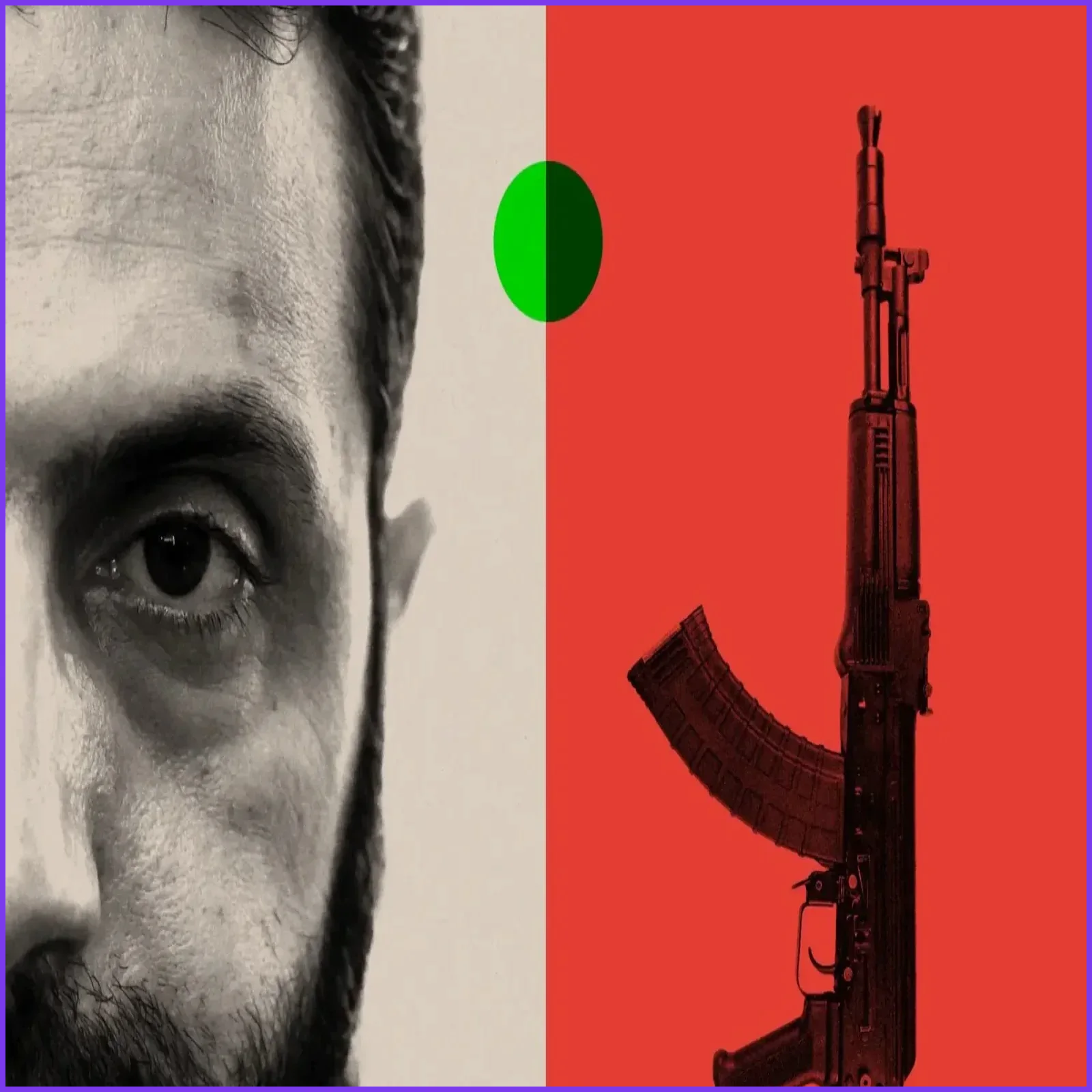
Twenty-five years after al-Qaeda executed the September 11 attacks in the United States, and twelve years after the Islamic State group declared its caliphate across Iraq and Syria, the landscape of global jihadism has undergone a fundamental transformation. Rather than prioritizing direct attacks against Western nations or fighting exclusively for an overarching global caliphate, major jihadist organizations are increasingly focusing on securing and consolidating power closer to home, showing a growing willingness to adopt pragmatic tactics along the way.
This tactical evolution has ignited an intense ideological rift within the movement. While hardline factions reject any deviation from strict dogma as outright apostasy, pragmatic elements view alliances with local power brokers and former adversaries as the most viable path to governing. This shift raises a central question among security analysts and internal ideologues: whether this pragmatic approach reflects genuine structural reform or merely a calculated strategy to establish states governed by strict Sharia law.
Neither al-Qaeda nor Islamic State has achieved its ultimate goal of capturing and permanently ruling sovereign states under their uncompromising interpretations of Islam. Both organizations have endured catastrophic military defeats, lost key leaders, and faced relentless international counterterrorism pressure. Islamic State lost its final territorial stronghold in 2019. However, the movement itself has not dissolved; instead, Africa has emerged as the primary operational theater for global jihadism.
In Africa, powerful al-Qaeda affiliates including Jama'at Nusrat al-Islam wal-Muslimin (JNIM) in the Sahel region—spanning Mali, Burkina Faso, and Niger—and al-Shabab in Somalia are conducting sustained insurgencies. Simultaneously, rival Islamic State branches maintain active operations across Nigeria, the Democratic Republic of Congo, Mozambique, the Sahel, and Somalia.
A significant catalyst for this strategic shift is the political trajectory of Syria's president, Ahmed al-Sharaa. Formerly known by his militant moniker Abu Mohammed al-Jolani, the ex-commander of Islamic State and al-Qaeda led the Nusra Front and subsequently Hayat Tahrir al-Sham (HTS). Sharaa progressively severed ties with both global terror networks, renounced calls for international jihad, and concentrated on building a localized power base in Syria's northwestern Idlib province.
Sharaa demonstrated a willingness to cooperate with non-Islamist factions and interact with foreign governments. As HTS forces advanced toward Damascus, its leadership actively reassured international observers, even initiating communication with Russia—a major backer of former Syrian President Bashar al-Assad—to mitigate fears of an extremist takeover. Supported by shifting geopolitical conditions, including diminished Russian and Iranian influence in the region, Sharaa assumed power in Syria in December 2024 and was subsequently embraced by Western political figures.
During a visit to the White House in November 2025, U.S. President Donald Trump welcomed Sharaa, playfully spraying him with his branded cologne, asking about his family life, and publicly praising him as a very strong leader. Sharaa's rise has stirred mixed reactions across the jihadist spectrum. While some view his success as a blueprint for gaining international legitimacy, Islamic State declared jihad against Syria's new government, labeling Sharaa and his cabinet as apostates and targeting government forces. Other hardline clerics have issued sharp condemnations, sparking a bitter online debate since 2025 accompanied by competing publications defending opposing theological positions.
For uncompromising hardliners, pragmatic concessions—such as refraining from immediate Sharia enforcement, recognizing constitutional frameworks, participating in elections, or engaging with non-Islamist and foreign governments—represent a betrayal of foundational beliefs. Conversely, pragmatists draw inspiration from the Taliban's return to power in Afghanistan in 2021. The Taliban demonstrated that a movement could secure total state control after decades of war by cultivating local alliances, conducting international diplomacy, exercising strategic patience, and eventually capturing Kabul in a rapid offensive.
In Somalia, al-Shabab has systematically emphasized governance and public outreach alongside its military efforts. Operating across vast rural areas of central and southern Somalia, the group showcased its humanitarian wing throughout 2026. In August, al-Shabab broadcast images and radio reports showing its charity distributing essential food supplies—including rice, pasta, sugar, cooking oil, and beans—to hundreds of impoverished families, accompanied by media featuring local residents praising the aid. In October, al-Shabab concluded a truce with the Ma'awisley, a powerful tribal militia that had previously led front-line counterinsurgency efforts alongside government forces. The tribe's withdrawal from combat operations dealt a major setback to the Somali government's military campaign.
Somalia specialist Abdullahi Guji noted that the withdrawal of African Union peacekeeping forces, driven by budget shortfalls and the scheduled conclusion of their mandate in December, coincides with internal political friction and regional rebellions in Somalia. These combined factors create severe security vulnerabilities that al-Shabab is positioned to exploit as it seeks to expand its control.
In the Sahel, JNIM has displayed similar adaptability. In late April, the al-Qaeda branch partnered with nationalist Tuareg separatists—groups it had previously battled—to launch a coordinated offensive against Mali's military junta, publicly referring to the Tuareg fighters as brothers. JNIM's media operations have also transformed; since late 2024, its promotional content has largely removed traditional al-Qaeda branding and slogans. Instead of promoting global pan-Islamic causes, JNIM focuses on local grievances, presenting itself as a defender of citizens against state corruption and abuses by Malian forces and their Russian military allies.
In an April address directed at all sincere patriots, JNIM proposed building a new Mali grounded in security, justice, prosperity, and Islamic governance. The group even raised the possibility of maintaining balanced relations with Russia, mirroring the diplomatic overtures HTS extended to Moscow during its advance on Damascus. Security analyst Aman Bezreh observed that while JNIM exhibits pragmatic traits similar to HTS, its formal rebranding moves more slowly because the group is simultaneously focused on territorial expansion and recruiting from varied populations.
Jihadism expert Wassim Nasr highlighted an ongoing internal debate within JNIM's command structure. One faction advocates for the Taliban model of seizing power through direct force with minimal political compromise, while a dominant rival faction favors the HTS model of building broad coalitions to accelerate political gains. Nasr assessed that JNIM will likely combine aspects of both approaches, predicting that an eventual formal separation from al-Qaeda is inevitable as the group's political strategy evolves.
This pragmatic doctrine is not entirely unprecedented. Following the 2011 Arab Spring uprisings, al-Qaeda affiliates in Yemen, Libya, and Tunisia adopted the label Ansar al-Sharia to build local support without drawing immediate international focus to the al-Qaeda brand. Similarly, when jihadists and Tuareg rebels seized northern Mali in 2012, al-Qaeda leadership explicitly cautioned fighters against precipitously enforcing harsh religious sanctions, advising them instead to prioritize local alliances and exercise strategic patience.
Current jihadist strategists also perceive favorable international conditions for expansion. With Western powers increasingly preoccupied by the conflict in Ukraine, escalating U.S.-Iran tension in the Middle East, and strategic competition with China and Russia, counterterrorism has fallen from the top of the Western security agenda. Soufan Center executive director Colin Clarke pointed out that several jihadist groups have recognized that avoiding direct military confrontation with the United States allows them to preserve their capabilities and live to fight another day, leveraging strategic patience while global attention remains divided.
"May God reward them," said a local woman in one of al-Shabab's videos.
Sharaa, centre, in 2016, was once a jihadist leader wanted by the FBI
Related Articles

Md. Kazi Bijoy is a dedicated tech enthusiast and content creator with a passion for digital innovation. With years of experience in the tech industry, he specializes in breaking down complex topics into easy-to-understand guides. When he isn’t writing, he explores the latest gadgets and researches emerging trends in the digital world.