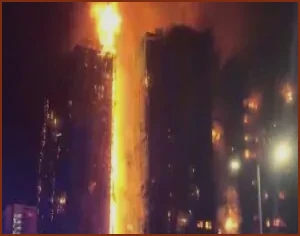
On November 26, 2025, a devastating fire engulfed the Wang Fuk Court apartment complex in Tai Po, Hong Kong, leaving 168 people dead. Eleven months after the tragedy, Hong Kong Chief Executive John Lee announced the resignation of Housing Secretary Winnie Ho over the disaster. However, the decision has drawn sharp criticism from bereaved family members who question why political consequences have been confined to a single minister.
Yip Ka-kui, who lost his wife in the disaster, criticized the administration's stance as political accountability calculated with "nanometer precision." Challenging the scope of the decision, Yip stated that all secretaries for the departments named in connection with the failure should step down from their posts.
An independent committee appointed to investigate the tragedy delivered unequivocal findings regarding systemic government neglect. According to the report, residents had previously submitted "numerous complaints and enquiries about fire safety concerns at Wang Fuk Court." However, government departments ignored warnings, failed to exercise "real supervision," and allowed hazardous construction practices—including "the extensive use of foam boards to cover all windows"—to persist unchecked. The report highlighted serious regulatory failures across four agencies: the Housing Bureau's Independent Checking Unit (ICU), the Buildings Department, the Fire Services Department, and the Labor Department.
In explaining Ho's departure, Lee pointed to the Housing Bureau's supervisory responsibility over the ICU, while clarifying that Ho had committed no personal wrongdoing. Lee stated that the resignation was a political decision based on departmental responsibilities and broader factors. However, the chief executive did not articulate a clear standard explaining why failures within the Housing Bureau warranted a ministerial resignation while systemic shortcomings in other departments yielded no equivalent outcomes.
Other cabinet members whose departments were implicated confirmed they would remain in office at Lee's direction. Development Secretary Bernadette Linn, whose bureau oversees the Buildings Department, acknowledged having considered resigning. However, she compared the chief executive to the captain of a ship, explaining that as part of his "crew," she was obligated to follow his instructions. Labor and Welfare Secretary Chris Sun similarly stated that politically appointed officials must answer to the chief executive, maintain team spirit, and demonstrate an awareness of the administration's broader interests, confirming he would stay in his position as instructed.
The structure of the investigation has also faced scrutiny. The independent committee was appointed by Lee and submitted its findings directly to him. Despite conducting public hearings and compiling detailed findings, it operated as a non-statutory body without compulsory evidence-gathering powers. Its recommendations were returned to the same executive authority tasked with determining their implementation and deciding the political fate of officials.
This concentration of executive discretion occurs within Hong Kong's specific political framework. The chief executive is chosen by a 1,500-member Election Committee rather than through universal suffrage, while only 20 of the Legislative Council's 90 seats are directly elected under strict candidate eligibility screening. Consequently, residents possess limited electoral channels to demand political consequences over the government's handling of disasters.
Public efforts to press for broader accountability have met official resistance. Shortly after the tragedy, student Miles Kwan was detained by police after distributing leaflets calling for an independent inquiry and government accountability, highlighting the constraints surrounding public mobilization. In contrast, Beijing's Liaison Office endorsed Lee's leadership following the report's release. The office characterized the government's apologies, investigations, and reform plans as evidence of "a responsible government that is willing to take ownership and commit to reform." Commending the administration's "firm resolve to rectify long-standing, deep-rooted problems," the Liaison Office urged Hong Kong society to "unite and look to the future" under Lee's leadership, framing the disaster response alongside Hong Kong's first five-year plan and the goal of advancing "high-quality development."
While the government's 11-month investigation, criminal proceedings, and proposed bureaucratic reforms illustrate its administrative response capacity, the process highlights a system where political accountability remains largely defined and managed by executive power rather than enforced through public participation.
You have reached the limit of 3 free articles this month.
The government’s 11-month investigation, criminal proceedings, and proposed reforms demonstrate its administrative capacity to respond to a major disaster. Whether these measures will prevent another tragedy remains to be seen. What the official response already reveals, however, is a political system in which accountability is largely defined and administered by the executive rather than enforced through public participation and democratic control.
Related Articles

Mr. Udoy is a professional Web Developer and Blogger with 7+ years of experience in the tech world. He specializes in web architecture and digital storytelling. As the driving force behind worldincidents.com, he focuses on delivering high-quality, well-researched content to a global audience.