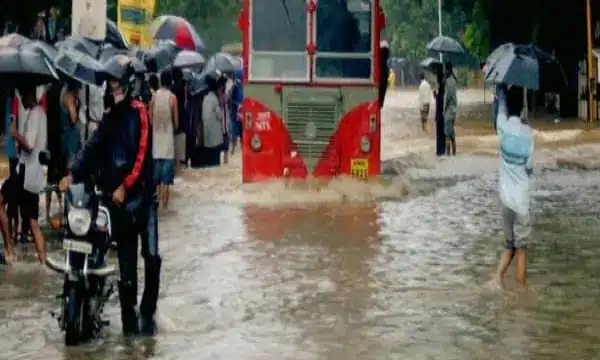
In the first week of July, Mumbai's Mankhurd neighborhood witnessed a tragic building collapse that buried five children under debris following torrential monsoon rains. This occurred during one of the city's wettest July days in half a century, causing severe flooding that paralyzed transport networks and hindered emergency response efforts. Thousands of kilometers away, a June 2026 heatwave pushed temperatures past 36 degrees Celsius in London, causing commuters to faint on sweltering Underground trains. This prompted climate activists to cover Tube stations with stickers reading "Heatwave, sponsored by Shell" to protest the role of fossil fuels in global warming.
These contrasting disasters highlight how climate change no longer distinguishes between developed and developing nations, making extreme weather the defining challenge of the 21st century. According to the World Meteorological Organization (WMO), the global mean near-surface temperature in 2023 reached 1.45 ± 0.12 degrees Celsius above the pre-industrial average, dangerously close to the 1.5-degree limit set by the Paris Agreement. Concurrently, greenhouse gases have surged to unprecedented concentrations, with carbon dioxide at approximately 150 percent, methane at 264 percent, and nitrous oxide at 124 percent of pre-industrial averages.
The devastating effects of these changes were starkly felt in Europe during the summer of 2026. The June heatwave led to more than 3,700 deaths across France, Belgium, and the Netherlands. Home mortality jumped by an estimated 91 percent in the last week of June as high night-time temperatures prevented buildings from cooling. In Belgium, surging air-conditioning demand caused electricity prices to spike, while extreme heat forced the cancellation of outdoor events, including the historic Battle of Waterloo reenactment. Public transport networks in older European cities struggled to operate safely under conditions they were not designed to withstand.
Meteorologists linked these European conditions to an Omega blocking pattern, or "heat dome," where a high-pressure ridge becomes trapped between two low-pressure systems. This atmospheric congestion stalls weather systems, allowing hot air to linger for extended periods. While natural, these patterns are exacerbated by global warming, which raises baseline temperatures. Notably, Europe is warming at approximately twice the global average, amplifying these environmental risks.
Meanwhile, India faces a more complex set of simultaneous climate extremes. In Kerala's Wayanad district, heavy rainfall that reached nearly ten times the normal daily average for July triggered landslides near Meenakshi Bridge, causing casualties and destroying homes. In Maharashtra, landslides killed at least 13 people over a three-day period, destroyed homes in Ratnagiri, and blocked traffic on the Mumbai-Pune Expressway near Khandala. Severe waterlogging also suspended Western Railway services and forced flight diversions in Mumbai.
Paradoxically, these intense local storms occurred during a season when India recorded an overall 38 percent deficit in monsoon rainfall. Instead of steady seasonal rain, precipitation was highly erratic, with some districts receiving 600 to 1,700 percent of their normal rainfall during sudden cloudbursts. This uneven distribution affected over 94,000 people across hundreds of villages with floods and landslides. This variability highlights a core principle of climate science: global warming increases climate volatility, replacing steady patterns with dry spells interrupted by intense, destructive downpours.
Another dramatic example occurred on May 30 in western Rajasthan, where a powerful dust storm swept through Bikaner and adjacent districts. With wind speeds reaching 70 to 80 kilometers per hour, the storm turned skies orange-brown, cut visibility to zero, uprooted trees, damaged structures, and cut off electricity before being followed by heavy rain. This sequence was fueled by extreme heat drying out soils, which allowed strong winds to lift sediment before unstable weather triggered sudden rainfall, illustrating how heatwaves, dust storms, and downpours act as interconnected, cascading events.
This atmospheric volatility is further complicated by El Niño, a natural warming of the equatorial Pacific Ocean. Scientists have warned that particularly strong El Niño episodes may rival some of the most severe historical events, dramatically increasing agricultural, water and food security risks. Although El Niño is a natural climate oscillation, its interaction with long-term global warming creates increasingly unpredictable outcomes. Human-induced climate change effectively raises the baseline upon which natural variability operates, making both droughts and floods more severe.
This dynamic reflects the broader climate rule that "wet gets wetter, dry gets drier." As global temperatures rise, increased evaporation allows the atmosphere to hold more moisture, causing heavy rainfall regions to get more intense precipitation while dry areas face worsening droughts. India embodies this contradiction, experiencing national rainfall deficits alongside catastrophic floods, and agricultural droughts alongside urban inundation.
Ultimately, these disasters reveal deep social vulnerabilities. Poor households in informal settlements, rain-fed farmers, elderly people without cooling, and outdoor workers are disproportionately affected. Whether it is a collapsed building in Mumbai, a flooded Himalayan village, or a stifling European apartment, social inequality worsens environmental hazards. The economic impacts are also massive, damaging infrastructure, agriculture, and energy systems, which strains government budgets and raises insurance losses.
Scientific advances have greatly improved weather forecasting, seasonal outlooks and disaster early-warning systems. Yet prediction alone cannot eliminate vulnerability. Governments must prioritize climate-resilient infrastructure, improve urban drainage, update building standards, implement heat action plans, protect wetlands and forests, and enhance emergency services. At the international level, there must be greater cooperation on emissions reductions, climate finance, technology transfer, and disaster preparedness to address a rapidly changing planet.
Originally published under Creative Commons by 360info ™.
You have reached the limit of 2 free articles this month.

Md. Kazi Bijoy is a dedicated tech enthusiast and content creator with a passion for digital innovation. With years of experience in the tech industry, he specializes in breaking down complex topics into easy-to-understand guides. When he isn’t writing, he explores the latest gadgets and researches emerging trends in the digital world.