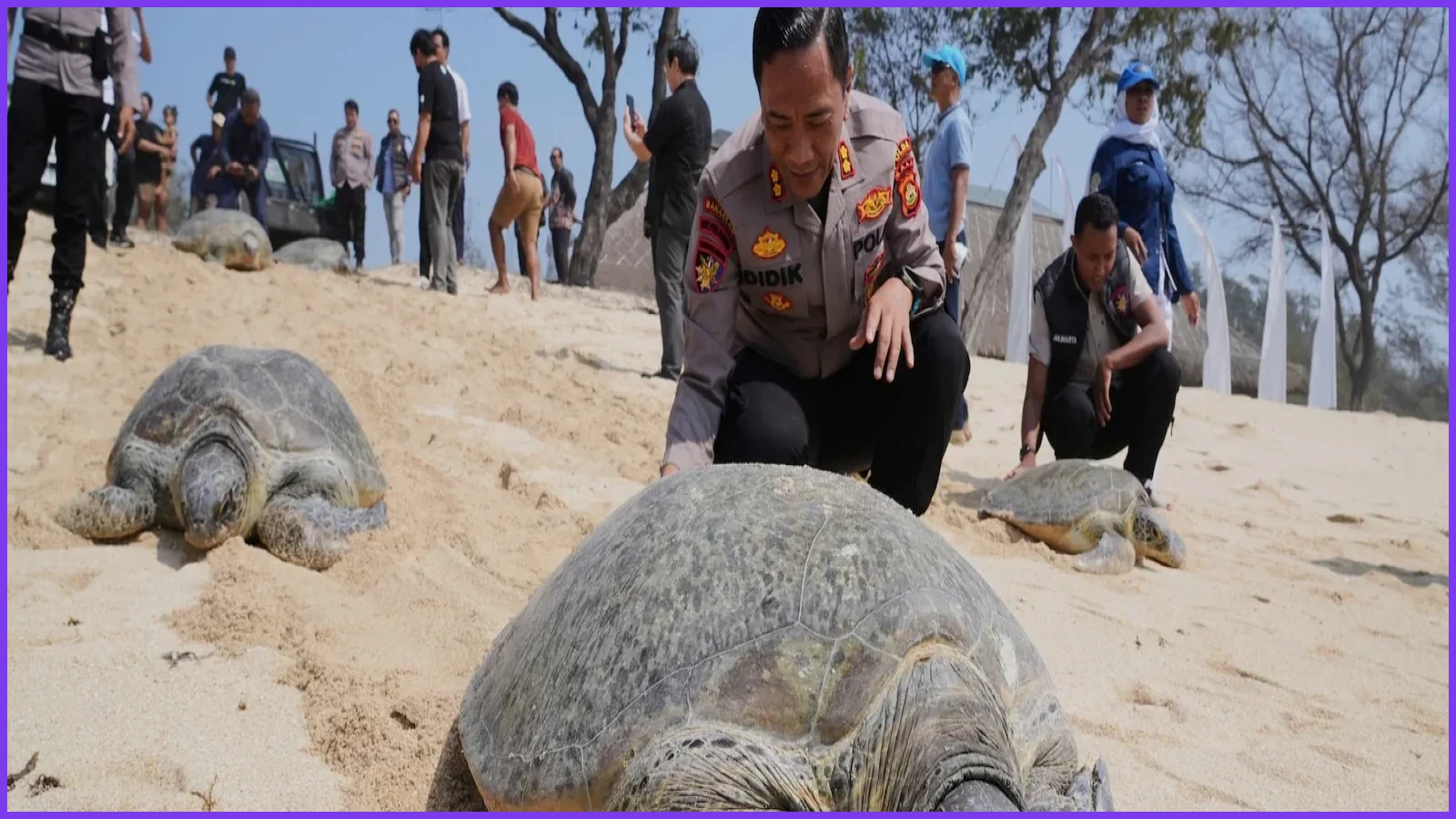
Indonesian authorities on the tourist island of Bali successfully released 20 protected green sea turtles back into the ocean on Tuesday. The release followed a weekend operation where the animals were discovered on an empty boat that had been abandoned by suspected wildlife smugglers attempting to evade a police raid.
Marine police officers in Bali intercepted the smuggling attempt on Saturday in the waters off Serangan Island, also known as Turtle Island, located in southern Bali. The intervention was prompted by reports from local residents who suspected illicit sea turtle trafficking activity in the vicinity. By the time officers arrived at the scene, the suspects had already fled, leaving the 22 turtles on board the vessel.
Following the seizure, the turtles were taken to a conservation center on Serangan Island for final health checks. On Tuesday, officers carefully transported the animals to the shoreline using blue cloths and small trucks to facilitate their return to the wild. According to Gusti Agung Purnama Wirahadi of the Bali Water and Air Police, two of the 22 rescued turtles remain ill and are currently receiving medical treatment before they can be released.
Wirahadi emphasized the importance of these conservation efforts, stating, “We hope that no one will dare to capture, keep, or trade these protected species anymore.” All sea turtle species in Indonesia have been legally protected under national conservation and fisheries laws since 1990. These protections were further strengthened by a 2018 Environment Ministry regulation, which clarifies the status of the six species found in Indonesian waters and strictly prohibits their trade.
Historically, Bali served as a significant hub for green sea turtle trafficking, partly due to the traditional use of turtle meat in offerings within Balinese Hinduism. However, conservation efforts remain a priority for the island’s population of approximately 4.5 million people. A 2022 global study by researchers at Arizona State University highlighted the scale of the threat, noting that the green sea turtle, known scientifically as Chelonia mydas, accounted for 56% of sea turtle killings globally in the 30-year period leading up to 2020.
Related Articles

Meet Md. Rubel Rana
As a core contributor to Worlddincidents.com, Rubel Rana brings a unique perspective to the world of journalism. Whether it’s deep-diving into historical trivia or covering the latest global headlines, Rubel Rana is committed to delivering high-quality, high-impact articles. Their writing blends meticulous research with a compelling voice, helping readers stay informed and curious about the world around them.