The recent wave of Iranian retaliatory attacks on U.S. military facilities in the Middle East is reverberating far beyond the region, sparking deep anxieties among communities hosting American bases worldwide—particularly in the strategically tense Indo-Pacific.
The United States operates the world's largest overseas military footprint, maintaining up to 750 installations across 80 countries. Recent Iranian strikes targeting U.S. bases and access points in Bahrain, Iraq, Jordan, Kuwait, Qatar, Saudi Arabia, and the United Arab Emirates have resulted in several U.S. soldier fatalities. Beyond the immediate casualties, these attacks have severely impacted local civilian populations and forced host nations to reevaluate the security risks of hosting American forces, leading some analysts to speculate about potential base closures in the Middle East.
In the Indo-Pacific, where the threat of a potential U.S.-China conflict looms, the vulnerability of these bases has taken on heightened significance. The region hosts some of the largest U.S. troop deployments globally, with Japan ranking first and South Korea ranking third. Following the Middle East strikes, some Philippine policymakers warned that granting the U.S. military access is "effectively painting bullseyes on Filipino soil" in the event of a confrontation with China.
While the concept of host communities becoming targets is not new, the destruction in the Middle East has made the threat far more tangible. For years, peace and anti-base activists have argued that hosting U.S. forces invites external aggression. In Okinawa, Japan, which hosts a disproportionate share of the U.S. military presence, activists have long warned that the prefecture would be "the first place for an enemy to attack," a concern intensified by rising tensions over the nearby Taiwan Strait. Similarly, during the 2017 deployment of the Terminal High Altitude Area Defense (THAAD) system in South Korea, residents of Soseong village feared their community would become "one of the first targets of attack" in a conflict involving North Korea or China.
You have reached the limit of 2 free articles this month.
Despite these localized protests, broader public opinion has historically leaned positive. A 14-country survey conducted in the 2010s showed generally favorable or neutral views of the U.S. military presence. Among Indo-Pacific nations, the Philippines recorded the highest favorability at 76 percent, followed by South Korea at 52 percent and Australia at 50 percent. Even in Japan, where favorability stood at 34 percent, positive views still outnumbered negative or neutral sentiments.
A new, larger survey conducted this year following the escalation of the U.S.-Israel-Iran conflict shows a more sobering shift, with a net negative opinion of hosting U.S. troops across most surveyed host nations globally. Nevertheless, key U.S. allies in the Indo-Pacific remain outliers. South Korea and Japan recorded net positive ratings of plus 14 and plus 2, respectively. In the Philippines (net minus 2) and Australia (net minus 18), combined positive and undecided views still outweighed outright negative opinions.
Observers note that while peace activists in the Indo-Pacific and Europe will likely continue to argue that U.S. bases "draw a target" on local populations—a narrative bolstered by the credibility of the Middle East attacks—this framing may not trigger widespread demands for troop withdrawals. Second, this framing may be convincing to host nation citizens, as the recent attacks on the bases in the Middle East show that this threat is both credible and tangible. Highly aligned allies like South Korea, Japan, the Philippines, and Australia are unlikely to push for base closures. However, the dilemma is much more acute for nations attempting to maintain geopolitical distance between Washington and Beijing. Furthermore, the perceived vulnerability of relying on U.S. protection may drive increased public support for developing independent, indigenous military capabilities, including nuclear weapons, even among long-standing American allies.
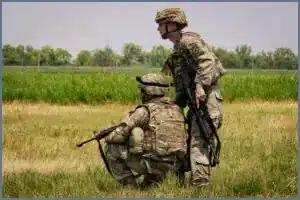
U.S. Army Soldiers assigned to 4th battalion, 2nd Aviation Regiment, 2nd Combat Aviation Brigade, 2d Infantry Division/ROK-U.S. Combined Division, participate in a field training exercise at Camp Humphreys, South Korea, June 30, 2026.
Analystshave speculated about what these attacks and the subsequent damages to the bases might mean for U.S. basing in the region, including potential base closures.
Related Articles

Mr. Udoy is a professional Web Developer and Blogger with 7+ years of experience in the tech world. He specializes in web architecture and digital storytelling. As the driving force behind worldincidents.com, he focuses on delivering high-quality, well-researched content to a global audience.
1 thought on “How Iran’s Attacks on US Bases Fuel Indo-Pacific Security Fears”