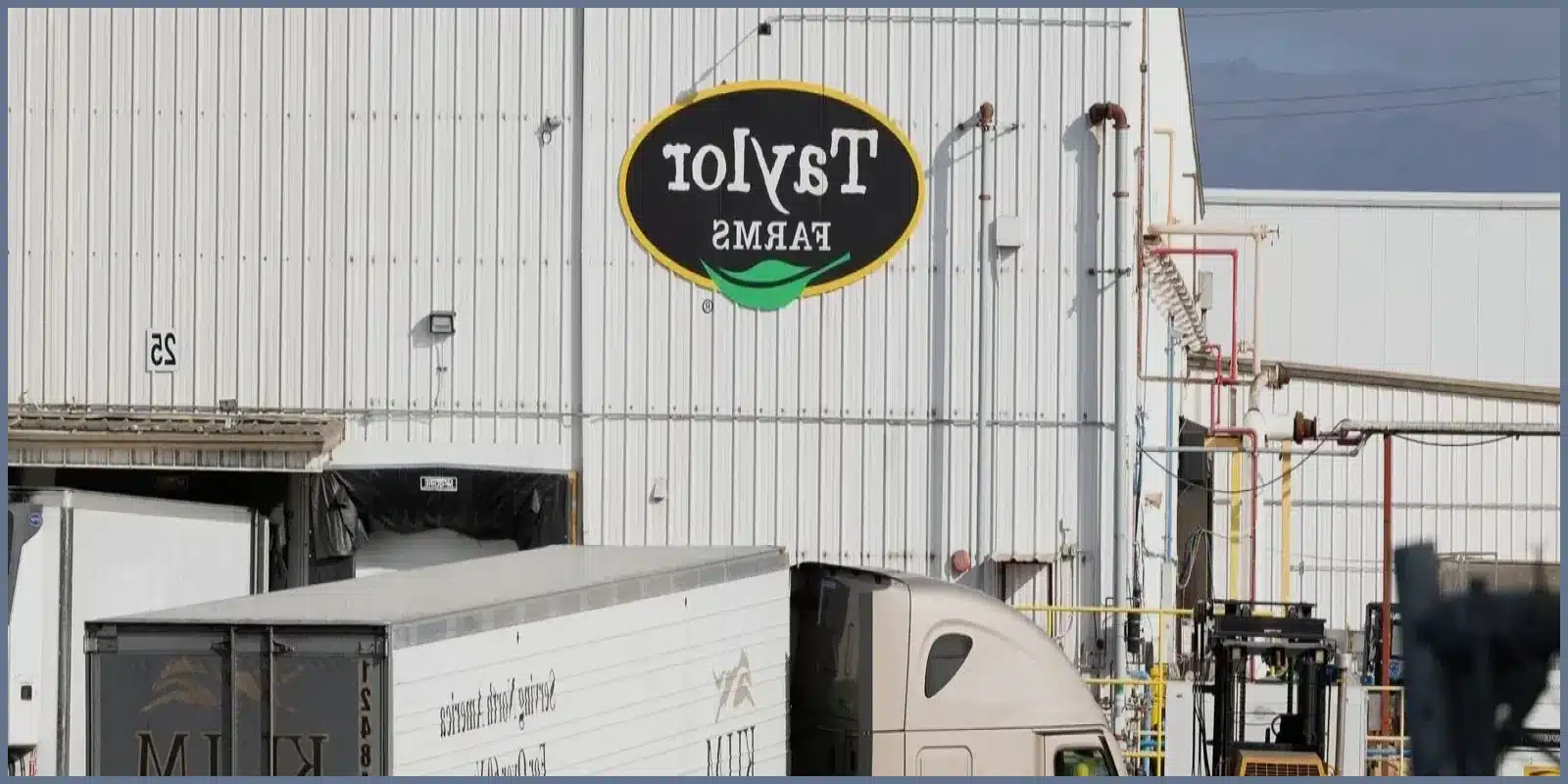
A historic outbreak of cyclosporiasis and a concurrent salmonella recall have put a spotlight on Taylor Farms, one of the primary suppliers of fresh produce to major American supermarkets and fast-food establishments. As health authorities investigate the spreading infections, consumers face the difficult task of identifying which of their favorite grocery stores and restaurants rely on the agricultural giant for lettuce, jalapeno peppers, and other fresh foods.
The ongoing cyclosporiasis outbreak represents an unprecedented wave of infections that has been building since May, resulting in two deaths and cases reported across 47 states. The largest cluster of these cases, centered in Michigan, was traced by the Food and Drug Administration (FDA) to recalled iceberg lettuce grown by the produce giant. However, health experts note that not all clusters nationwide have been linked to this single source. In addition to the cyclosporiasis outbreak, a salmonella recall has impacted products sold at major grocery stores in 26 states, including Walmart, Target, and Trader Joe's, according to an August 9 FDA notice.
In response to the health concerns, Taylor Farms issued a voluntary recall of its iceberg lettuce products on July 17. The company has pointed out that, through August 5, the FDA reported no confirmed positive sample results for product testing for Cyclospora. Despite this, the FDA has instructed Americans to avoid eating certain iceberg lettuce products produced by Taylor Farms. Following this directive is challenging for everyday consumers, as tracing the exact origin of lettuce used in a restaurant's tacos, burgers, or sub sandwiches is nearly impossible.
Here, then, is a primer on Taylor Farms and its global reach.
Self-described on its website as the "leading global producer of salads and healthy fresh foods," the company operates processing facilities across the United States, Mexico, Canada, and Europe. According to a spring 2026 profile in the UC Berkeley Haas Magazine, Taylor Farms generates $7 billion in annual revenues, employs more than 25,000 people, and operates 30 processing facilities.
“Operating across retail, foodservice, and prepared foods, Taylor Farms partners with every major retail group, club store, and quick-service restaurant chain in the country,” the profile says.
For grocery shoppers, the company's presence is nearly universal. A search of the company's Find-a-Product page reveals that Taylor Farms salad kits and other packaged items are carried by a vast array of major American supermarkets and big-box retailers. This list includes Walmart, Target, Safeway, Whole Foods, Meijer, Vons, Food4Less, H-E-B, Sprouts, Fry’s, Albertsons, and Kroger.
Identifying which fast-food and casual dining chains currently serve Taylor Farms produce is more complex. It is confirmed that Taco Bell served Taylor Farms lettuce due to the widely publicized recall. Chipotle also sources produce from the company, as confirmed by a corporate official on July 20. Laurie Schalow, Chipotle’s chief corporate affairs and food safety officer, stated, "We are continuing to follow the Cyclospora investigation very closely, and at this time, we don’t believe the ingredients we source are associated."
Historical data provides further insight into the company's restaurant partnerships. A 2014 report from Capital & Main and The Huffington Post revealed that Taylor Farms has previously supplied major chains such as McDonald’s, Subway, KFC, Long John Silver’s, and Pizza Hut, as well as Darden Restaurants, the parent company of brands like Olive Garden.
Has the company had recalls before? Yes, although some past recalls have involved mislabeled products rather than potential pathogens. Company officials attribute the frequency of such recalls to the sheer scale of their operations. Bruce Taylor, the chief executive of Taylor Farms, defended the company's record, stating, "Just if you do the sheer math, our recalls relative to our size are fewer than anybody else," speaking to the Times.
Founded in 1995 by Bruce Taylor—a third-generation lettuce grower in California’s Salinas Valley—and a group of partners, the company set out with the goal of becoming "North America’s favorite producer of salads and healthy fresh foods." Over the decades, it grew into an industry leader and took on a prominent role in promoting food safety standards. In 2007, Taylor partnered with the Produce Marketing Association to establish the Center for Produce Safety, collaborating with other growers to standardize food safety practices across the industry. Later, in 2009, the company introduced "SmartWash Solutions," which was described by the Berkeley profile as a revolutionary wash-water monitoring system designed to sanitize and prevent microbial cross-contamination.
Taylor Farms further cemented its market dominance in 2012 by entering the supermarket industry with the first-ever branded, prepackaged chopped salads complete with dressings and condiments. According to a 2026 report in the trade publication Western Farm Press, the company also revolutionized the agricultural sector by converting it into a fixed-price business. This model offered growers a guaranteed profit while ensuring retail and restaurant customers received a consistent supply at stable prices. Highlighting this shift, Bruce Taylor recalled how major clients drove this operational change: "McDonald’s wanted shredded lettuce. They wanted consistent product at a stable price."
Contributing: Melina Khan, Mary Walrath-Holdridge.
Related Articles

Meet Md. Rubel Rana
As a core contributor to Worlddincidents.com, Rubel Rana brings a unique perspective to the world of journalism. Whether it’s deep-diving into historical trivia or covering the latest global headlines, Rubel Rana is committed to delivering high-quality, high-impact articles. Their writing blends meticulous research with a compelling voice, helping readers stay informed and curious about the world around them.