Tensions across the Middle East have intensified as concerns grow over potential U.S. and Israeli military strikes on Iran shortly after Tuesday's U.S. midterm elections. The elevated threat of renewed conflict comes as two Iranian officials, speaking anonymously due to the sensitivity of the situation, confirmed that Iran's negotiating delegation departed Qatar following several days of discussions. Despite the departure, messages between Washington and Tehran continue to be exchanged through mediator channels.
Addressing reporters on Sunday evening, U.S. President Donald Trump stated that he held a "very good" phone conversation on Saturday with Israeli Prime Minister Benjamin Netanyahu. While Trump confirmed that Iran was a primary topic of their discussion, he offered no specific details regarding the talk. Concerns have been escalating that Netanyahu might press for new military strikes against Iran in an effort to maintain power within an emergency government, particularly after his political bloc lost its parliamentary majority in last week's election. Netanyahu has made no public statements since last Tuesday's vote other than commenting on the election results.
Commentating on the geopolitical dynamics, Andreas Krieg, a professor at King's College London, posted on X that the regional standoff is fundamentally split between diplomatic and military approaches. "The standoff in the Gulf between the U.S. and Iran is really between Qatar and Israel," Krieg wrote, adding that "Qatar is tirelessly working on a diplomatic offramp with the region’s backing while Israel is looking for military ways to throw the region under the bus."
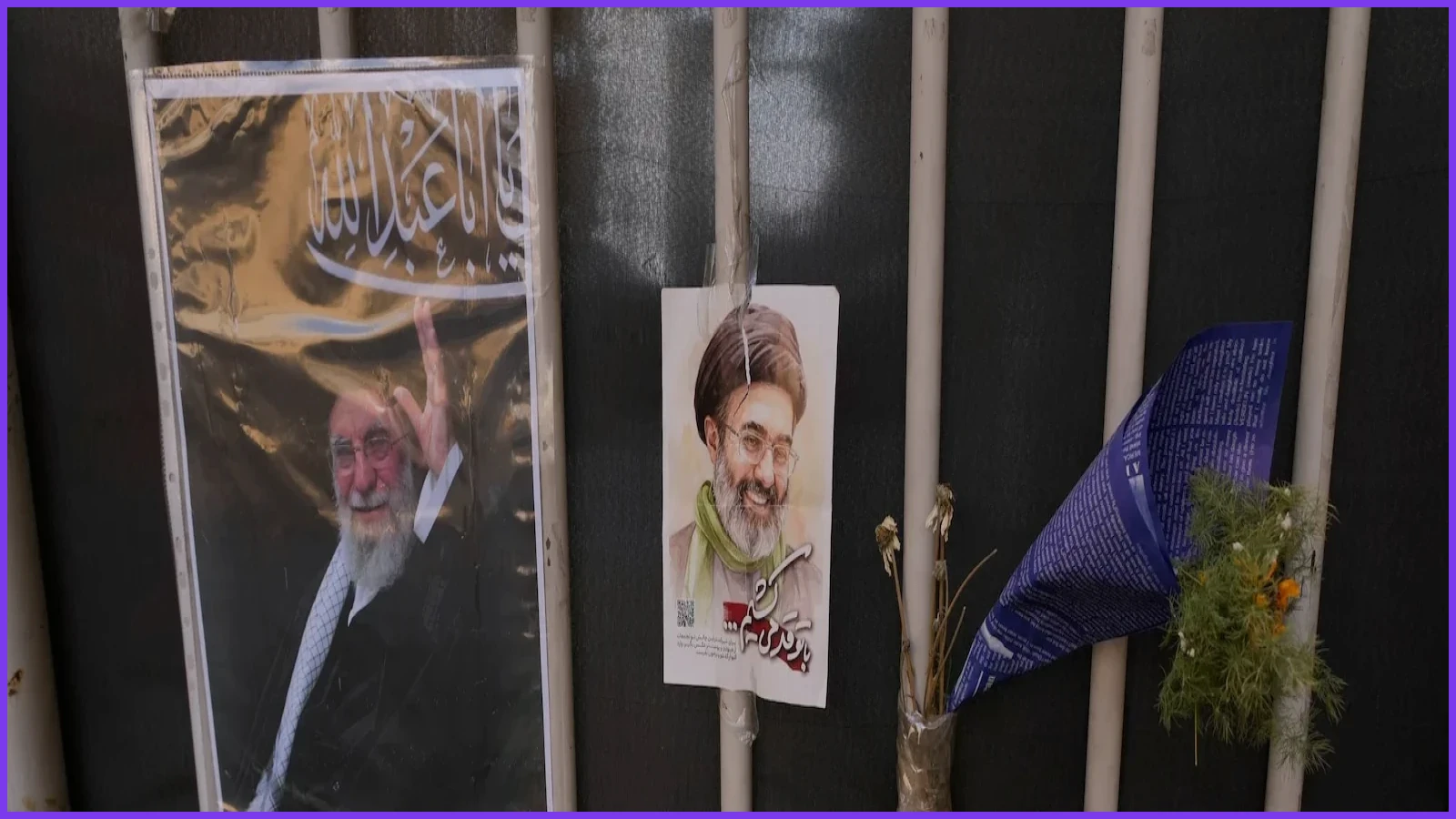
Tehran has amplified its public rhetoric during the period of uncertainty, stating that it remains prepared for both diplomatic engagement and renewed hostilites. Ayatollah Mojtaba Khamenei, Iran's new supreme leader, instructed military commanders that any threat from the U.S. or Israel must receive an immediate response without "geographic limits." He also directed military officials to expand Iran's list of potential targets. Mojtaba Khamenei has not appeared publicly since the Feb. 28 opening strikes by the U.S. and Israel, which killed his father, the country's former supreme leader.
Adding to Tehran's warnings, Iranian security chief Mohsen Rezaei declared on X that any attack would prompt "devastating blows on the aggressor using new weapons." However, during an interview on state television, Rezaei noted that "the tone has completely changed" from the United States, describing the shift as a "very good sign." Rezaei made no detailed comments regarding a letter received last week from U.S. Vice President JD Vance, acknowledging that he had not sent a response. He also stated that while there has been no decision to alter Iran's nuclear doctrine, some domestic voices have questioned whether it should be modified if Iran faces further attacks. Iran maintains that its nuclear activities are strictly peaceful.
Substantive differences persist over the framework of potential negotiations. Washington aims to ensure Iran cannot acquire a nuclear weapon and insists on including the matter in initial talks, whereas Iran insists on deferring nuclear discussions until later stages. During a one-day diplomatic visit to neighboring Turkmenistan on Monday, Iranian Foreign Minister Abbas Araghchi emphasized that the ultimate resolution depends on the answers provided by the U.S. to "Iranian questions."
Security along key maritime routes remains compromised. Commercial shipping reported an uptick in attacks in the Strait of Hormuz during October, marking the busiest month for maritime incidents since the war began in March. Meanwhile, the mood was described as grim at the Manama Dialogue, an annual security conference in Bahrain hosted by the International Institute for Strategic Studies.
At the summit, United Arab Emirates presidential adviser Anwar Gargash warned that "the rules of logic" demonstrate how far apart the U.S. and Iranian positions remain, warning that "if these positions are not bridged, then we have to worry about the worst." Since the outbreak of hostilities, Gulf states have directed billions of dollars toward strengthening defense capabilities. The UAE has absorbed the highest volume of Iranian missile and drone strikes, with the vast majority being intercepted by defense systems. Egypt's Foreign Minister Badr Abdelatty also addressed the gathering in Bahrain, warning that any further escalation "will be more dangerous, more destructive, and it will lead to nowhere."
Diplomatic initiatives outside the immediate region are also underway. Chinese Foreign Ministry spokesperson Mao Ning announced Monday that Beijing will dispatch a special envoy to Iran, Oman, and Saudi Arabia in early to mid-November. Additionally, Chinese Foreign Minister Wang Yi held talks with Ali Bagheri Kani, deputy secretary of Iran’s Supreme National Security Council. According to a readout from China's Foreign Ministry following a meeting between Chinese President Xi Jinping and the sultan of Oman, Xi asserted that "The Middle East Gulf region should not become an arena for great-power rivalry and geopolitical conflict," with both China and Oman urging a prompt return to diplomatic dialogue.
Related Articles

Mr. Udoy is a professional Web Developer and Blogger with 7+ years of experience in the tech world. He specializes in web architecture and digital storytelling. As the driving force behind worldincidents.com, he focuses on delivering high-quality, well-researched content to a global audience.