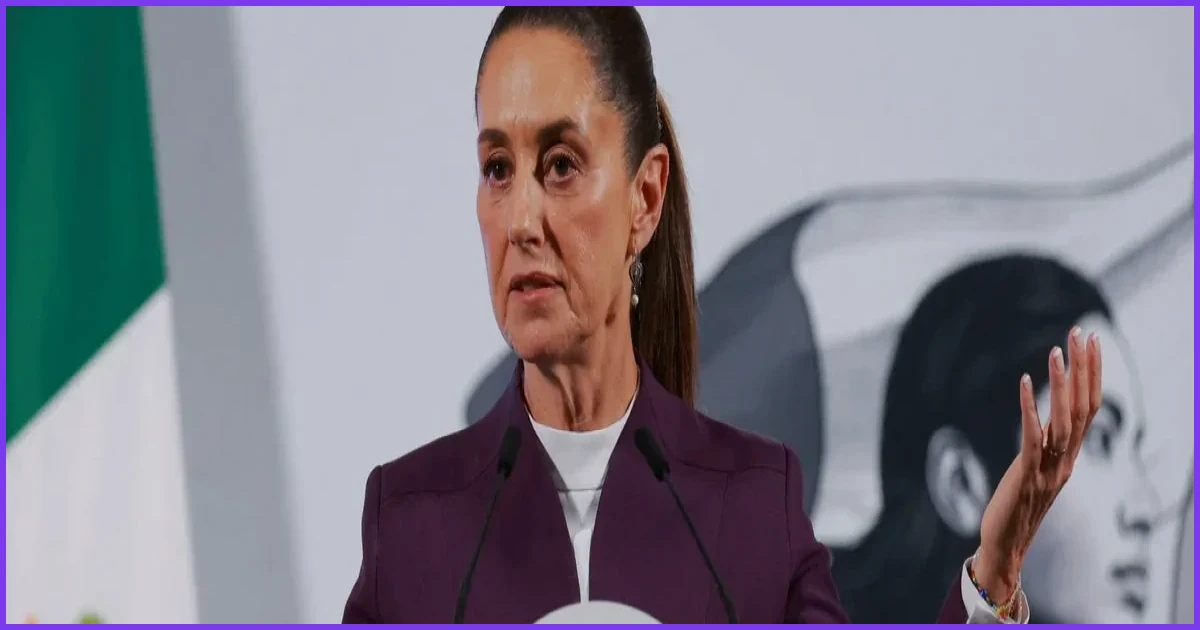
Mexican President Claudia Sheinbaum has strongly criticized the U.S. Drug Enforcement Administration over its decision to establish anonymous tip lines inside Mexico, characterizing the move as direct foreign interference. Speaking at a daily news briefing, Sheinbaum confirmed that Mexico's foreign ministry filed a formal diplomatic complaint with U.S. Ambassador Ron Johnson. She stressed that while her administration remains open to security collaboration with Washington, it will not accept foreign overreach, affirming that bilateral ties must be based on coordination rather than subordination.
The diplomatic friction erupted shortly after DEA Administrator Terry Cole announced the launch of new tip lines across U.S. government channels, urging Mexican citizens to submit information regarding members of criminal syndicates operating in Sinaloa state. Cole specifically called for tips targeting corrupt public figures supporting these groups and individuals laundering money to fund narcoterrorism. Promising that reports submitted via encrypted applications like Signal, WhatsApp, and email would remain confidential, Cole emphasized that citizen safety and information matter. Cole further noted that a separate tip channel targeting criminal operations in Jalisco state—the primary stronghold of the Jalisco New Generation Cartel (CJNG)—would be launched shortly.
Sheinbaum rejected the initiative, questioning how Washington would react if Mexico launched its own WhatsApp service to collect reports on political corruption within the United States. Pushing back against American pressure, she insisted that American authorities should focus on tackling illicit networks within their own borders rather than launching unauthorized intelligence operations in Mexico. She argued that the DEA must first address domestic corruption tied to organized crime and foreign-designated terrorist organizations, noting that Mexico already maintains active security and prosecutorial bodies to handle law enforcement on its own territory.
In her public remarks, Sheinbaum drew heavily from a new investigative report published by The Associated Press detailing severe lapses in U.S. drug enforcement. The investigation revealed that DEA agents permitted at least 1.4 million counterfeit fentanyl pills to hit American streets over an eight-month period between August 2024 and April 2025 while tracking a major Southwest drug trafficking syndicate. Sheinbaum labeled the agency's decision to let deadly synthetic opioids move freely the "Fast and Furious of Fentanyl." The phrasing references a controversial 2011 U.S. gun-walking operation in which federal agents allowed about 2,000 assault weapons to be smuggled into Mexico in an attempt to track cartel leaders.
The AP investigation into the DEA's fentanyl operations drew upon thousands of pages of court documents, internal investigative records, detailed wiretap logs, and 12 hours of DEA surveillance video. The evidence documented drug dealers moving massive quantities of illicit pills in plastic storage bins and duffel bags through high-traffic venues across six U.S. states, including residential apartment complexes, hotels, short-term Airbnb rentals, and self-storage units. Despite monitoring these movements as they built what became the largest fentanyl case in U.S. history, federal agents allowed the shipments to proceed unhindered.
These latest revelations contradict previous assurances from federal law enforcement. In June, DEA whistleblowers told the AP that agents stationed in New Mexico had allowed hundreds of thousands of fentanyl pills to go unseized in recent years. At the time, the agency denied knowingly permitting the trafficking of synthetic opioids, which the White House has designated a weapon of mass destruction. However, the newly uncovered documentation demonstrates a broader pattern of unseized illicit shipments. Last month, a veteran DEA agent also stated that the law enforcement agency had actively contributed to the crisis by allowing dangerous fentanyl shipments to reach American communities. The DEA did not immediately respond to requests for comment regarding the findings.
The dispute over the tip lines comes amid ongoing friction over security cooperation and U.S. proposals to deploy military personnel onto Mexican soil—a measure Sheinbaum has repeatedly ruled out. Despite diplomatic tensions, bilateral security operations have continued in specific high-profile cases. On November 20, Mexican military forces captured Fausto Isidro Meza Flores, a high-ranking drug lord known as "El Chapo Isidro" and a key ally of a major Sinaloa cartel faction. Meza Flores was listed on the FBI's 10 Most Wanted Fugitives list, with the U.S. Department of State offering a reward of up to $5 million for information leading to his capture.
The high-stakes operation to apprehend Meza Flores triggered widespread panic across the region as civilians fled intense gunfire and suspected gang members set up improvised road blockades. Mexican officials confirmed that 16 cartel suspects and four soldiers were killed during violent clashes. Mexico had requested technical assistance from Washington for the raid, and the United States supplied an uncrewed drone to help pinpoint the fugitive's location. Following the arrest, U.S. authorities formally requested his extradition to face criminal charges in American courts; however, Mexican Attorney General Ernestina Godoy stated that Meza Flores will be tried within Mexico.
Meza Flores was captured just days after Sheinbaum met with U.S. President Donald Trump on the sidelines of an international summit in Asia. Following their meeting, President Trump confirmed that the two leaders discussed key issues surrounding bilateral trade and border security. The capture follows earlier high-level Mexican military actions, including a February operation that resulted in the death of CJNG leader "El Mencho," Mexico's most powerful cartel chief. That operation similarly unleashed widespread localized violence and vehicle fires across the region.
While cross-border cooperation was effective during the operation against "El Mencho," relations strained sharply in late April when federal prosecutors in New York unsealed a drug trafficking indictment against Sinaloa Governor Rubén Rocha Moya, a prominent member of Mexico's ruling party. Prosecutors accused Rocha Moya and nine other public officials of conspiring with a faction of the Sinaloa cartel, which the Trump administration has formally designated a foreign terrorist organization. Following the public disclosure, Rocha Moya stepped down on an indefinite leave of absence and Mexican financial authorities froze his bank accounts, but Mexican officials declined to execute a U.S. request for his arrest. Meanwhile, former Sinaloa Security Secretary Gerardo Mérida Sánchez traveled to the United States and surrendered to federal authorities in May.
Related Articles

Mr. Udoy is a professional Web Developer and Blogger with 7+ years of experience in the tech world. He specializes in web architecture and digital storytelling. As the driving force behind worldincidents.com, he focuses on delivering high-quality, well-researched content to a global audience.