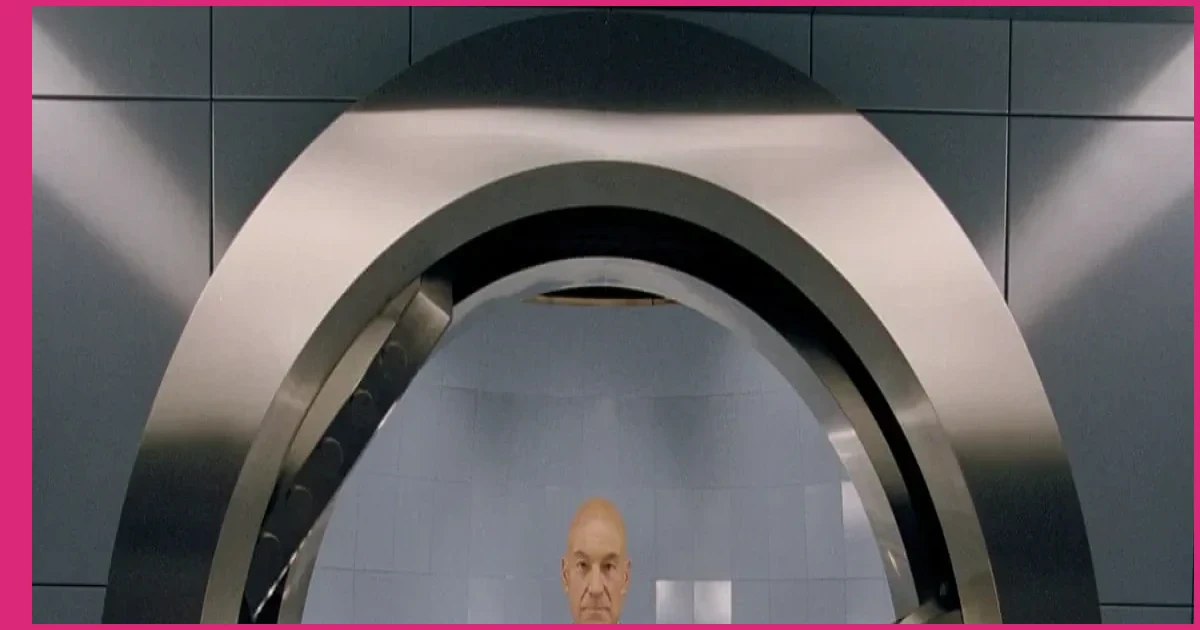
Sir Patrick Stewart redefined how classical British stage training could power mainstream American cinema and television, bringing uncommon depth, authority, and minutely self-aware technique to modern pop culture. Emerging from the 1970s stage generation of the Royal Shakespeare Company, Stewart demonstrated how classical actors could outmaneuver traditional American method performers on screen, even when taking on early film roles at competitively low rates. His command of style, vaudevillian mimicry, athletic presence, and distinctive bald look paired with a resonant voice made him a unique charismatic force capable of shifting seamlessly between high-minded drama and blockbuster fantasy.
Stewart achieved massive mainstream stardom when he landed the role of Captain Jean-Luc Picard in Star Trek: The Next Generation, the acclaimed reboot that aired from 1987 to 1994. The series birthed four feature films and later the follow-up series Star Trek: Picard. Unlike William Shatner's Captain James Kirk—who portrayed a clean-cut, romantic action lead akin to John F. Kennedy—Stewart's Picard offered a far more complex figure. With his exotic name and bare head, Picard fit naturally alongside the planet-dwellers and alien characters populating an increasingly diverse intergalactic cosmos, winning over a new generation of Trekkers. Shatner himself honored the actor's legacy, remarking, "He stood for the best of us." Stewart's sci-fi presence also echoed across the genre, later inspiring Alan Rickman's portrayal of the haughty actor-turned-sci-fi figure Alexander Dane in the 1999 comedy Galaxy Quest.
Leveraging his Star Trek notoriety, Stewart entered the superhero landscape at the turn of the century as Marvel began its overwhelming multiplex dominance. He assumed the role of Professor Charles Xavier, the wheelchair-using mentor to the mutants in the X-Men film franchise. Playing opposite fellow Royal Shakespeare Company veteran Ian McKellen—who portrayed Magneto with resounding conviction inside his Lycra costume—Stewart drew heavily on his stage roots to give Professor X a wise, kingly posture resembling an exiled monarch.
Long before his blockbuster franchises, Stewart had already established sci-fi credentials. He played King Leodegrance, the father of Guenevere, in John Boorman's 1981 film Excalibur, and portrayed Paul Atreides' trusted adviser Gurney Halleck in David Lynch's 1984 cinematic adaptation of Frank Herbert's Dune. Early television audiences also saw his intimidating performance as Sejanus in I, Claudius, where he starred opposite Derek Jacobi.
Beyond major studio franchises, Stewart's most satisfying cinematic performance came in director Jeremy Saulnier's horror-thriller Green Room. The role allowed him to play a sinister villain in a way his heroics in Star Trek and Marvel never permitted. Stewart portrayed a cold neo-Nazi leader directing his followers against a rock band trapped inside a scuzzy venue's green room after witnessing a horrific scene. Throughout his career, Stewart's face could instantly shift from refined and handsome to aggressive and lion-like, matching his mellifluous voice with a chilling, threatening edge.
Related Articles

Md. Kazi Bijoy is a dedicated tech enthusiast and content creator with a passion for digital innovation. With years of experience in the tech industry, he specializes in breaking down complex topics into easy-to-understand guides. When he isn’t writing, he explores the latest gadgets and researches emerging trends in the digital world.