Rights groups have accused Russia and the United States of obstructing the path toward a binding international agreement to regulate lethal autonomous weapons systems (LAWS). Despite a clear majority of nations favoring such an instrument, these two countries remain at the opposing end of the diplomatic spectrum.
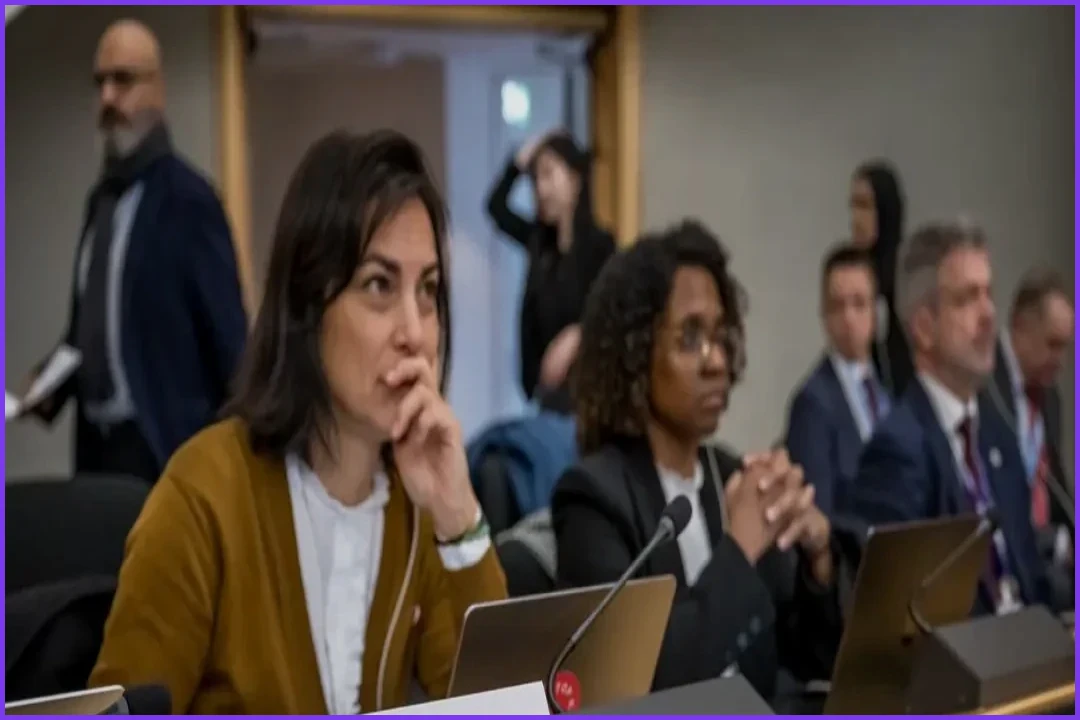
Nicole Van Rooijen, executive director of Stop Killer Robots, revealed during a press briefing on Wednesday that 95 states have formally expressed support for a legally binding framework. The ongoing United Nations Review Conference of the Convention on Conventional Weapons (CCW), which is taking place in Geneva from Monday to Friday, is currently facing a significant impasse regarding these technologies, often referred to as "killer robots."
The global military landscape is shifting as armies increasingly integrate artificial intelligence to identify and strike targets with greater speed and precision. With over a decade of discussions behind them, representatives from the 128 countries party to the CCW are tasked this week with deciding whether to initiate formal negotiations. Because the CCW operates on a consensus basis, progress has been difficult.
The event faced immediate friction on its first day when Russia triggered a procedural standoff by objecting to the participation of observers, including the European Union and various civil society organizations. This move forced the conference to continue its deliberations in an informal format.
Despite these challenges, Richard Lennane, a disarmament adviser at the International Committee of the Red Cross, noted some "encouraging signs" within the discussions. He highlighted that a large number of states are firmly pushing for negotiations to begin. Furthermore, opposing camps have been engaged in discussions regarding various compromises to reconcile their differing positions. Lennane observed that several states, including China and Australia, have shown increased flexibility and openness toward a legally binding instrument.
Some nations, such as France, are reportedly advocating for a hybrid approach that would combine legally binding rules with non-binding measures. While Lennane expressed openness to such a prospect, other countries—including Austria, Brazil, Cuba, and Mexico—have reaffirmed their support for a fully binding protocol without endorsing hybrid alternatives. Magnus Lovold of the Lex International philanthropic fund suggested that if the current conference fails to launch formal negotiations, states favoring a binding agreement might seek to pursue the process through an alternative framework, mirroring the 2008 Convention on Cluster Munitions.
Related Articles

Meet Md. Rubel Rana
As a core contributor to Worlddincidents.com, Rubel Rana brings a unique perspective to the world of journalism. Whether it’s deep-diving into historical trivia or covering the latest global headlines, Rubel Rana is committed to delivering high-quality, high-impact articles. Their writing blends meticulous research with a compelling voice, helping readers stay informed and curious about the world around them.