Military tensions in the Middle East have escalated sharply after Iran launched retaliatory attacks against U.S. military bases in Jordan and Iraq. The escalation follows a resumption of American military strikes on Tuesday, which reportedly resulted in civilian casualties inside Iran.
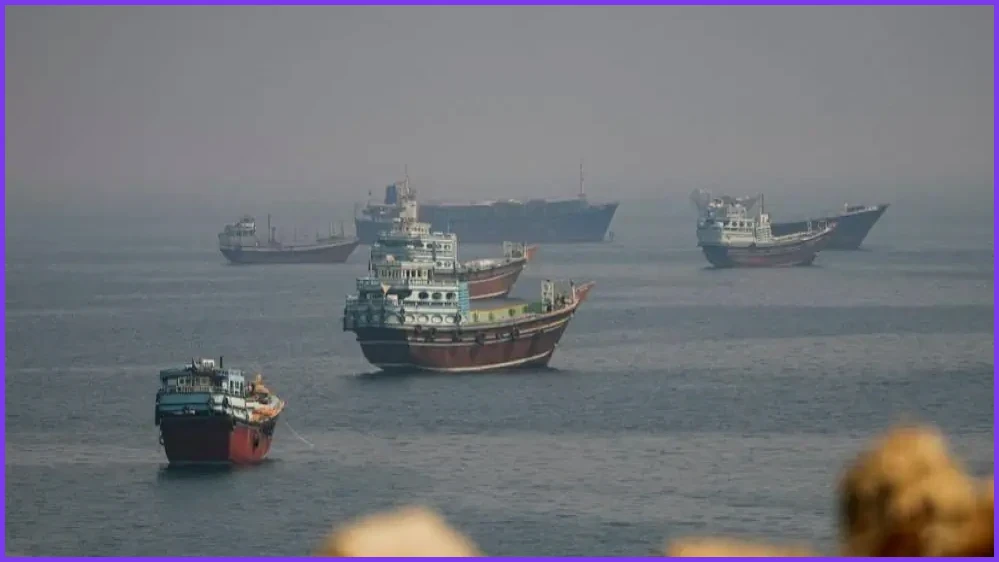
The Iranian Red Crescent reported that a U.S. missile strike in Sirik, located in southern Iran, killed four people, including a child. Shrapnel from the attack struck a home where a wedding celebration was taking place, leaving more than 50 other people injured. U.S. Central Command (Centcom) stated that its military actions in Iran were a direct response to recent attempted attacks by the Islamic Revolutionary Guard Corps (IRGC) targeting commercial shipping vessels in the strategic Strait of Hormuz, where military vessels have been visible from Oman.
In response to the Sirik incident, the IRGC warned that the United States would "regret" the strikes. According to Iran's semi-official Tasnim news agency, Tehran followed through early Wednesday by launching a barrage of ballistic missiles at a U.S. Marine base located in Aqaba, Jordan. The Jordanian Armed Forces confirmed they intercepted 13 ballistic missiles, destroying 10 of them, while three landed in remote, uninhabited areas. No deaths or injuries were reported in Jordan. Jordan's national security center temporarily warned residents in the Aqaba and Mafraq governorates to watch for falling debris, a warning that has since been lifted.
The conflict quickly rippled across other Gulf nations. The Kuwaiti military announced that its air defenses responded to Iranian missile attacks early Wednesday morning. Meanwhile, Iranian state media reported that multiple explosions were heard in Bahrain following attacks launched by Iran.
Centcom reported that U.S. forces initiated strikes on IRGC targets at 12:00 ET (16:00 GMT) on Tuesday and concluded the operations by early Wednesday. Iranian state media indicated that projectiles struck areas in Chabahar, Konarak, and an airport in Jiroft, with additional explosions heard on Qeshm island and in Bandar Abbas. Addressing the reported civilian casualties in Sirik, U.S. Navy Captain Tim Hawkins, speaking on behalf of Centcom, stated that the military was aware of the reports but emphasized that the U.S. military never targets civilians, unlike the IRGC.
Following the initial announcement of the U.S. strikes on Tuesday afternoon, Donald Trump warned that Iran would face retaliation at "a much harder and higher level" if it chose to strike back. This week's actions represent the first known U.S. strikes inside Iran since late July, when American forces targeted two rocket launchers on Larak Island in the Strait of Hormuz. Tehran had previously retaliated against those July strikes by firing missiles at air bases in Jordan and launching a drone at the United Arab Emirates.
The current escalation follows a period of intense conflict that began on February 28, when wide-ranging U.S. and Israeli strikes on Iran prompted Tehran to attack Israel, U.S. bases, and allied Gulf states, effectively shutting down the Strait of Hormuz to maritime shipping. Although both nations signed a ceasefire extension agreement, known as the Memorandum of Understanding, in June, that agreement has since expired. This expiration has led to a complete resumption of hostilities, with both sides targeting shipping. Iran has fired on vessels it claims are traversing the Strait without permission, while the U.S. has enforced a naval blockade on Iranian ports.
On the economic front, Washington introduced a new sanctions campaign on August 24 to further isolate Tehran and penalize its allies. Speaking at a G20 finance ministers meeting, U.S. Treasury Secretary Scott Bessent stated that numerous American allies had agreed to do "whatever is necessary" to support the sanctions. Iranian officials and state media have dismissed these sanctions as a mere continuation of past economic pressure, which they claim followed U.S. military failures. However, on Tuesday, Iranian President Masoud Pezeshkian signaled a potential diplomatic opening, stating that if the U.S. returns to its commitments under the previous agreement, Iran would reciprocate.
Related Articles

Meet Md. Rubel Rana
As a core contributor to Worlddincidents.com, Rubel Rana brings a unique perspective to the world of journalism. Whether it’s deep-diving into historical trivia or covering the latest global headlines, Rubel Rana is committed to delivering high-quality, high-impact articles. Their writing blends meticulous research with a compelling voice, helping readers stay informed and curious about the world around them.