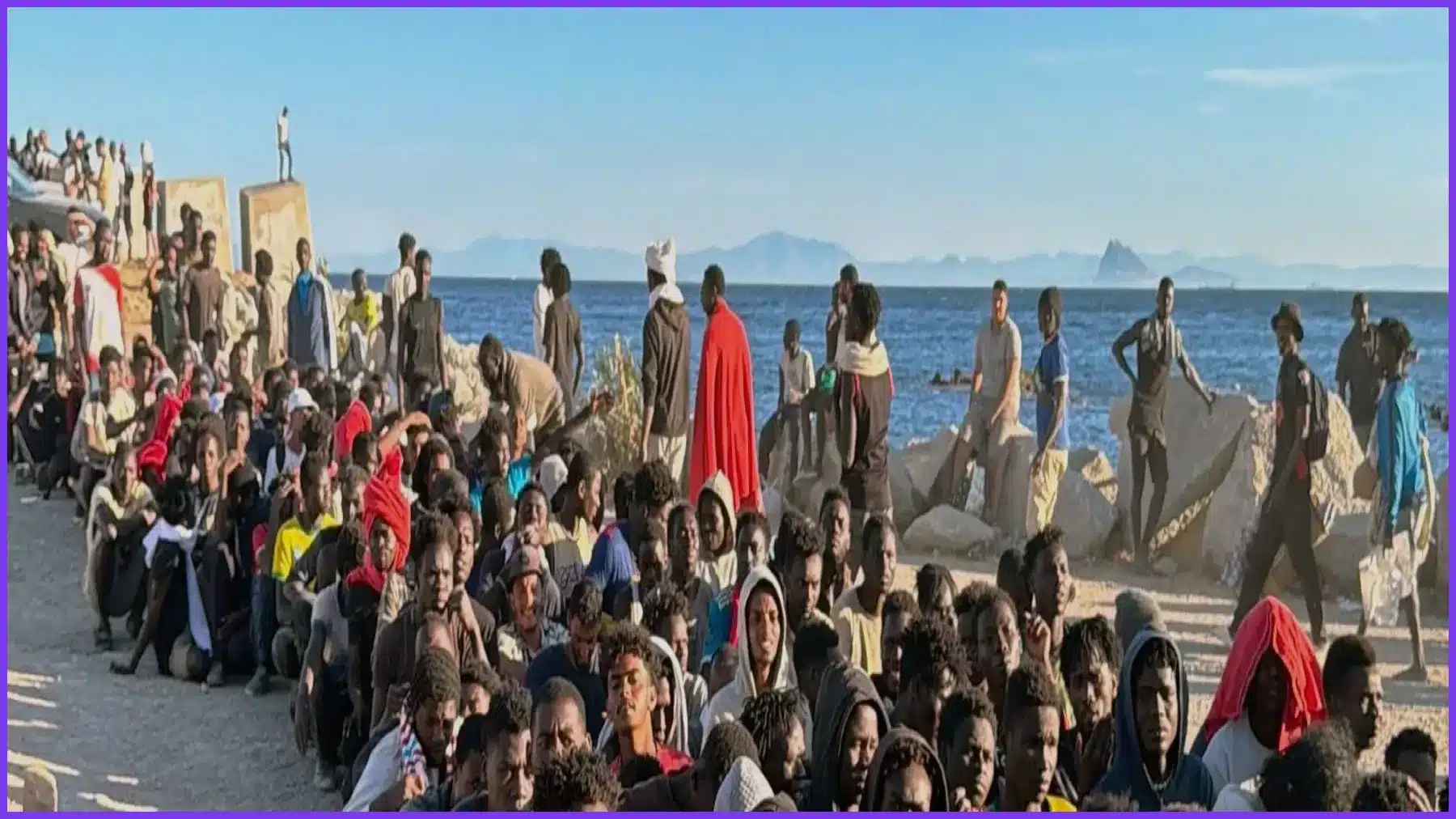
Spain has implemented strict border controls on all air and sea travel arriving from Italy, marking a significant escalation in a diplomatic dispute between the two European Union member states. The newly introduced restrictions, which went into effect at midnight (22:00 GMT), are scheduled to remain in place for one month. The move comes as a direct response to Italy's decision last week to impose its own border checks on travelers from Spain, following a massive influx of approximately 78,000 migrants from Morocco into the Spanish North African exclave of Ceuta.
The escalating political crisis has highlighted the deep ideological divide between Spain's socialist Prime Minister Pedro Sanchez and Italy's conservative Prime Minister Giorgia Meloni, who has consistently advocated for more stringent migration policies across the European Union. Prior to launching its reciprocal measures, Madrid had demanded that Rome reverse its travel checks by Sunday. However, the Italian government rejected the ultimatum, stating that its border controls would remain active until at least August 15, a date when Rome claims Spain expects another significant wave of migration to attempt crossings into Ceuta.
Spanish officials have strongly dismissed Italy's justification for the restrictions, describing them as being based on "spurious arguments" that lack any factual foundation. Madrid emphasized that the migrants who successfully entered Ceuta had no viable means of traveling onward into the wider passport-free Schengen zone. In response, Italy's government declared it would not bow to "ultimatums" or reconsider its suspension of the Schengen Agreement for third-country nationals arriving from Spain until security and potential terrorist threats are entirely resolved.
While Italian officials insisted they are doing everything possible to minimize disruptions and maintain comfort for travelers, reports from Spanish media outlet El Pais indicated that airport terminals have already experienced significant delays. Passengers arriving from Spain have faced lengthy queues after being funneled into dedicated screening lines. Rome has reiterated that Spanish citizens are officially exempt from these additional measures, which are intended to target only non-EU residents.
Under Spain's new retaliatory policy, which is set to run until September 7 unless changing circumstances prompt an earlier revision, authorities will conduct comprehensive passport, nationality, and visa checks on Italian passengers and other travelers arriving from Italy. The Spanish government justified the decision by pointing to the persistent irregular migratory pressure the nation has been experiencing.
Although most of the migrants who arrived in Ceuta last week were returned within days, nearly 1,400 minors—some described as very young boys and girls—still remain in the exclave. While Spain has not officially forecast a second wave of crossings, reports of potential new attempts have been widely circulated on social media by Moroccan users. The Spanish prime minister's office stated that they are actively monitoring the situation but do not anticipate a recurrence of the massive crossings seen last week.
The exact catalyst for the sudden surge of thousands of migrants swimming to Ceuta remains a subject of debate. Magnus Brunner, the European Union's Migration Commissioner, suggested that criminal trafficking networks spreading coordinated disinformation were responsible for orchestrating the event, an assessment that the Spanish government supports.
Furthermore, the crisis was preceded by a landmark ruling from Spain's Supreme Court, which decreed that migrants intercepted at sea while trying to reach the Spanish exclaves of Ceuta or Melilla cannot be summarily returned to Morocco. Moroccan officials have laid the blame for the border breach squarely on this judicial decision, with an unnamed government source stating that the ruling collapsed the system's deterrent effect. The number of people swimming to Ceuta at once has raised questions about why Morocco's border guards did not attempt to stop them. Both Ceuta and Melilla have long remained a source of diplomatic friction between Spain and Morocco, as Rabat does not recognize Spanish sovereignty over the territories.
Watch: Migrants started to return to Morocco after thousands entered Spain's Ceuta on 30 July
Spain's PM blames traffickers after 60,000 migrants reach Ceuta from Morocco
Related Articles

Mr. Udoy is a professional Web Developer and Blogger with 7+ years of experience in the tech world. He specializes in web architecture and digital storytelling. As the driving force behind worldincidents.com, he focuses on delivering high-quality, well-researched content to a global audience.