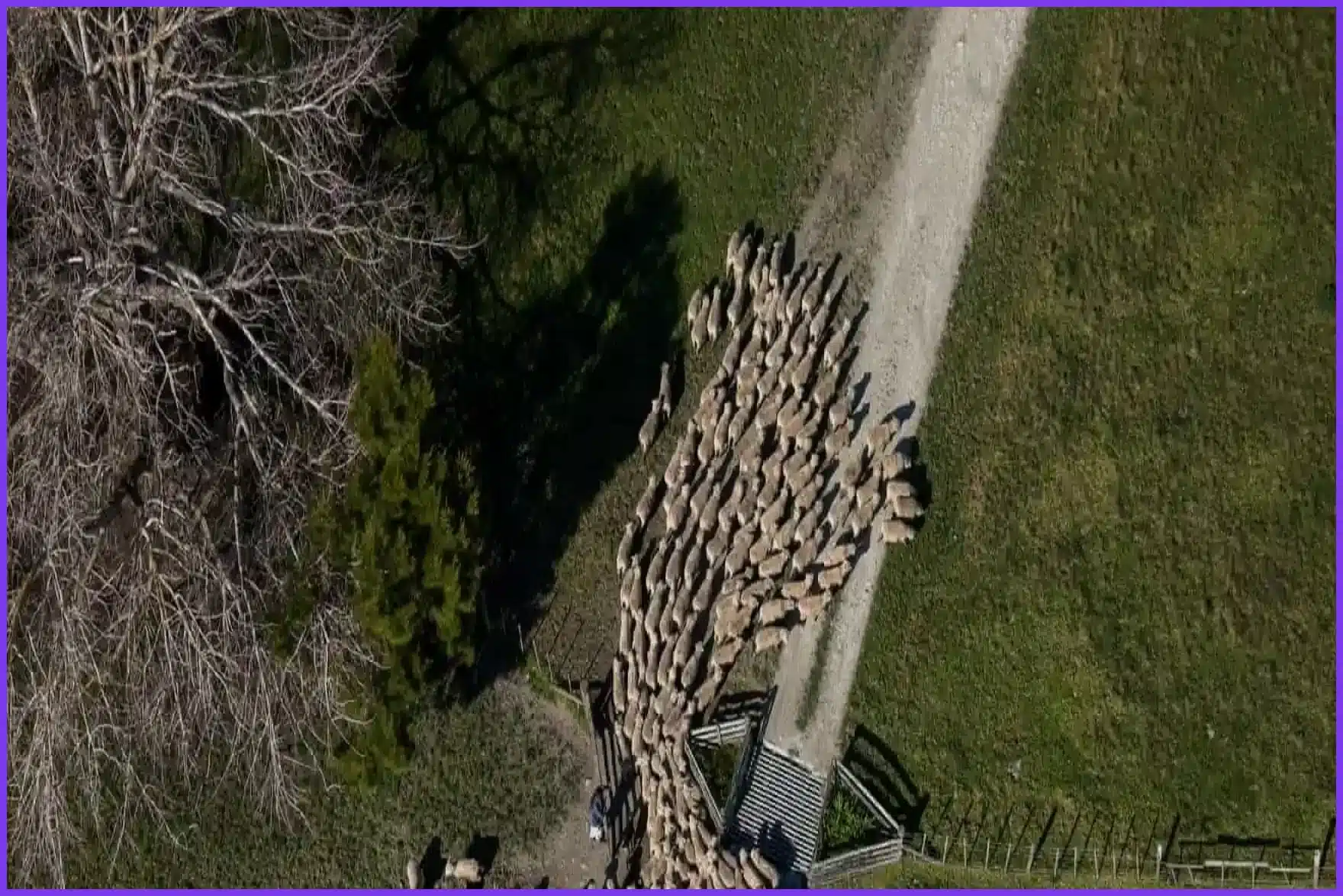
New Zealand’s historic wool industry is experiencing a notable resurgence, marking a shift for a sector that has faced decades of decline. For generations, farming families like that of John Hargreaves in Kaiwaka, north of Auckland, have navigated a difficult landscape. In the 1960s, the Hargreaves family managed 3,000 ewes, but as wool values plummeted and the costs of shearing surged, their flock size dwindled to roughly 1,700. Now, for the first time in about six years, the operation is once again turning a profit.
This revival is largely driven by a global increase in demand for natural fibers, as the rising costs of synthetic materials like nylon and polyester make them less attractive to international buyers. Dave Burridge, national wool auction manager for PGG Wrightson, noted that rising oil prices, exacerbated by conflict in the Middle East, have inflated the costs of raw materials needed for synthetic production. This trend is successfully pushing buyers from major markets, including China and India, back toward natural alternatives.
The impact of this shift was evident in June, when New Zealand wool reached its highest price point in 15 years at the PGG Wrightson national auction. Crossbred fleeces fetched between NZ$6.47 and NZ$6.80 per kilogram, with top-quality, high-color fleeces selling for nearly $8 per kilogram. While the market remains volatile—as evidenced by a price dip at the 30 July auction in Christchurch, which Burridge attributed to buyers pausing after earlier commitments—prices remain $2 higher than they were a year ago.
The current state of the industry is a significant change from the 1980s, when New Zealand’s sheep population peaked at over 70 million, equating to 22 sheep for every human. Economic policy shifts in the 1980s, combined with the rise of synthetics and a land-use pivot toward forestry and dairy, saw the sheep population drop to just over 23 million, or 4.5 sheep per person, according to StatsNZ.
Industry leaders remain optimistic. Richard Dawkins, wool and meat manager for Federated Farmers, noted that the current pricing has buoyed farmers and that global sustainability trends favor wool’s long-term prospects. He emphasized that for the industry to achieve lasting stability, New Zealand must re-embrace wool domestically. "This nation was built off the back of a sheep, built off wool," Dawkins said, adding that the country needs to recognize the value of its own product.
Related Articles

Md. Kazi Bijoy is a dedicated tech enthusiast and content creator with a passion for digital innovation. With years of experience in the tech industry, he specializes in breaking down complex topics into easy-to-understand guides. When he isn’t writing, he explores the latest gadgets and researches emerging trends in the digital world.