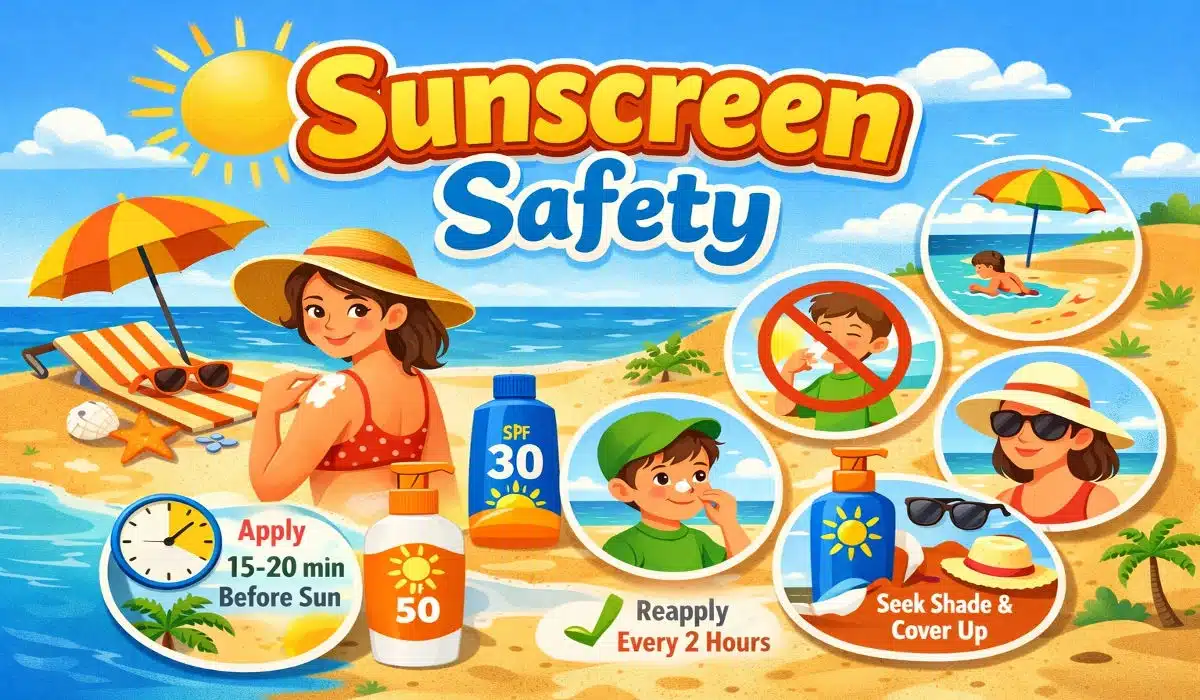
For the first time in over two decades, the FDA has proposed a major update to Sunscreen Safety standards by introducing Bemotrizinol to the U.S. market. Already a staple in Europe and Australia, this new active ingredient is a game-changer for UVA/UVB coverage. Its high photostability means it doesn’t break down quickly under direct sunlight, offering more reliable, long-lasting protection. For consumers, this marks a new era of safety where fewer reapplications may provide higher levels of skin defense.
Mineral vs. Chemical
The debate over Sunscreen Safety often centers on how ingredients interact with the body.
Mineral Filters (Zinc Oxide/Titanium Dioxide): Known as “Physical” blocks, these sit on top of the skin and reflect UV rays. They are generally recognized as safe (GRASE) by the FDA and are ideal for sensitive or acne-prone skin.
Chemical Filters (Avobenzone, Oxybenzone): These absorb UV rays and convert them into heat. While effective, 2026 research continues to monitor their systemic absorption into the bloodstream. Many modern brands are now reformulating to exclude older chemicals like Oxybenzone in favor of newer, larger-molecule filters that stay on the skin’s surface.
Ensuring Contaminant-Free SPF
A critical aspect of Sunscreen Safety in recent years has been the detection of Benzene, a known human carcinogen, in certain aerosol spray products. In 2026, manufacturers have implemented rigorous “Batch Testing” protocols to ensure that manufacturing impurities—often found in propellants—do not contaminate the final product. To maximize safety, dermatologists often recommend “Lotion” or “Stick” formulations over aerosols, as they provide more even coverage and carry a lower risk of accidental inhalation.
Safety for You and the Ocean
In 2026, Sunscreen Safety is intrinsically linked to environmental ethics. “Reef-Safe” is no longer just a marketing buzzword; it is a regulatory requirement in many coastal regions. Products containing Oxybenzone and Octinoxate are being phased out globally due to their role in coral bleaching. Safe alternatives in 2026 utilize non-nano mineral particles, which are large enough not to be ingested by coral polyps, ensuring your beach day doesn’t harm marine ecosystems.
Hybrid Protection
Modern Sunscreen Safety has moved toward “Hybrid” formulas. These products combine traditional UV filters with antioxidants like Vitamin C, Niacinamide, and Ectoin. These additives provide a secondary layer of safety by neutralizing free radicals produced by Infrared (IR) light and Blue Light (HEV), which traditional SPF may miss. This holistic approach ensures that your skin is protected not just from sunburn, but from the long-term cellular damage caused by the modern digital and urban environment.
Application Safety
Even the safest sunscreen fails if applied incorrectly. To achieve the labeled level of Sunscreen Safety, experts in 2026 advocate for the “2-Finger Rule”—applying two full strips of sunscreen to your index and middle fingers for the face and neck alone. Furthermore, with the rise of AI-driven skin diagnostics, many users now use smartphone apps to track UV intensity and receive “Reapplication Alerts,” ensuring their safety barrier never drops below the required threshold.
The Evolution of HEV and Blue Light Defense
In 2026, Sunscreen Safety has expanded beyond ultraviolet rays to include High-Energy Visible (HEV) light, commonly known as blue light. Research now shows that blue light from both the sun and digital screens can penetrate deeper than UV rays, triggering oxidative stress and worsening hyperpigmentation. Modern “Hybrid” sunscreens are now formulated with HEV-deflecting compounds and antioxidants that neutralize free radicals before they can damage DNA, making your daily SPF a vital tool for both outdoor and indoor skin health.
Ensuring Real-World Resilience
A major focus of Sunscreen Safety this year is photostability—the ability of a UV filter to maintain its effectiveness while exposed to light. In the past, some chemical filters would degrade within minutes of sun exposure, leaving the skin vulnerable despite application. 2026 formulations utilize “SPF Boosters” and stabilization tech that ensure the active ingredients remain intact for the full duration of their wear-time, providing more reliable defense during long periods of outdoor activity.
Wearable UV Sensors
One of the most innovative trends in Sunscreen Safety is the integration of wearable UV sensors and smart patches. These tiny, low-cost devices monitor real-time solar radiation and sync with your smartphone to provide personalized alerts. Based on your specific skin type and the local UV index, these apps calculate your “Safe Exposure Time” and send haptic notifications when it is time to reapply your sunscreen, removing the guesswork from sun protection.
AI-Powered Skin Analysis for Precision Application
Artificial Intelligence has revolutionized Sunscreen Safety by offering custom-tailored protection routines. In 2026, many dermatological apps use high-resolution “Selfie-Analysis” to identify areas of the face that are most susceptible to UV damage or pre-existing pigmentation. These tools provide a heat map of your face, showing exactly where you need a thicker application of SPF, ensuring that high-risk zones like the nose and cheekbones are never left under-protected.
The Precautionary Principle for Nanoparticles
While nanotechnology allows for mineral sunscreens that apply invisibly, 2026 Sunscreen Safety standards emphasize the “Precautionary Principle” regarding nanoparticle absorption. Regulatory bodies now require clearer labeling for “Nano-Sized” particles. While current data suggests they do not penetrate healthy skin, consumers are advised to use non-nano particles on damaged or broken skin to avoid any risk of systemic absorption, ensuring that the technology used to protect your skin remains strictly on the surface.
FAQ
Q1: Is SPF 100 safer than SPF 30?
Ans: While SPF 100 blocks about 99% of UVB rays compared to 97% for SPF 30, it can provide a false sense of security. Sunscreen Safety is more about proper application and reapplication than just the number on the bottle.
Q2: Can I use expired sunscreen?
Ans: No. Over time, active filters degrade and the emulsion can separate, leaving your skin unprotected. Always check the expiration date, especially with the newer 2026 biodegradable formulas.
Q3: Are “clear” mineral sunscreens safe?
Ans: Yes. Recent advances in micronized (non-nano) zinc technology allow for “clear” application without the white cast, maintaining high Sunscreen Safety standards for all skin tones.
read more: The Genesis of the Islamabad Peace Talks
Warren Buffett Investment Tips 2026

Mr. Udoy is a professional Web Developer and Blogger with 7+ years of experience in the tech world. He specializes in web architecture and digital storytelling. As the driving force behind worldincidents.com, he focuses on delivering high-quality, well-researched content to a global audience.