United States President Donald Trump has warned that the US military will destroy Iranian infrastructure, including bridges and power plants, if Tehran's forces continue to launch attacks on ships in the Strait of Hormuz. In a post on Truth Social, Trump specified that potential targets could include facilities "located next to, or in," the Iranian capital of Tehran. He emphasized that the American military response would follow any type of assault on shipping in the critical waterway, regardless of whether it is carried out by rocket, missile, drone, or any other weapon.
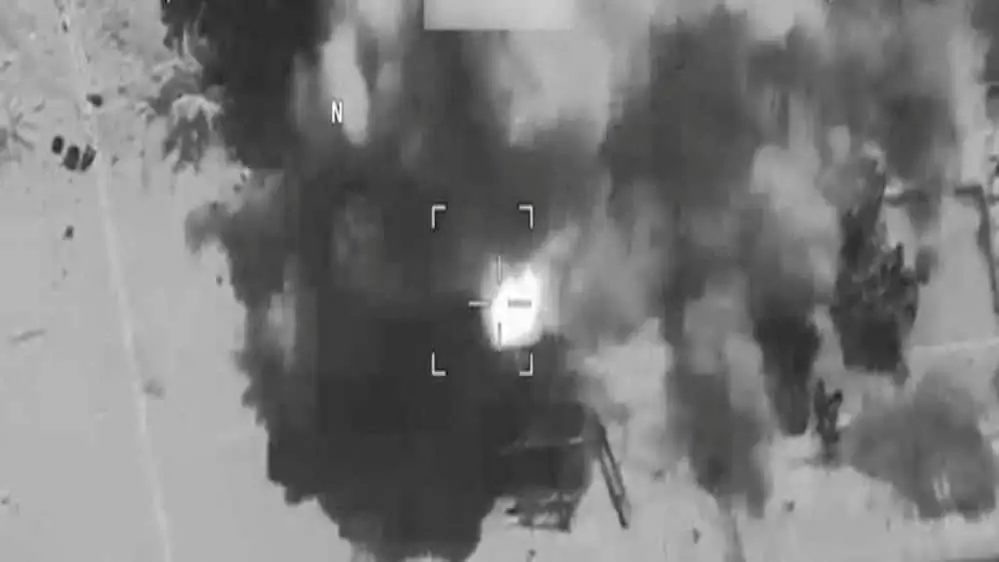
This warning comes as the conflict escalates, with the US conducting airstrikes against Iran for the 11th consecutive night. Iranian state media reported that air defenses were activated in Tehran, while explosions were also observed in several other locations. These included the north-western city of Tabriz, the south-eastern ports of Chabahar and Konarak, and the southern city of Bushehr, which houses Iran's sole nuclear power plant. In response to the ongoing operations, Tehran has warned Washington against striking its nuclear facilities, especially after Trump suggested the US could soon target an underground nuclear site near Natanz. Trump also noted that another potential military target is a complex known as Pickaxe Mountain, where Iran is suspected of constructing an undeclared underground uranium enrichment facility.
The regional fallout from the hostilities has spread to neighboring nations. Kuwait's military announced on Wednesday that its air defenses had successfully engaged drone attacks originating from Iran. Similarly, Bahrain and Jordan reported that they had intercepted incoming drone and missile strikes. Amid these tensions, Trump traveled to Dover, Delaware, on Wednesday to attend a dignified transfer ceremony for the bodies of US service members recently killed in the Middle East. Trump previously warned that Iran would pay for these American casualties "many times over." The Pentagon recently identified a fourth soldier believed to have died in these hostilities, naming 28-year-old Sgt Angel S Rampersad, who was initially declared missing following an Iranian strike in Jordan but is now believed to have died alongside two other soldiers in that same attack.
Meanwhile, the financial toll of the conflict on the US continues to mount. US Defense Secretary Pete Hegseth informed the Senate Appropriations Committee on Tuesday that the war with Iran has cost Washington approximately $37.5 billion (£28 billion) to date. This represents an increase of nearly $8 billion since the previous estimate in May. Hegseth warned lawmakers that military training programs would have to be curtailed unless Congress approves an urgent funding boost. Despite the military escalation, US Secretary of State Marco Rubio stated that Washington remains open to diplomatic engagement with Tehran, though he expressed skepticism about Iran's seriousness regarding negotiations.
The current hostilities have effectively collapsed a previous diplomatic breakthrough. In June, the US and Iran signed a Memorandum of Understanding (MoU) intended to halt military operations, reopen the Strait of Hormuz, and establish a framework to end the war within 60 days. However, just three weeks after the agreement was signed, Trump declared the ceasefire "over" following renewed Iranian attacks on vessels in the strait and subsequent US retaliatory strikes.
The conflict is also severely impacting global shipping and energy corridors. With the Strait of Hormuz effectively closed, the Red Sea has become a vital route for oil shipments from Saudi Arabia. However, the Iran-backed Houthi rebel group in Yemen has threatened a blockade of Saudi ports and announced the closure of the Bab al-Mandab Strait—the southern entrance to the Red Sea—to Saudi vessels. Trump responded by threatening to "take care of" the Houthis if they execute this blockade. The threat has already caused operational disruptions; British maritime risk management group Vanguard reported that two tankers carrying Saudi crude bound for China and India made U-turns on Tuesday after loading at the Red Sea port of Yanbu, redirecting instead toward the Suez Canal. These developments risk further disruptions to international trade, which have already caused global fuel prices to fluctuate widely.
Iran has remained defiant in the face of US pressure. On Wednesday evening, Iran's top negotiator, Mohammad Bagher Ghalibaf, posted a warning to the US on X, stating that "the equation of this war is clear: either all or none!" Ghalibaf declared that in a region where Iran is prevented from selling its oil, no other nation will be permitted to sell oil either. He warned that if Iran's security is not guaranteed, no infrastructure in the region will be safe, adding that the security of the Strait of Hormuz depends on the absence of American forces. He concluded by reiterating that the situation in the strategic waterway will not return to pre-war conditions.

Md. Kazi Bijoy is a dedicated tech enthusiast and content creator with a passion for digital innovation. With years of experience in the tech industry, he specializes in breaking down complex topics into easy-to-understand guides. When he isn’t writing, he explores the latest gadgets and researches emerging trends in the digital world.