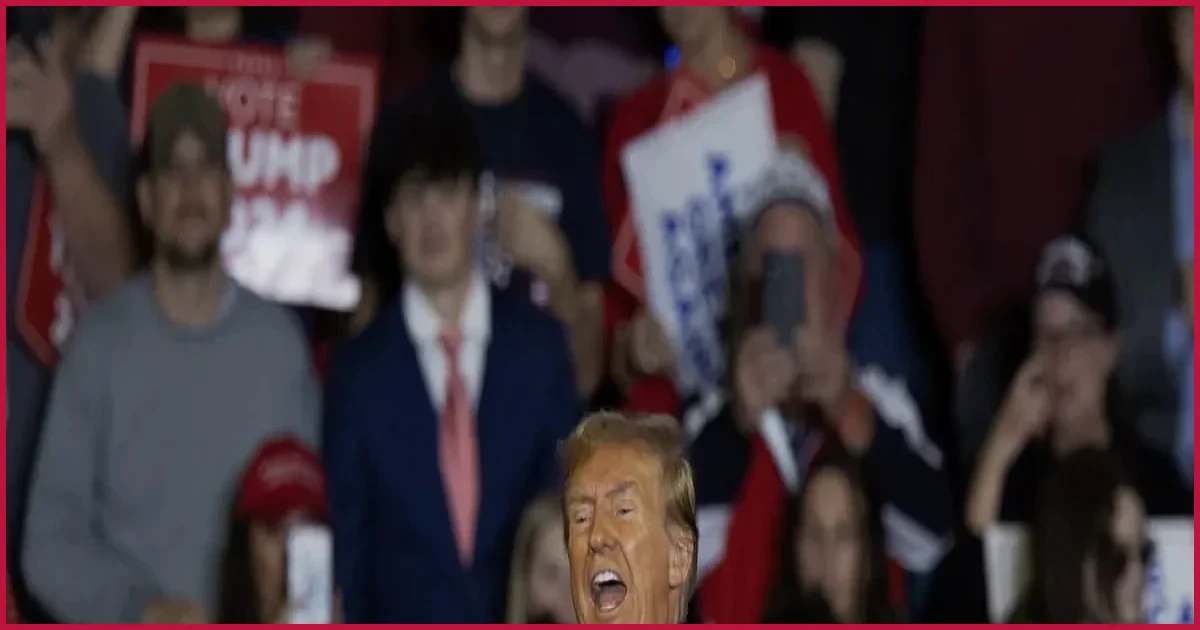
As the first postal ballots are sent out for the crucial US midterm elections that will shape the balance of power in Washington for the next two years, an unusual theory is gaining traction: President Donald Trump may actually be indifferent to a Republican defeat, or perhaps even secretly hoping for one. While the idea of a sitting president inviting electoral disaster seems counterintuitive, a consistent pattern of policy choices and political decisions suggests a strategy of self-sabotage.
A compelling explanation for this behavior lies in the President's personal psychology, as detailed in the book Regime Change by journalists Maggie Haberman and Jonathan Swan. The authors suggest that Trump's deep-seated narcissism would allow him to view a sweeping Democratic victory in the 2026 midterms, or even in 2028, as a personal validation. According to the book, if Republicans suffer major losses, Trump could simply boast that the party is incapable of winning without him directly on the ballot. Far from a rejection of his leadership, an epic Republican defeat would be interpreted by Trump as the ultimate compliment to his indispensability.
This psychological motivation helps explain a series of highly damaging decisions that seem designed to alienate voters. At the forefront is the central conflict of Trump's second term: his self-initiated war against Iran. Despite repeated presidential declarations of "mission accomplished" and claims that the Iranian military has been neutralized and the Strait of Hormuz reopened, the ground reality remains volatile. Over the past week, the conflict escalated from an economic standoff back into active combat. US forces fired on Iranian targets, mistakenly striking a wedding party and killing four people. In response, Tehran launched retaliatory strikes across the region, hitting targets in Iraq, Kuwait, Jordan, and Bahrain.
The domestic fallout of this war is being felt acutely by American voters in the form of soaring petrol prices and grocery bills. Furthermore, the US government's borrowing costs have climbed steeply since the war began on February 28, reaching a fresh high on Tuesday. For everyday consumers, this surge in borrowing costs is expected to trigger a significant rise in interest rates, meaning voters will face higher credit card bills and mortgage payments just as they head to the ballot box. For a president who won election in November 2024 on a firm promise to curb inflation, creating such an unfavorable economic environment is politically perilous. It has also deeply disillusioned his core MAGA supporters, who expected Trump to fulfill his promise of ending forever wars in the Middle East.
Beyond the Middle East, Trump has also initiated a highly damaging trade dispute with Canada. This conflict has featured highly unusual symbolic gestures, such as Trump unilaterally renaming Lake Ontario as "Lake America"—a change subsequently adopted by Apple and Google in their mapping applications. More importantly, the economic consequences are severe. Canada has responded with "dollar-for-dollar" retaliatory tariffs that directly target states with critical Senate races this year, including Michigan, Ohio, Maine, Iowa, and Texas. Republican candidates in these areas must now explain to voters why a vital export market has suddenly closed. In Iowa, which has not elected a Democratic senator in nearly two decades, Canada normally purchases nearly a third of all exports. Due to the tariff war, local farmers are suffering, giving Democrats a genuine opportunity to win the seat.
Trump has also taken highly unpopular stances on domestic issues, most notably regarding the rapid expansion of datacenters. Public concern over datacenters has spiked dramatically, with seven in ten Americans across the political spectrum stating they do not want such facilities near their homes. Voters, including many Republicans, are deeply concerned about the environmental impact, massive energy consumption, and heavy water use of these centers, which have also become a focal point for broader anxieties regarding artificial intelligence and job security. Yet, Trump directly challenged this sentiment on Monday, posting that "the only reason that communities throughout the USA should not want data centres is if they want to end up being backwards and poor," a statement that both opposed and insulted the majority of voters.
The President has consistently aligned himself with minority opinions on other high-profile issues. Strong majorities oppose his personal vanity projects, such as demolishing the East Wing of the White House to construct a ballroom or placing his signature on the US dollar bill, yet he continues to promote them. Additionally, Trump has weakened his party's electoral prospects by endorsing highly controversial candidates. In Texas, he backed Ken Paxton for the Senate, despite Paxton's prior impeachment by his fellow Texas Republicans on charges of bribery and abuse of public trust, leaving a traditional Republican stronghold suddenly vulnerable.
Ultimately, Trump appears completely unconcerned by the prospect of a Democratic "blue wave" reclaiming Congress. A Democratic-led House and Senate would hold the power of investigation and subpoena, but Trump knows these tools are difficult to enforce against the executive branch. Backed by the broad immunity granted to him by the Supreme Court, he can simply ignore congressional demands and instruct his aides to do the same, secure in his ability to issue presidential pardons to shield them from legal consequences. Knowing that Senate Republicans previously acquitted him after the January 6 insurrection, Trump is confident that Congress will never muster the votes to remove him from office, leaving him free to pursue his agenda without fear of legislative oversight.
What’s odd is that Trump’s trade wars are also wars of choice, and they are hurting especially badly what should be a reliable Republican constituency: farmers. Take Iowa: Democrats have not won a senate seat in that farming state for nearly 20 years, yet now, thanks to Trump’s tariffs, they have a genuine shot.
Still, perhaps the most egregious illustration of Trump’s apparent determination to ruin Republican chances in the midterms is his support for datacentres. Few issues have seen their salience rise so quickly and in such a clear direction: almost overnight, they have become objects of fear and loathing across the countr
Related Articles

Meet Md. Rubel Rana
As a core contributor to Worlddincidents.com, Rubel Rana brings a unique perspective to the world of journalism. Whether it’s deep-diving into historical trivia or covering the latest global headlines, Rubel Rana is committed to delivering high-quality, high-impact articles. Their writing blends meticulous research with a compelling voice, helping readers stay informed and curious about the world around them.