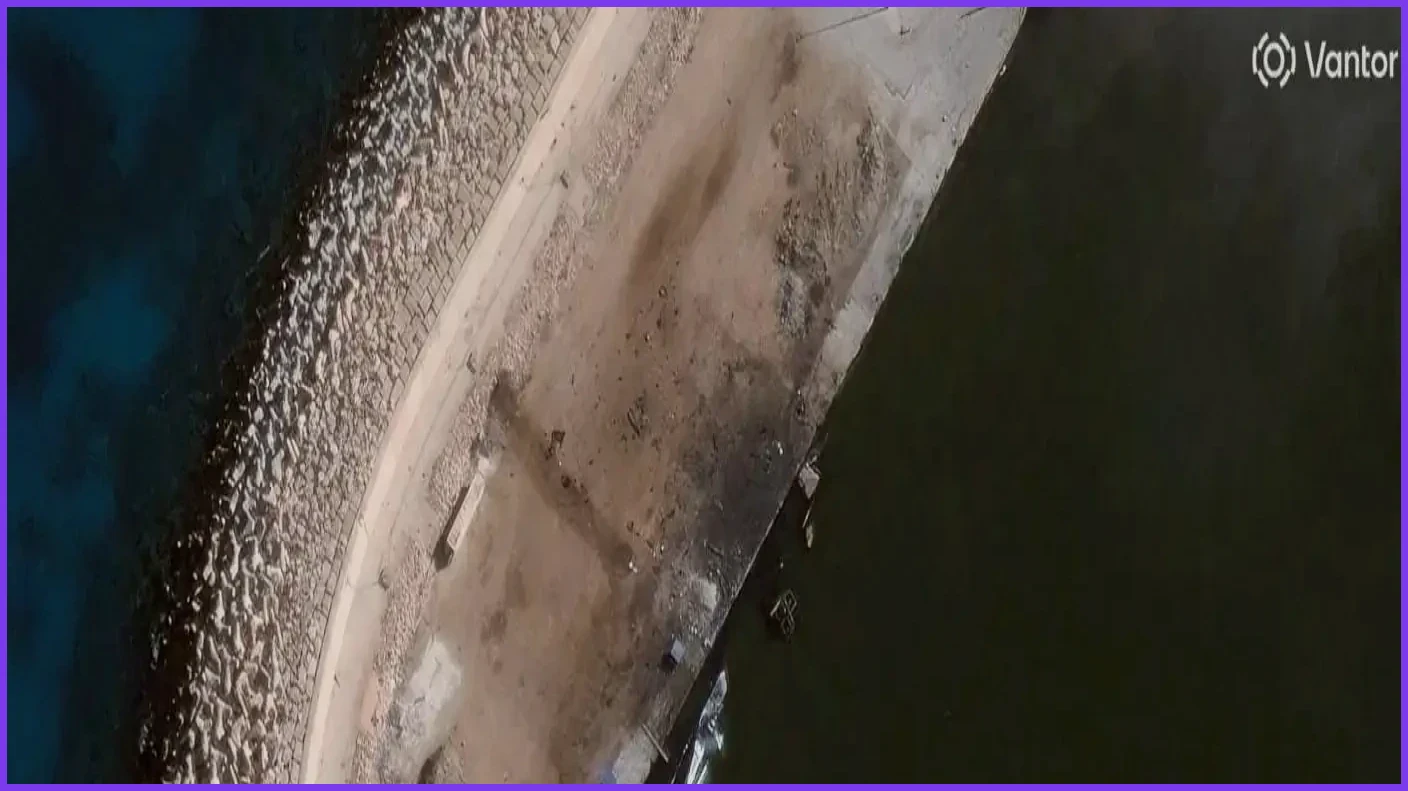
Anchored in a Mediterranean harbour nearly 2,000 miles from Moscow, the captain of the Russian corvette Merkury might have felt secure from the conflict raging in Eastern Europe. However, that sense of safety was shattered by an audacious night-time attack in Benghazi. The operation, coordinated by Ukraine’s SBU intelligence agency and its armed forces, has prompted a significant question: is the Ukraine war spreading well beyond its borders?
The answer is that the conflict has been expanding for some time, but this specific strike, which Ukrainian President Volodymyr Zelensky hailed as an "exemplary operation," marks a notable escalation.
Russia, currently engaged in a persistent campaign of daily missile and drone strikes against Ukraine’s civilian population, has labeled the Benghazi incident a "dangerous escalation." This event follows a suspected Ukrainian drone attack on a Russian dry-cargo ship in the Gulf of Finland over the weekend, an act the Kremlin described as terrorism.
Furthermore, Ukraine’s long-range drones have previously targeted Russia’s Baltic oil terminal at Ust-Luga and have even reached targets thousands of kilometres deep inside Siberia.
Among these, the most prominent was last year’s "Operation Spider's Web," where a specially adapted lorry approached a Russian strategic nuclear bomber airbase, releasing a swarm of explosive drones that damaged or destroyed several expensive aircraft. Ukraine has also been active in Africa, targeting Russian mercenaries from the Africa Corps, the successor to the Wagner Group, which has been accused of numerous human rights abuses.
Libyan officials have emphasized that their country is not a party to the Russia-Ukraine war. However, the Merkury and an accompanying cargo ship were berthed in the eastern part of Libya, a region controlled by the pro-Moscow warlord and self-styled "Field Marshal" Khalifa Haftar.
The International Maritime Organisation (IMO) has spent this year condemning attacks on commercial shipping in the Strait of Hormuz, and the global shipping community is now questioning whether this strike sets a dangerous precedent.
If Ukraine can execute such a bold operation in a nominally neutral harbour so far from home, the limits of the conflict become increasingly difficult to define.
As the fifth anniversary of Russia’s full-scale invasion approaches, the war is manifesting in other parts of Europe. On Friday, several Russian projectiles landed deep inside Poland, just 60 miles from an Anglo-French military exercise intended to support forces for a potential future ceasefire. Polish Prime Minister Donald Tusk described this as a "deliberate provocation" by Moscow.
While Russian munitions have landed in Polish territory before, observers note that Russia’s probing of Nato borders is becoming increasingly brazen, leading some to call for a firmer response. However, options for Western retaliation are limited, as Russia is already heavily sanctioned and direct military confrontation remains a scenario no one wishes to pursue.
The broader landscape of this conflict is increasingly defined by hybrid warfare, which is on the rise. This practice involves anonymous, unattributable operations such as cyber attacks, the burning of military supply warehouses, and the use of explosive or surveillance drones.
This autumn, three explosive drones targeted Germany's Leipzig-Halle airport, which serves as a resupply hub for Ukrainian cargo aircraft, though they were discovered before causing harm.
Other incidents have involved explosive packages sent across Europe to Germany, Poland, and the UK, all of which Moscow denies involvement in. Meanwhile, Romania and Moldova frequently face overflying Russian drones, and Bulgaria and Romania have experienced maritime drone attacks on commercial shipping offshore.
In Romania, a Nato member, fast jets have been scrambled to intercept incoming drones, with profound suspicions that these incursions are not accidental. The Baltic states—Estonia, Latvia, and Lithuania—also consider themselves on the front lines, reporting anonymous attacks on military industrial facilities blamed on agents acting for Moscow.
Russia, conversely, has accused Estonia of complicity in Ukrainian drone attacks on the Baltic involving overflights through Estonian airspace.
Related Articles

Mr. Udoy is a professional Web Developer and Blogger with 7+ years of experience in the tech world. He specializes in web architecture and digital storytelling. As the driving force behind worldincidents.com, he focuses on delivering high-quality, well-researched content to a global audience.