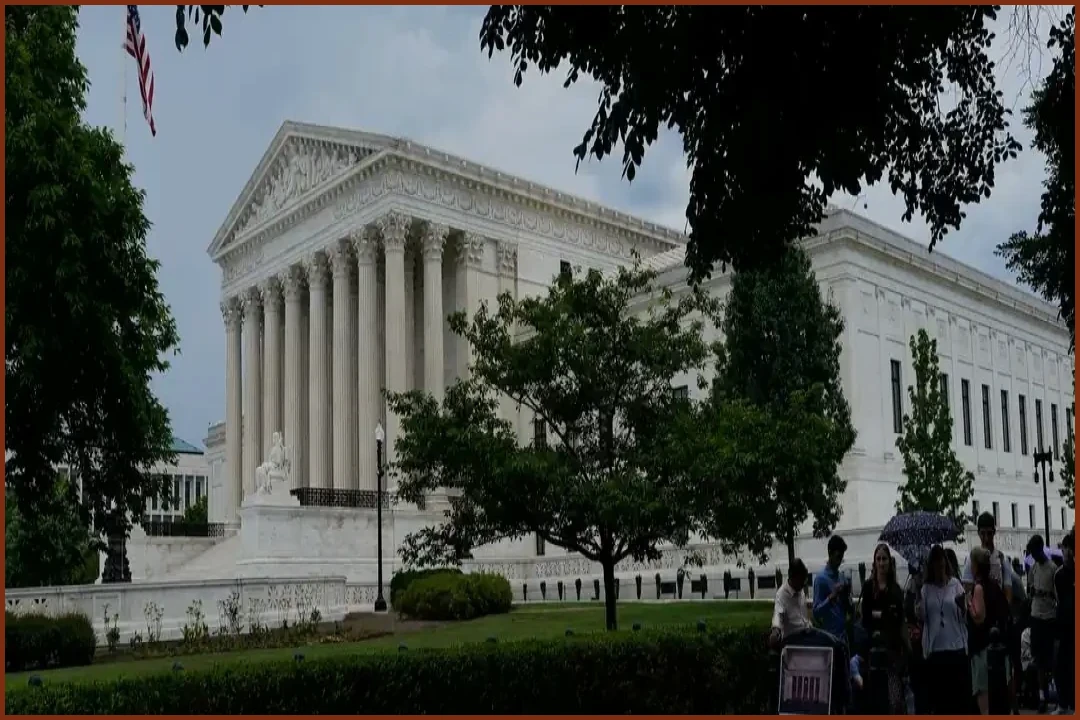
The United States Supreme Court has granted a request from the Trump administration to permit the use of a federal database to identify potential non-citizens on voter rolls. The decision, delivered via an unsigned opinion, was supported by a majority of the nine justices, marking a victory for President Donald Trump ahead of the November mid-term elections. The court's three liberal justices dissented from the ruling.
The Supreme Court's decision effectively lifts a lower court order that had previously blocked the use of the Department of Homeland Security program known as Systematic Alien Verification for Entitlements (SAVE). While the SAVE database is primarily utilized to determine citizenship status for benefit eligibility, the Supreme Court ruled that the federal government maintains an obligation to respond to requests from state and local election officials who seek to verify the citizenship of voters. The court stated that the lower court's injunction had prevented the federal government from utilizing the program it believes is best suited for this task.
In a ruling issued in June, the lower court had argued that states partnering with the federal government to access the database were actively removing United States citizens from voter rolls based on inaccurate information. President Trump has maintained for years that mail-in ballots are vulnerable to fraud and that non-citizens frequently vote in US elections.
US Attorney General Todd Blanche welcomed the Supreme Court's decision as a "huge victory for election integrity," stating that it will allow states to clear the voter rolls of illegal voters. However, election experts suggest the ruling is unlikely to have a significant impact on the November elections. Rick Hasen, a law professor at the University of California, Los Angeles, noted that most US states prohibit the purging of voters within 90 days of an election. Hasen observed that both the majority and the dissent agree the case will likely have limited impact on the midterms, noting that it is not very important substantively compared to a recent Supreme Court decision that blocked a Trump plan to restrict mail-in ballots. President Trump had previously reacted to that earlier ruling with frustration, calling it "horrible" in a post on Truth Social.
Related Articles

Mr. Udoy is a professional Web Developer and Blogger with 7+ years of experience in the tech world. He specializes in web architecture and digital storytelling. As the driving force behind worldincidents.com, he focuses on delivering high-quality, well-researched content to a global audience.