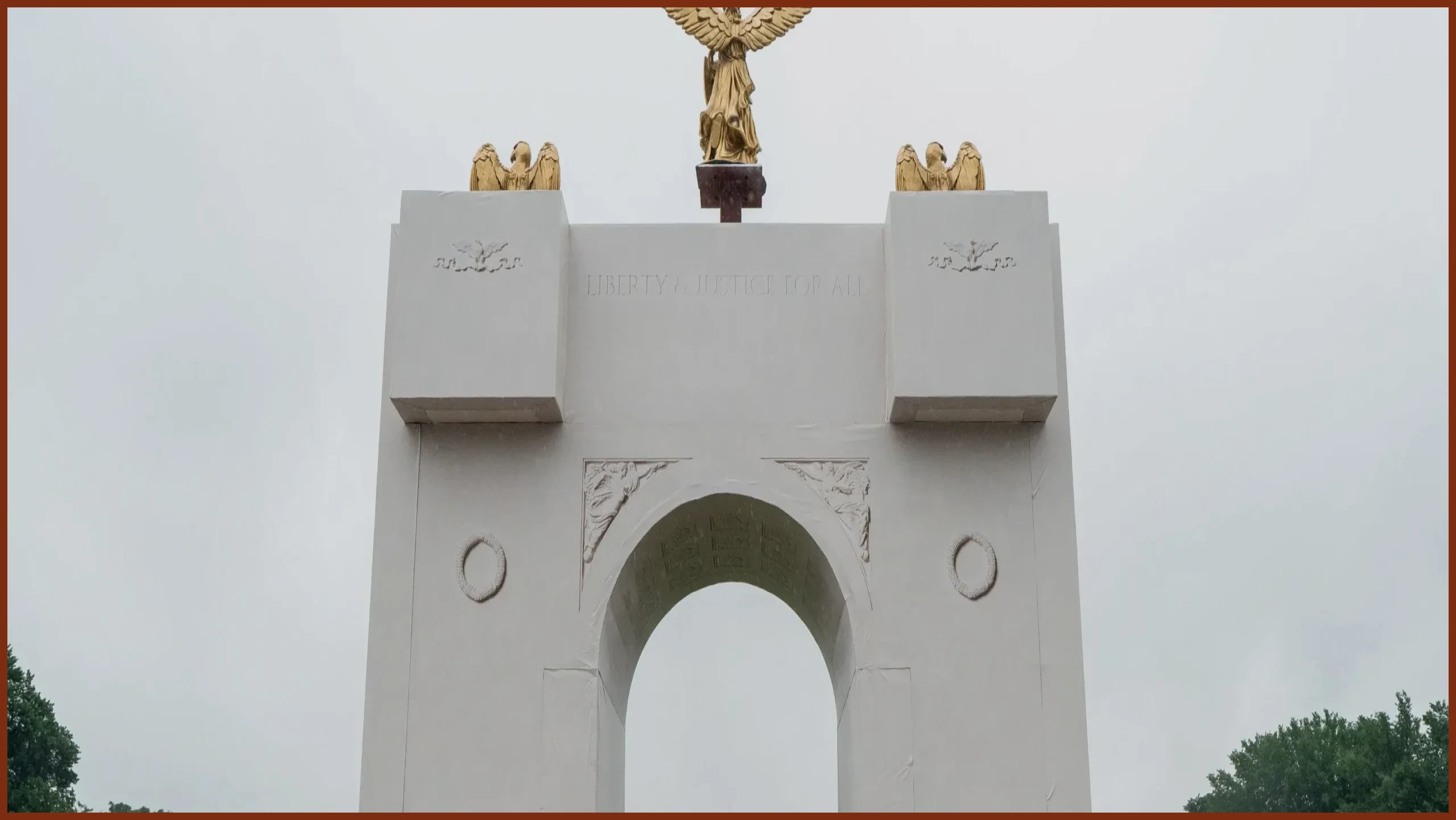
The National Park Service has officially expressed support for the construction of a massive monument proposed by President Donald Trump, known as the "Triumphal Arch," even after identifying that the project would result in negative consequences for the views surrounding several historic sites and monuments in Washington. In a report released on August 28, the agency stated its intention to mitigate or minimize these harms, noting that the arch is designed to commemorate 250 years of American independence and honor the nation's founding principles.
The proposed 250-foot-tall structure is slated for a location where the Arlington Memorial Bridge and the George Washington Memorial Parkway intersect, directly in front of the entrance to Arlington National Cemetery. The report characterized this site as consistent with the area's role as a ceremonial gateway and an "Avenue of Heroes" intended to celebrate sacrifice, valor, and American heritage. Situated across the Potomac River from the Lincoln Memorial, the arch's height would surpass that of the Lincoln Memorial and approach the 288-foot height of the Capitol building. The Park Service explicitly rejected proposals for a smaller structure, emphasizing that the 250-foot height is symbolic of the country's 250th anniversary.
Planned as a reinforced concrete structure clad in granite, the arch will feature two eagles and a central winged figure, along with an observation deck for visitors. This project is part of a broader series of initiatives championed by President Trump to alter the Washington landscape, which have also included the installation of a granite helipad, the construction of a new White House ballroom, and a controversial remodeling of the Lincoln Memorial's Reflecting Pool.
According to the Park Service's own findings, dozens of historic locations will suffer adverse effects, primarily involving the disruption of views rather than physical damage to the structures themselves. Properties identified as being most impacted include the Lincoln Memorial corridor, Memorial Circle, Memorial Avenue, Arlington House, and Arlington National Cemetery. The agency dismissed alternative locations or scaled-down versions, arguing that a smaller arch would obstruct views of the Lincoln Memorial and that moving the project would negate its purpose, as the current site was chosen for its historical appropriateness.
While acknowledging the sensitivity of the commemorative landscape, the Park Service stated that it will work to minimize construction-related disruptions, rehabilitate existing architecture along the bridge and avenue, and develop educational materials for the public. The agency noted that the very qualities making the location sensitive for preservation are the same ones that make it the historically appropriate choice for the monument.
Related Articles

Mr. Udoy is a professional Web Developer and Blogger with 7+ years of experience in the tech world. He specializes in web architecture and digital storytelling. As the driving force behind worldincidents.com, he focuses on delivering high-quality, well-researched content to a global audience.
1 thought on “Park Service Backs Trump’s Triumphal Arch Despite Landmark Impacts”