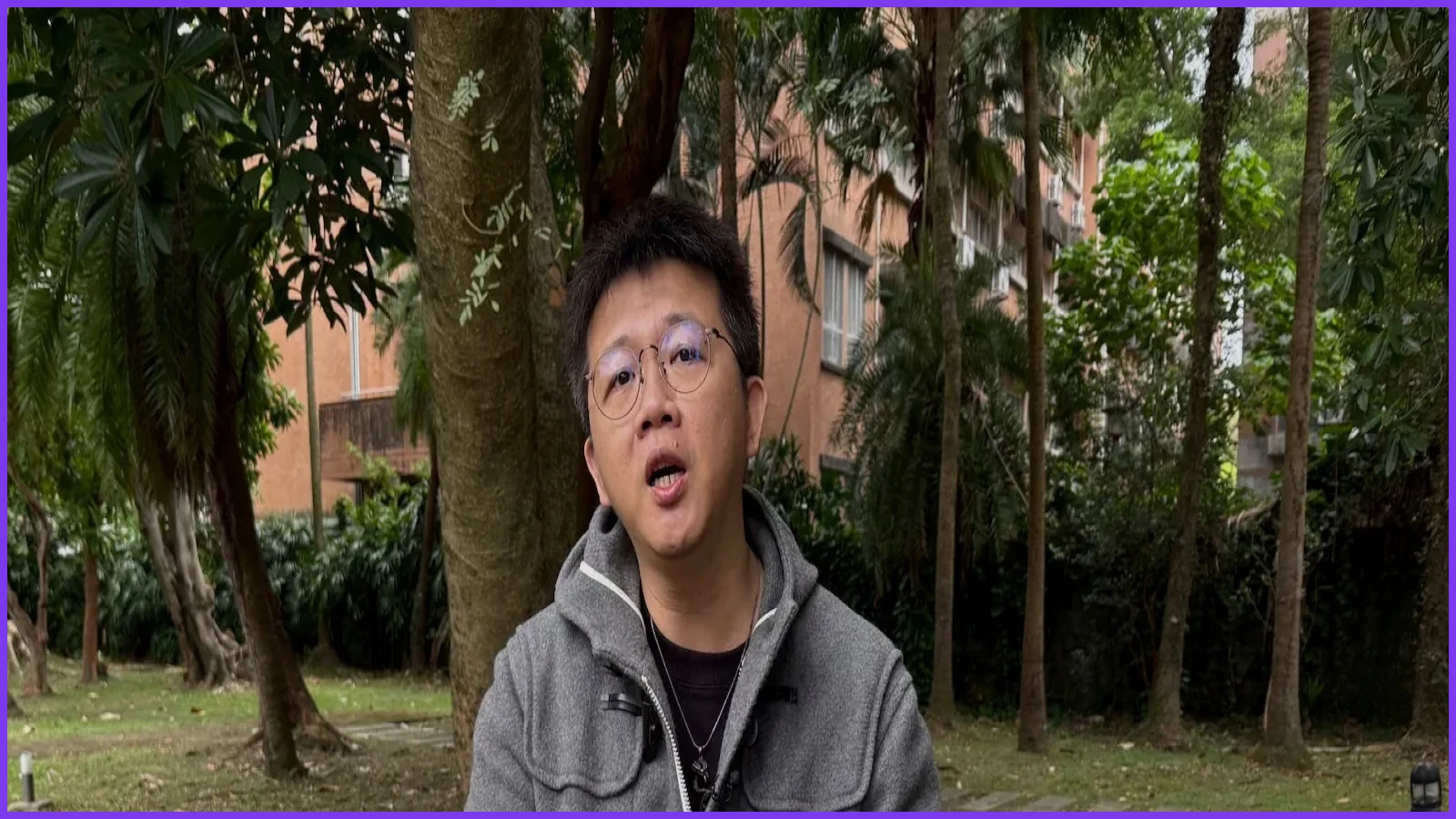
In September, comedian Huang Yi-hao was involved in a car accident that initially seemed routine. However, the situation took an ominous turn when the men in the other vehicle displayed unusual politeness, offering to cover both his medical expenses and vehicle repairs. Subsequent investigations by Taiwanese police revealed that the crash was not an accident at all. In October, Taipei prosecutors charged five men for deliberately attempting to injure Huang, marking a significant development in a broader pattern of alleged transnational repression targeting individuals on the self-ruled island who speak out against the government in Beijing.
Chiu Shao-Chou, the commissioner of Taiwan's Criminal Investigation Bureau, noted that these incidents reflect an alarming escalation in tactics. According to Chiu, the harassment has evolved from verbal threats and property damage, such as pouring paint, to more severe actions like orchestrating fake car accidents. Authorities view this trend with serious concern, as Taiwan has long contended with various infiltration attempts, including espionage targeting military officials and the president's bodyguards, as well as disinformation campaigns during electoral cycles or the use of cultural exchanges to spread Communist Party ideology.
Huang suspects the attack was retaliation for his performance late last year, in which he used the xiangsheng comedic tradition to compare Chinese President Xi Jinping to Winnie the Pooh. Prosecutors allege the five suspects were paid approximately 450,000 New Taiwan dollars, equivalent to $13,900, by an individual in China using the alias “K” to inflict injuries severe enough to end Huang's performing career. While Huang has ceased collaborations with other comedians due to safety concerns, he reports that his solo shows have continued to sell out. He remains defiant, stating that the Communist Party's reaction to a comedian's critique appears childishly aggressive. He also noted that other comedians have faced performance cancellations in China and Taiwan due to their associations with him.
The targeting of critics extends beyond the entertainment industry. Taiwanese prosecutors have also accused Hong Kong triad members of plotting to assault Japanese political commentator Akio Yaita. According to an October statement, five members were paid by a fellow gangster to monitor the area around a hotel where Yaita was scheduled to speak. Although two withdrew, the remaining pair, alongside another member, left Taiwan after the incident. One of the men was offered 100,000 Hong Kong dollars, or $12,750, to assault Yaita. He punched the commentator in the face and was later arrested, while a lookout fled the island. Yaita, a former reporter in Beijing who now leads a think tank in Taiwan, believes the assault was a direct attempt to silence his criticism of Chinese government policies. The arrested suspect pleaded guilty on Tuesday, according to the Central News Agency, and awaits sentencing.
Experts suggest these tactics represent a shift in Beijing’s approach. Matt Brazil, a fellow at The Jamestown Foundation in Washington, D.C., argued that these actions go beyond traditional military posturing with ships and aircraft, indicating a more militant stance against dissidents. Meanwhile, Taiwan's police are coordinating with international partners, including U.S. authorities, to address the global scope of these threats. This cooperation follows the October arrest of a woman in Los Angeles accused of surveilling the son of Taiwan's President Lai Ching-te on behalf of the Chinese government.
Taiwanese officials are treating these cases as national-level security threats, involving immigration, the coast guard, and other government agencies to intercept perpetrators before they leave the island. The Mainland Affairs Council has announced plans to strengthen the Anti-Infiltration Act to better deter such interference. In response to the Yaita incident, China’s Taiwan Affairs Office claimed in July that the assailant acted out of “righteous indignation” and called it an ordinary public security incident. China has denied any involvement in the attack on Huang, with the Taiwan Affairs Office stating on Wednesday that “transnational repression” was a lie by Taiwan’s ruling Democratic Progressive Party intended to suppress political dissent. For Huang, who now travels with a police escort to every performance, the intended message remains clear.
Related Articles

Md. Kazi Bijoy is a dedicated tech enthusiast and content creator with a passion for digital innovation. With years of experience in the tech industry, he specializes in breaking down complex topics into easy-to-understand guides. When he isn’t writing, he explores the latest gadgets and researches emerging trends in the digital world.