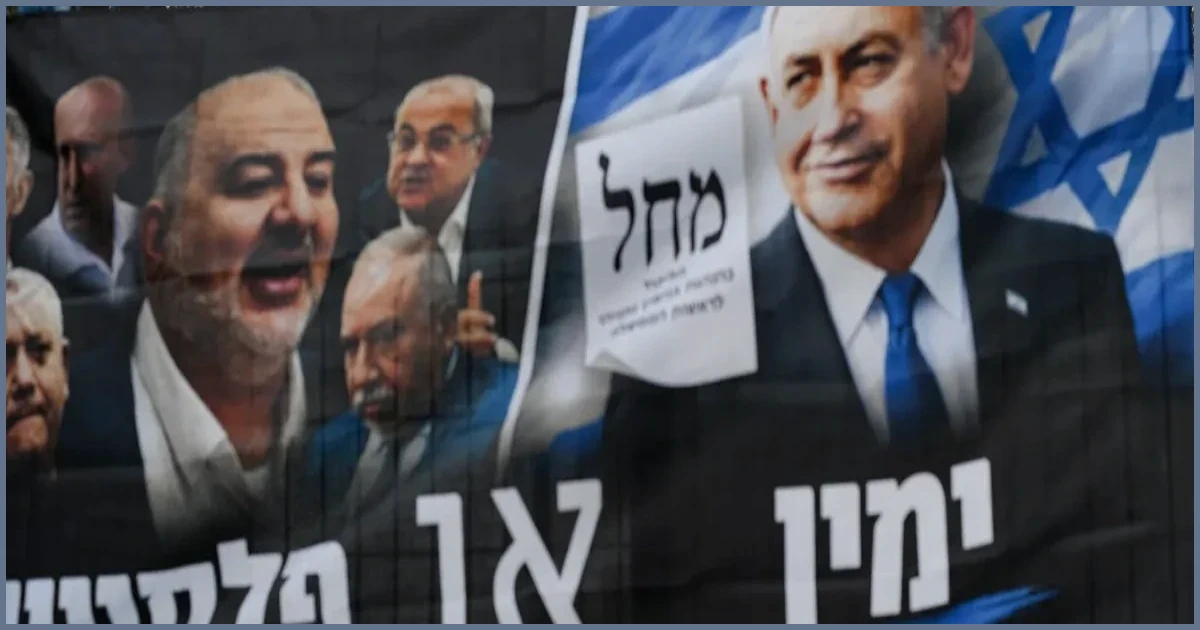
Israel’s major television networks have released exit polls following Tuesday’s election, indicating that the country is once again headed toward a potential political stalemate. While Prime Minister Benjamin Netanyahu’s Likud party emerged as the largest single party, the projections show that a majority of Israeli voters cast their ballots against his coalition. Crucially, neither Netanyahu nor his opposition bloc appears to have secured a clear majority in the 120-seat Knesset, the country’s parliament.
Forming a government requires majority support within the Knesset, a threshold that both sides are expected to struggle to reach. This election marks the first since the October 7, 2023, attacks by Hamas, an event authorities have described as the most significant security failure in Israel’s history since 1948. Voters went to the polls while the nation remains engaged in a multifront war across Gaza, Lebanon, and Syria, alongside recent direct conflicts with Iran. Given the ongoing nature of these conflicts, many Israelis viewed the election as an existential moment, resulting in high voter turnout.
Netanyahu, the nation’s longest-serving prime minister, is attempting to build a coalition similar to his current government, which relies on partnerships with ultranationalist and Jewish religious parties. He has framed the ongoing military campaigns as a necessity, arguing that he requires more time to complete the objectives set by his government. Last week, Donald Trump provided a strong endorsement of Netanyahu, reiterating support for the war against Iran and warning on Truth Social, "If Israel has the wrong Leader, which would be anyone other than Bibi, America will have to do this work ourselves, and I am not inclined to do so."
Opposing the Prime Minister is a diverse group of parties united by the goal of removing him from power. The front-runner for this "change bloc" is Gadi Eisenkot, the former Israeli military chief and leader of the centrist Yashar party. During a rally late Tuesday, Eisenkot stated, "The Israeli public has voted against Netanyahu's service as Israel's prime minister. A worthy leader would have accepted the people's non-confidence and announced today his retirement from politics." Eisenkot, who served in the war cabinet during the first year of the Gaza conflict, has positioned himself as a veteran aiming to unify a divided nation. His party’s candidate list notably includes a high proportion of women, contrasting with the male-dominated coalition led by Netanyahu.
A notable development in this election was the performance of Israel's two Arab parties, which won more seats than in any previous cycle. This outcome followed what many Arab voters described as a difficult period under Netanyahu’s hard-right government, driving historic turnout among the minority community, which constitutes approximately 20% of the population. Despite their electoral success, both Netanyahu and his opposition have vowed not to form a government reliant on these parties, claiming their influence could endanger the country. However, political analysts note that if the opposition abandons this preelection pledge—a common occurrence in Israeli politics—they could theoretically form a government with the support or abstention of Arab parties.
Should neither bloc succeed in forming a coalition, the country faces the possibility of new elections. Between 2019 and 2022, Israel held five elections due to similar legislative deadlocks. The path forward may involve weeks of negotiations or individual lawmakers switching sides to break the impasse.
Related Articles

Mr. Udoy is a professional Web Developer and Blogger with 7+ years of experience in the tech world. He specializes in web architecture and digital storytelling. As the driving force behind worldincidents.com, he focuses on delivering high-quality, well-researched content to a global audience.