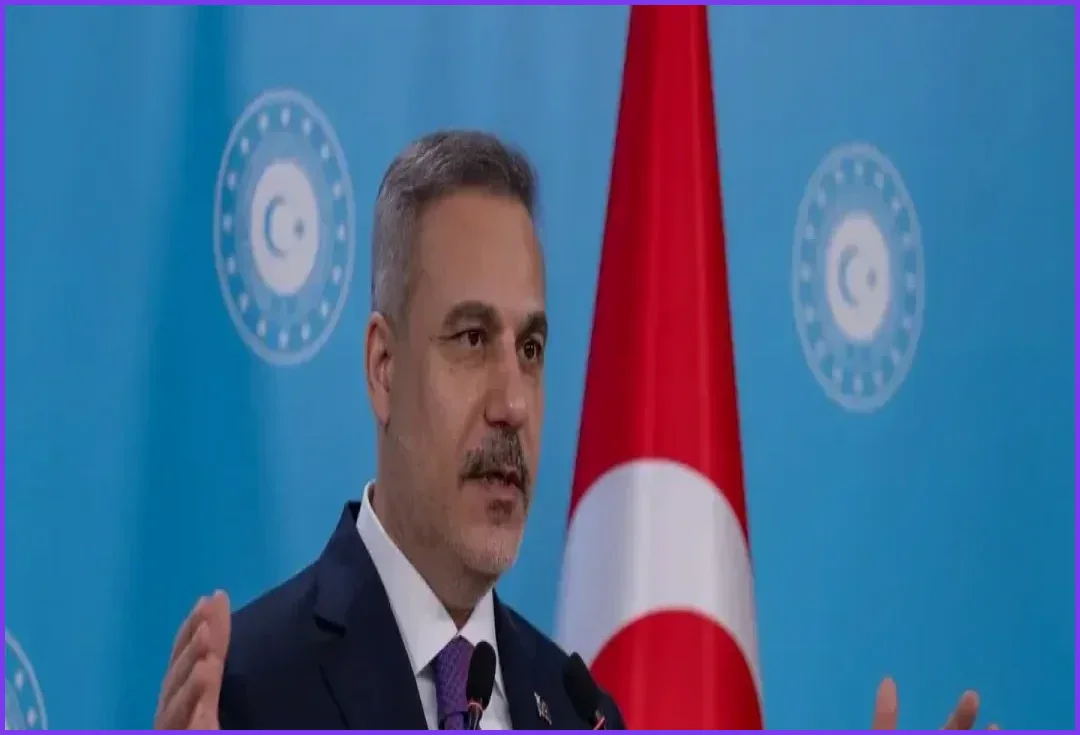
Turkish policy is currently structured around assisting the defense of Saudi Arabia, though no decision has been taken regarding the potential deployment of Turkish forces inside Yemen, Foreign Minister Hakan Fidan announced. Speaking on Saturday to Turkish broadcaster TGRT Haber, Fidan confirmed that Ankara is actively providing the necessary support required to defend Saudi territory against external threats.
Fidan highlighted defense industry cooperation between Türkiye, Pakistan, Saudi Arabia, and potential future partners as a foundational pillar of the Mecca Defense Alliance. Drawing from Türkiye’s own experience of encountering supply denials when foreign allies refused to sell it weapons, Fidan emphasized that the Mecca security framework is not directed against any third nation. Instead, he explained, the agreement aims to foster mutual trust among member states while simultaneously advancing wider regional economic cooperation.
Addressing defense commitments within the alliance, Fidan stated that collective defense provisions akin to NATO’s Article 5 are far from automatic. Any potential military action relies on comprehensive threat assessments, coordinated intelligence sharing, joint defense planning, and formal authorization from the Turkish parliament. Fidan noted that this legislative approval process mirrors the mandates previously granted for Turkish military presence in Syria, Iraq, Somalia, Lebanon, and international waters.
Regarding the broader situation in Yemen, the Foreign Minister observed that Saudi Arabia already maintains security cooperation with nearly 30 nations. He noted that repeated military strikes launched by the United States, the United Kingdom, and European allies have failed to end the conflict in Yemen. At the same time, continued Houthi strikes in the Bab el-Mandeb Strait have transformed the crisis into a pressing global security concern.
Under the strategic vision set by President Recep Tayyip Erdogan, Türkiye has consistently focused on building functional and innovative regional mechanisms rather than empty symbolic bodies, Fidan added. He cited examples such as the Mecca Defense Alliance, the Gaza Group of Eight, and the Regional Quad (R4), which brings together Türkiye, Egypt, Pakistan, and Saudi Arabia. Fidan maintained that engaging proactively in volatile strategic zones before conflicts escalate has protected Türkiye from regional and global existential shocks, establishing Ankara as an indispensable partner whose emphasis on "regional ownership" is now being adopted by European leaders.
As the United States reduces its security footprint in Europe amid the ongoing Russia-Ukraine war, Türkiye hosted a diplomatic gathering in Istanbul that brought together both the Regional Quad and the European Quad (E4), comprising France, Germany, Italy, and the United Kingdom. Fidan stated that these non-binding, informal platforms encourage open dialogue without diplomatic rigidities, adding that a follow-up meeting is scheduled for next month in Berlin, provided plans proceed smoothly.
Fidan also recalled Türkiye's initiative at last month’s G20 foreign ministers' gathering in the United States, where Ankara called for a binding international declaration to safeguard uninterrupted maritime commerce. The proposal seeks to guarantee commercial transit through critical maritime chokepoints, including the Strait of Hormuz, the Turkish Straits, Gibraltar, the Strait of Malacca, and the Panama Canal, regardless of active wars or global political disputes.
Turning to maritime risks in the Black Sea, Fidan warned that intensifying combat is increasingly placing commercial shipping at grave risk. With vessels being targeted daily and both Russia and Ukraine announcing their intent to strike ships, Türkiye's Transport Ministry and Naval Forces Command have issued formal advisories. Fidan noted that Turkish officials are communicating with both warring parties through coast guard and transport channels, strongly advising any vessels carrying Turkish crew members to keep clear of the active conflict zone.
Related Articles

Md. Kazi Bijoy is a dedicated tech enthusiast and content creator with a passion for digital innovation. With years of experience in the tech industry, he specializes in breaking down complex topics into easy-to-understand guides. When he isn’t writing, he explores the latest gadgets and researches emerging trends in the digital world.