For over a million Rohingya refugees living in the crowded camps of Cox’s Bazar, Bangladesh, the November 19, 2026, ruling by the International Court of Justice (ICJ) marked a transformative moment in their nine-year struggle for justice. The court’s landmark judgment, which officially determined that Myanmar committed genocide against the Rohingya, has sparked a renewed sense of hope within the community for recognition, accountability, and the eventual possibility of returning to their homeland. This historic legal victory, brought before the court by The Gambia, represents the first time a state has been censured under the U.N. Genocide Convention.
The ICJ’s findings were stark, accepting estimates that at least 10,000 Rohingya were killed during the 2017 military operations. The court further documented at least 1,834 acts of rape and examined multiple sites of severe violence, including Min Gyi, where 750 people were killed, Chut Pyin, where 358 died—including 127 children aged five or under—and Maung Nu, where at least 82 were killed. The judicial body concluded that the Myanmar military systematically destroyed villages and replaced them with security infrastructure, confirming the brutal nature of the campaign that forced over 700,000 people to flee in just a few weeks. The court noted that the Chut Pyin figures, while not officially confirmed, were considered believable.
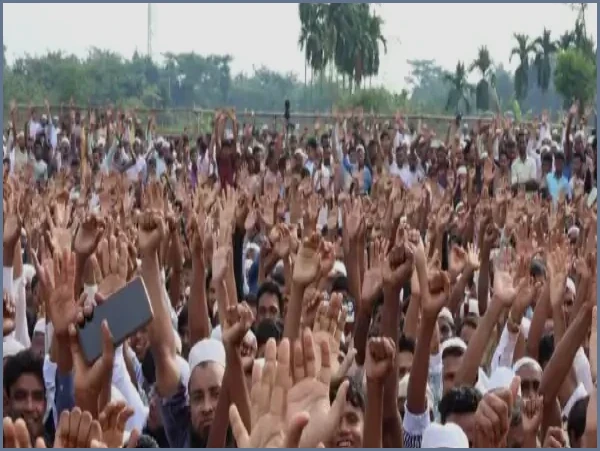
On November 20, 2026, the day following the ruling, Rohingya refugees held a large gathering at the Camp 4 football field, where they met with Dr. Khalilur Rahman, the president of the 81st session of the United Nations General Assembly and Bangladeshi Foreign Minister. During the event, refugees displayed banners bearing his image and messages such as “We miss our home” and “Arakan is our hope.” Dr. Rahman assured the attendees that the crisis is a priority for the international community and expressed his commitment to supporting their eventual, dignified return, promising to return with good news.
The gathering featured speeches from community leaders and female activists who demanded accountability and a safe return to their homeland with full rights and citizenship. Rohingya youth activist Anowar Faisel emphasized that for the community, justice means being recognized as human beings with the same rights, dignity, and freedom as people in other communities. Similarly, 50-year-old refugee Amir Hossain, who lost his father in 2017, stated that the community's primary goal is to return home with full rights, safety, and citizenship.
Despite the legal milestone, the daily reality for those in the camps remains dire. Many survivors, such as Enous Juhar, continue to live in uncertainty. Young people in the camps grow up without access to higher education or basic rights, and recent cuts to rations by the World Food Program in April 2026 have exacerbated the struggle for survival, leading some youth to engage in criminal activities. Furthermore, the ongoing civil war in Myanmar’s Rakhine State, where the military and the Arakan Army are both accused of targeting civilians and forced recruitment, makes immediate repatriation impossible. Some refugees who attempted to reach Malaysia or other neighboring countries by fishing boat have gone missing, adding to the community's trauma.
Human rights activists have welcomed the ruling and are calling for concrete steps to ensure accountability, bring perpetrators to justice, and safeguard the rights and future of the Rohingya population. As poet and writer Sirajul Islam noted, the quest for justice will only truly conclude when the dream of returning home with full citizenship, rights, and safety becomes a reality. For now, the Rohingya continue to wait, watching for the next steps from the international community, hopeful that this ruling signifies a turning point where no one remains above the law.
Related Articles
Mr. Udoy is a professional Web Developer and Blogger with 7+ years of experience in the tech world. He specializes in web architecture and digital storytelling. As the driving force behind worldincidents.com, he focuses on delivering high-quality, well-researched content to a global audience.