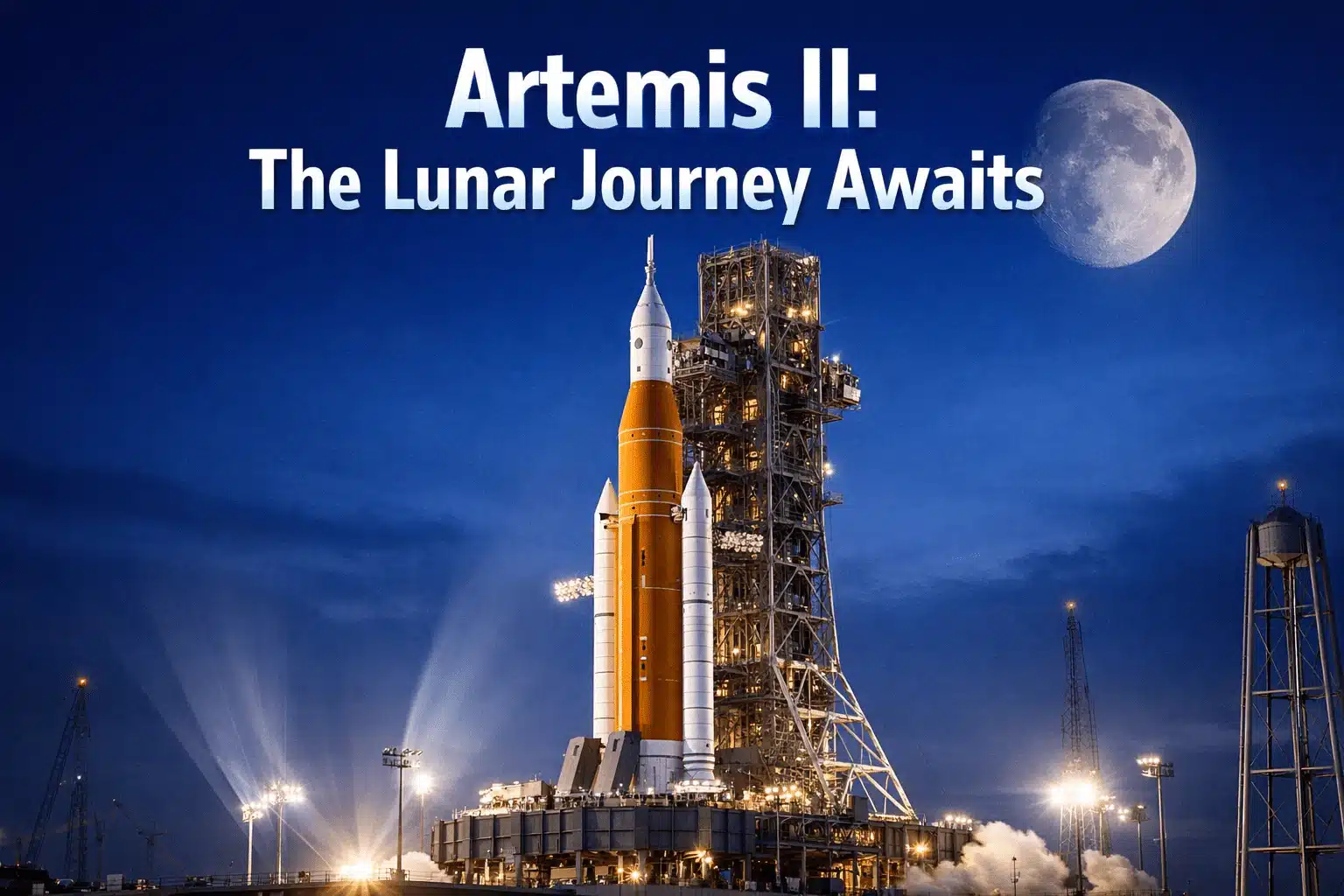
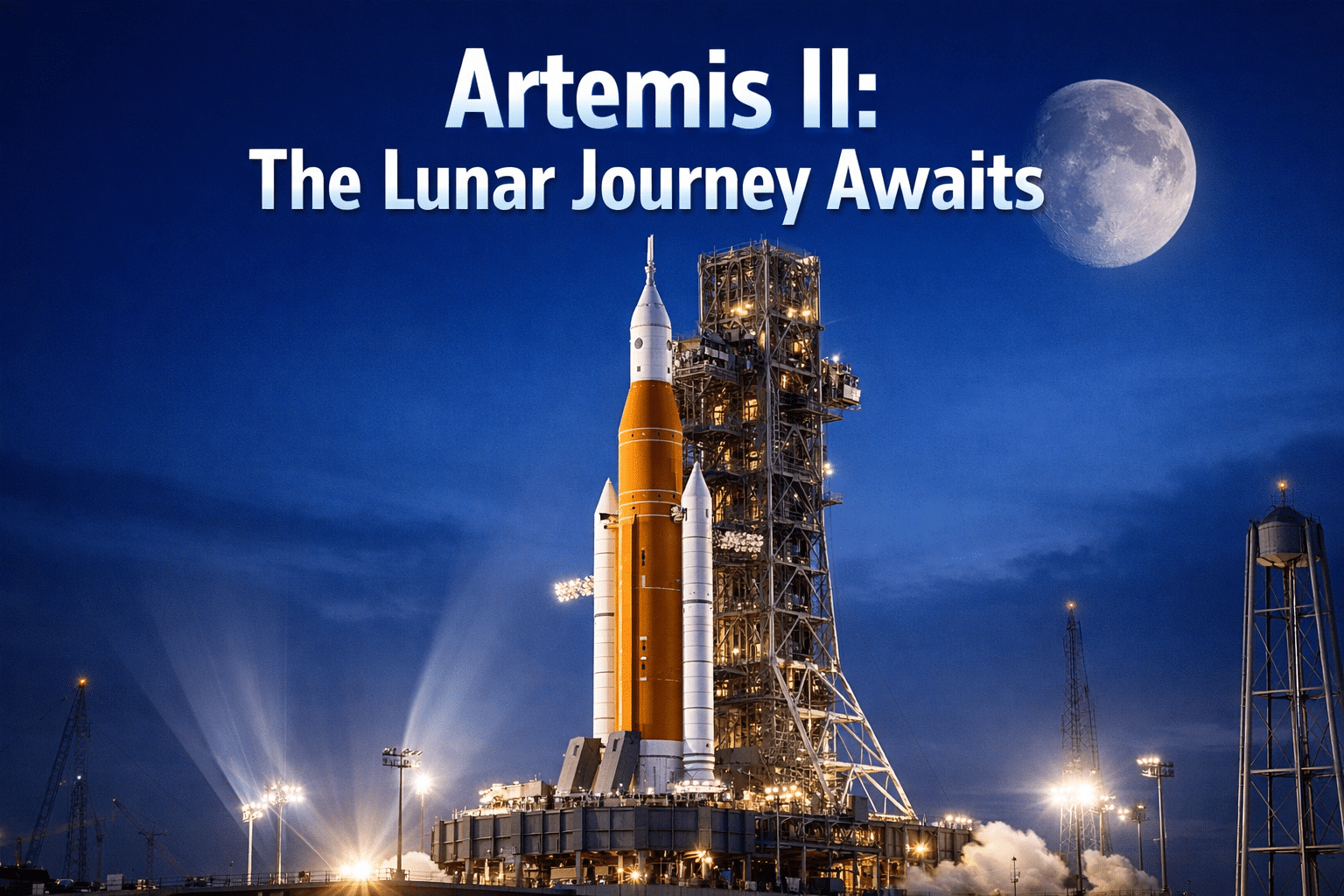
Quick Answer: The Artemis II mission is currently targeted for launch in September 2026, aiming to send four astronauts on a lunar flyby, marking a critical step towards humanity’s sustained presence on the Moon. This timeline reflects careful consideration of hardware readiness, extensive testing, and lessons learned from previous missions, ensuring crew safety and mission success.
Key Takeaways:
- Target Launch Window: Artemis II is projected to launch in September 2026.
- Mission Profile: This will be a crewed lunar flyby, not a landing, designed to test the Orion spacecraft’s life support systems and validate operational procedures in deep space.
- Crew Complement: Four astronauts will embark on this historic journey: Commander Reid Wiseman, Pilot Victor Glover, Mission Specialist Christina Koch, and Canadian Space Agency astronaut Jeremy Hansen.
- Critical Test Flight: Artemis II serves as a vital precursor to Artemis III, the mission slated to return humans to the lunar surface.
- SLS and Orion: The mission will utilize NASA’s Space Launch System (SLS) rocket and the Orion spacecraft, building on the success of the uncrewed Artemis I flight.
- Challenges and Delays: Development of complex human spaceflight systems inherently involves challenges, leading to adjustments in the Artemis 2 launch date to ensure safety and resolve technical issues.
- International Collaboration: Canada’s participation underscores the global effort in lunar exploration.
- Path to Lunar Base: Artemis II is a crucial step in establishing a long-term human presence around and on the Moon, part of the broader Artemis program objectives.
The roar of the Space Launch System (SLS) rocket, a beacon of human ingenuity, is set to echo across the Florida coastline once more, propelling the Artemis II mission toward its monumental lunar flyby. After decades, humanity is on the cusp of returning to the Moon, and the Artemis II launch date is a pivotal moment in this grand endeavor. For many, the very thought of astronauts circling the Moon again evokes memories of Apollo, a golden age of exploration that now feels within reach for a new generation. This article will explore the mission’s current timeline, its objectives, the incredible team behind it, and what this journey means for the future of space exploration in 2026 and beyond.
Ref: Artemis II Splashdown Highlights and Re-entry Coverage
What is the Current Target Artemis II Launch Date?
The current target Artemis II launch date is set for September 2026. This date is a result of extensive planning, hardware production, and rigorous testing schedules, along with adjustments based on the comprehensive review of the Artemis I mission data.
The September 2026 window provides a realistic timeframe to complete all necessary preparations for a crewed deep-space mission. This includes final assembly and integration of the SLS rocket stages, the Orion spacecraft, and its service module, as well as extensive ground testing and crew training. Launch windows for lunar missions are often constrained by orbital mechanics, dictating specific periods when the Moon’s position is optimal for the trajectory. If you are planning a trip to witness the launch, consider that even target dates can shift due to technical readiness or weather, so flexibility is key.
What Are the Primary Objectives of the Artemis II Mission?
The primary objectives of the Artemis II mission are to demonstrate the critical functions of the Orion spacecraft with a crew aboard in a deep-space environment and to validate the operational procedures required for future human lunar landings. This mission is an essential testbed for the technologies and protocols that will carry humanity further into the solar system.
Specifically, Artemis II aims to:
- Test Orion’s Life Support Systems: Ensuring the spacecraft can sustain astronauts safely for an extended period beyond low Earth orbit, including critical systems like air purification, water recycling, and temperature control.
- Evaluate Crew Interfaces and Manual Operations: Astronauts will actively manage and control the Orion spacecraft, assessing how well the human-machine interface performs in the unforgiving environment of deep space. This includes practicing critical maneuvers and emergency procedures.
- Verify Earth Re-entry and Splashdown Procedures: A high-speed re-entry into Earth’s atmosphere and a safe splashdown in the Pacific Ocean are crucial, testing the heat shield’s integrity and the recovery teams’ effectiveness.
- Perform a Lunar Flyby Trajectory: The mission will take the crew around the far side of the Moon before returning to Earth, providing invaluable experience for future lunar orbital and landing missions. This trajectory will push the boundaries of human spaceflight further than ever before.
- Gather Data for Future Missions: Every aspect of Artemis II, from launch to recovery, will be meticulously monitored to gather data that will inform and refine plans for Artemis III and subsequent missions, including those aimed at establishing a long-term lunar outpost.
This mission is a far cry from the uncrewed Artemis I, which successfully tested the SLS rocket and Orion spacecraft structurally. Artemis II adds the irreplaceable element of human decision-making and physiological response to the equation, making it an indispensable step towards sustainable lunar exploration.
Who Are the Astronauts for Artemis II?
The four astronauts selected for the Artemis II mission are Commander Reid Wiseman, Pilot Victor Glover, Mission Specialist Christina Koch, and Canadian Space Agency (CSA) astronaut Jeremy Hansen. These individuals represent a diverse and highly experienced team, embodying the international collaborative spirit of the Artemis program.
Each crew member brings a unique set of skills and experiences to this historic mission:
- Reid Wiseman (Commander, NASA): A seasoned astronaut with previous spaceflight experience on the International Space Station (ISS), Wiseman will lead the mission, overseeing critical operations and ensuring crew safety.
- Victor Glover (Pilot, NASA): Glover is a U.S. Navy captain and test pilot, also an ISS veteran. As pilot, he will be instrumental in operating the Orion spacecraft, particularly during launch, orbital maneuvers, and re-entry.
- Christina Koch (Mission Specialist, NASA): Koch holds the record for the longest single spaceflight by a woman and participated in the first all-female spacewalk. Her extensive experience in long-duration spaceflight and systems operations will be vital.
- Jeremy Hansen (Mission Specialist, CSA): A fighter pilot and the first Canadian to be assigned to a lunar mission, Hansen’s inclusion highlights the international partnership fundamental to the Artemis program. He will contribute to mission operations and represent Canada’s significant role in space exploration.
This crew’s selection was not arbitrary; it represents a careful balance of experience, technical expertise, and collaborative spirit essential for a mission of this magnitude. Their journey will inspire millions and provide critical insights into the challenges and triumphs of deep-space travel.
What is the Significance of the Artemis II Mission for Lunar Exploration?
The Artemis II mission holds immense significance for lunar exploration as it represents humanity’s first return to the Moon’s vicinity in over 50 years and is a crucial stepping stone toward establishing a sustainable human presence on and around the Moon. This mission is not merely a repetition of Apollo but a foundational element of a long-term strategy.
Its significance can be broken down into several key areas:
- Re-establishing Deep Space Human Operations: For decades, human spaceflight has been largely confined to Low Earth Orbit (LEO). Artemis II re-engages humanity with the challenges and opportunities of deep-space operations, including radiation exposure, communication delays, and extended mission durations far from Earth’s protective magnetic field.
- Validating Orion for Crewed Missions: While Artemis I proved Orion’s hardware capabilities, Artemis II will validate its human systems, ensuring the spacecraft is truly ready to carry astronauts safely on longer, more complex missions, including those to the lunar surface.
- Paving the Way for Artemis III: Without a successful Artemis II, the Artemis II launch date becomes an even more critical milestone. Artemis II directly enables Artemis III, the mission intended to land astronauts on the Moon, by proving the systems and procedures necessary for lunar surface expeditions.
- Developing a Lunar Gateway Operational Model: Although Artemis II won’t dock with the Gateway, the mission helps refine the operational concepts for future missions that will utilize the Lunar Gateway as an orbital outpost around the Moon. This future station will serve as a science lab, a proving ground for deep space technologies, and a staging point for lunar surface missions. You can learn more about the Gateway’s role in sustained lunar presence here.
- Inspiring a New Generation: The sight of astronauts orbiting the Moon again will undoubtedly captivate audiences worldwide, inspiring a new generation of scientists, engineers, and explorers. This “Apollo effect” is vital for future STEM development and public engagement in space.
- International Collaboration and Partnership: The inclusion of a Canadian astronaut highlights the increasingly international nature of space exploration. Artemis II demonstrates that complex, ambitious space endeavors are best achieved through global partnerships, pooling resources and expertise. This collaboration is key for projects like future lunar bases.
Ultimately, Artemis II is more than just a flight; it is a declaration of intent, signaling a renewed human commitment to exploring our nearest celestial neighbor, not just for flags and footprints, but for sustained scientific research, resource utilization, and ultimately, as a stepping stone to Mars.
What Challenges Could Impact the Artemis II Launch Date?
Several complex factors and inherent risks in human spaceflight development could potentially impact the Artemis II launch date of September 2026. These challenges range from technical hurdles to supply chain issues and unforeseen events.
Even with meticulous planning, delays are a common occurrence in space programs due to:
- Hardware Development and Testing: The SLS rocket and Orion spacecraft are cutting-edge systems. Any discovered anomalies during final assembly, integration, or testing of components could require extensive troubleshooting and re-testing, potentially pushing back the launch. For instance, issues with critical avionics or propulsion systems would necessitate thorough investigation.
- Software Validation: The flight software for Orion is incredibly complex, managing everything from navigation to life support. Rigorous testing and bug fixing are continuous processes, and discovering critical software issues late in the development cycle could lead to significant delays.
- Ground Infrastructure Readiness: Kennedy Space Center’s Launch Complex 39B and associated ground support equipment must be fully operational and certified. Any issues with the Mobile Launcher, Vehicle Assembly Building systems, or other ground infrastructure could stall the mission.
- Supply Chain Disruptions: Manufacturing components for such advanced spacecraft relies on a global supply chain. Delays in receiving specialized parts or materials could cascade, affecting the overall schedule.
- Budgetary Constraints: While funding is generally allocated, unexpected cost overruns or shifts in budgetary priorities could slow down or alter development timelines.
- Workforce Availability: A highly specialized workforce is required for the Artemis program. Labor shortages, unexpected personnel changes, or even large-scale health events could affect productivity.
- Weather Conditions: Even if all technical aspects are ready, weather at the launch site (e.g., thunderstorms, high winds) or in the splashdown zone could necessitate postponing a launch.
- Lessons from Artemis I: While Artemis I was a success, post-flight analysis identified areas for improvement, particularly regarding the heat shield and recovery procedures. Implementing these lessons learned requires time and thorough validation. For information on lessons learned from previous missions, refer to resources discussing launch incident investigations, such as this page.
Managing these challenges requires flexibility, contingency planning, and a commitment to safety above all else. While September 2026 is the target, space enthusiasts often learn to anticipate adjustments in such ambitious undertakings.
How Does Artemis II Pave the Way for Future Lunar Landings (Artemis III)?
Artemis II is explicitly designed to pave the way for future lunar landings, specifically Artemis III, by proving the critical human-rated capabilities of the Orion spacecraft and validating the complex operational procedures required for deep-space human missions. It acts as the ultimate dress rehearsal before astronauts attempt to set foot on the Moon again.
Here’s how Artemis II directly contributes to the success of Artemis III:
- Crewed System Validation: Artemis II is the first mission to fly astronauts in Orion beyond Earth orbit. This allows for real-time human evaluation of every system – from propulsion and navigation to life support and communication – in the actual space environment they will experience on a landing mission. Any deficiencies discovered can be addressed before Artemis III.
- Deep Space Operations Experience: The 10-day mission provides invaluable experience for both the crew and ground control teams in managing a mission far from Earth. This includes managing radiation exposure, handling communication delays, and executing complex orbital maneuvers around the Moon. These skills are directly transferable to the longer, more intricate Artemis III mission profile.
- High-Speed Re-entry Practice: Orion’s re-entry from the Moon’s vicinity involves extreme speeds and temperatures. Artemis II will demonstrate that Orion’s heat shield and re-entry procedures can safely bring humans back to Earth, a crucial capability for any lunar landing mission.
- Crew Training and Familiarization: The Artemis II crew’s experience will inform and refine the training protocols for Artemis III astronauts. They will provide firsthand feedback on everything from habitability inside Orion to manual flight controls, making subsequent missions safer and more efficient.
- Integration with Ground Systems: The mission provides a full-scale test of the launch, mission control, and recovery operations with a human crew. This ensures all ground systems, personnel, and procedures are robust enough to support the even more demanding Artemis III mission.
- Public and Political Confidence: A successful Artemis II mission builds confidence among the public, politicians, and international partners, demonstrating that the Artemis program is on a viable path to achieving its ambitious goals of returning humans to the Moon. This sustained support is vital for the long-term success of lunar exploration endeavors, including the development of a lunar economy as discussed in resources like this one.
In essence, Artemis II is the bridge between the uncrewed tests and the actual human landing. It’s where the rubber meets the road, or more accurately, where human presence validates the technological capabilities required for sustained lunar exploration.
What is the Difference Between Artemis I, II, and III?
The Artemis program is structured as a series of progressively more complex missions, with Artemis I, II, and III representing foundational steps toward returning humans to the lunar surface and establishing a sustainable lunar presence. Each mission builds upon the successes and lessons learned from its predecessor.
Here’s a breakdown of the key differences:
| Feature | Artemis I (Completed) | Artemis II (Target: September 2026) | Artemis III (Future) |
|---|---|---|---|
| Crew Status | Uncrewed (mannequins aboard) | Crewed (4 astronauts) | Crewed (4 astronauts, 2 of whom land on Moon) |
| Primary Goal | Test SLS rocket and Orion spacecraft performance | Test Orion’s human-rated systems in deep space with crew | Land humans on the lunar south pole |
| Trajectory | Lunar orbital flight, 25-day duration | Lunar flyby, approximately 10-day duration | Lunar orbital flight and surface landing, ~30-day duration |
| Key Tests | SLS launch, Orion systems, heat shield re-entry | Crew life support, manual flight, deep space communication | Lunar landing system, spacewalks on lunar surface |
| Landing | None | None | Yes, two astronauts will land and explore |
| Predecessor Role | Proved initial hardware capabilities | Proves human readiness and operational procedures | Utilizes proven hardware and operational procedures |
| Vehicle Use | First flight of integrated SLS/Orion | Second flight of integrated SLS/Orion | Third flight of integrated SLS/Orion, with Human Landing System (HLS) |
Artemis I, launched in November 2022, was a resounding success, proving the fundamental capabilities of the SLS rocket and the Orion spacecraft in an uncrewed lunar test flight. It successfully tested the heat shield’s performance and demonstrated Orion’s ability to travel to and from the Moon.
Artemis II introduces the human element, adding the complexities of life support, manual crew control, and human physiological response to deep space. This mission is about verifying that every system can keep astronauts safe and operational beyond Earth’s protective sphere.
Artemis III is the culmination of these initial efforts, leveraging the validated systems and procedures to achieve the ultimate goal: returning astronauts to the lunar surface, specifically targeting the lunar south pole for its scientific interest and potential water ice resources. This mission will require an additional component, the Human Landing System (HLS), which will transport astronauts from lunar orbit to the surface and back. For more on the specifics of the Artemis program structure, resources like this detailed overview are valuable.
What Technology is Being Used for Artemis II?
The Artemis II mission will primarily utilize NASA’s Space Launch System (SLS) rocket and the Orion spacecraft, building upon the foundational technologies proven during the Artemis I mission. These systems represent the pinnacle of current human spaceflight engineering, designed for deep-space exploration.
Key technologies and components include:
- Space Launch System (SLS):
- Core Stage: Powered by four RS-25 engines (derived from the Space Shuttle program), providing immense thrust at launch. This central stage is the backbone of the rocket.
- Solid Rocket Boosters (SRBs): Two five-segment SRBs provide additional thrust during the initial ascent, contributing over 75% of the total thrust at liftoff.
- Interim Cryogenic Propulsion Stage (ICPS): A single-engine upper stage that gives Orion the final push needed to escape Earth’s orbit and begin its journey to the Moon.
- Orion Multi-Purpose Crew Vehicle (MPCV):
- Crew Module (CM): The pressurized habitat for the four astronauts, equipped with advanced life support, environmental control systems, crew interfaces, and re-entry capabilities. It’s designed to withstand the harsh environment of deep space and return safely to Earth.
- European Service Module (ESM): Provided by the European Space Agency (ESA), this module provides propulsion, power (solar arrays), thermal control, and stores consumables like water, oxygen, and nitrogen for the crew module. It’s a critical component that propels Orion through space.
- Launch Abort System (LAS): Positioned at the very top of the rocket, the LAS is designed to swiftly pull the crew module away from the SLS rocket in the event of an emergency during launch or ascent.
- Ground Support Equipment: A vast network of systems at Kennedy Space Center, including the Mobile Launcher, Vehicle Assembly Building (VAB), and Launch Control Center, are integral to assembling, transporting, and launching the SLS and Orion.
These technologies are highly integrated, with each component playing a vital role in ensuring mission success and crew safety. The reuse of proven Space Shuttle-era engines and the modular design of the SLS highlight a strategy of combining reliability with advanced capabilities for deep-space travel. The development and deployment of such complex systems are detailed in broader discussions on space infrastructure, such as this page.
What Does the Mission Profile for Artemis II Look Like?
The mission profile for Artemis II is an approximately 10-day crewed lunar flyby designed to rigorously test the Orion spacecraft with astronauts aboard, taking them further beyond Earth than any human since Apollo 17. It will be a dynamic journey, starting with a powerful launch and culminating in a high-speed re-entry.
Here’s a generalized sequence of events for the Artemis II mission profile:
- Launch from Kennedy Space Center (KSC): The SLS rocket, carrying the Orion spacecraft and its four-person crew, will lift off from Launch Complex 39B.
- Ascent and Core Stage Separation: The SLS will ascend, with the SRBs separating first, followed by the core stage.
- Trans-Lunar Injection (TLI): The Interim Cryogenic Propulsion Stage (ICPS) will fire to perform the crucial TLI burn, accelerating Orion out of Earth orbit and onto a trajectory towards the Moon. After TLI, the ICPS separates from Orion.
- Orion’s Journey to the Moon: The Orion spacecraft, powered by its European Service Module, will travel towards the Moon. During this phase, the crew will perform various tests of Orion’s systems, including manual flight maneuvers, life support system checks, and communications checks with Earth.
- Lunar Flyby and Far Side View: Orion will perform a lunar flyby, using the Moon’s gravity to sling itself back towards Earth. This trajectory will take the crew around the far side of the Moon, a vantage point only a handful of humans have ever seen. At its closest approach, Orion will be approximately 6,400 miles (10,300 km) from the Moon’s surface.
- Return Trajectory: After the lunar flyby, Orion will begin its journey back to Earth, continuing to test systems and gather data.
- Service Module Separation: Before re-entry, the European Service Module will separate from the crew module and burn up harmlessly in Earth’s atmosphere.
- Atmospheric Re-entry: The Orion crew module will perform a high-speed, skip re-entry into Earth’s atmosphere, designed to manage heat and G-forces. The heat shield will endure temperatures reaching approximately 5,000 degrees Fahrenheit (2,760 degrees Celsius).
- Parachute Deployment and Splashdown: A series of parachutes will deploy to slow the spacecraft for a controlled splashdown in the Pacific Ocean.
- Recovery: Naval recovery teams will retrieve the crew and the Orion capsule, bringing an end to this historic 10-day mission.
This profile is meticulously planned to push the boundaries of human spaceflight capabilities while prioritizing crew safety. It provides the essential operational experience needed for the even more ambitious Artemis III mission and the long-term goal of building a lunar base.
Conclusion: The Path to a New Era of Lunar Exploration
The Artemis II launch date of September 2026 marks a monumental moment in human space exploration, a tangible step toward returning humanity to the Moon’s vicinity and establishing a sustained lunar presence. This mission is far more than a mere circumnavigation; it is a critical proving ground for the Orion spacecraft’s human-rated capabilities, an essential training exercise for its four courageous astronauts, and a validation of the intricate systems and procedures that will enable future lunar landings.
The challenges inherent in such an ambitious undertaking are significant, from the complexities of cutting-edge hardware and software development to the logistical demands of an international endeavor. However, the meticulous planning, rigorous testing, and dedication of thousands of engineers, scientists, and mission specialists across the globe underscore a profound commitment to safety and success.
As we look towards September 2026, Artemis II stands as a beacon of human curiosity and ingenuity. It not only prepares us for the moon landings of Artemis III but also lays the groundwork for a future where lunar outposts are commonplace, resource utilization becomes a reality, and the Moon serves as a vital springboard for missions to Mars and beyond. The journey of Artemis II is a testament to what humanity can achieve when united by a common goal: to explore, to discover, and to expand the boundaries of our cosmic understanding.
Read Also: The Future of AI Smartphones in 2026: Amazing New Features!

Md. Kazi Bijoy is a dedicated tech enthusiast and content creator with a passion for digital innovation. With years of experience in the tech industry, he specializes in breaking down complex topics into easy-to-understand guides. When he isn’t writing, he explores the latest gadgets and researches emerging trends in the digital world.