Slow Living: 10 Incredible Ways to Reclaim Peace 2026
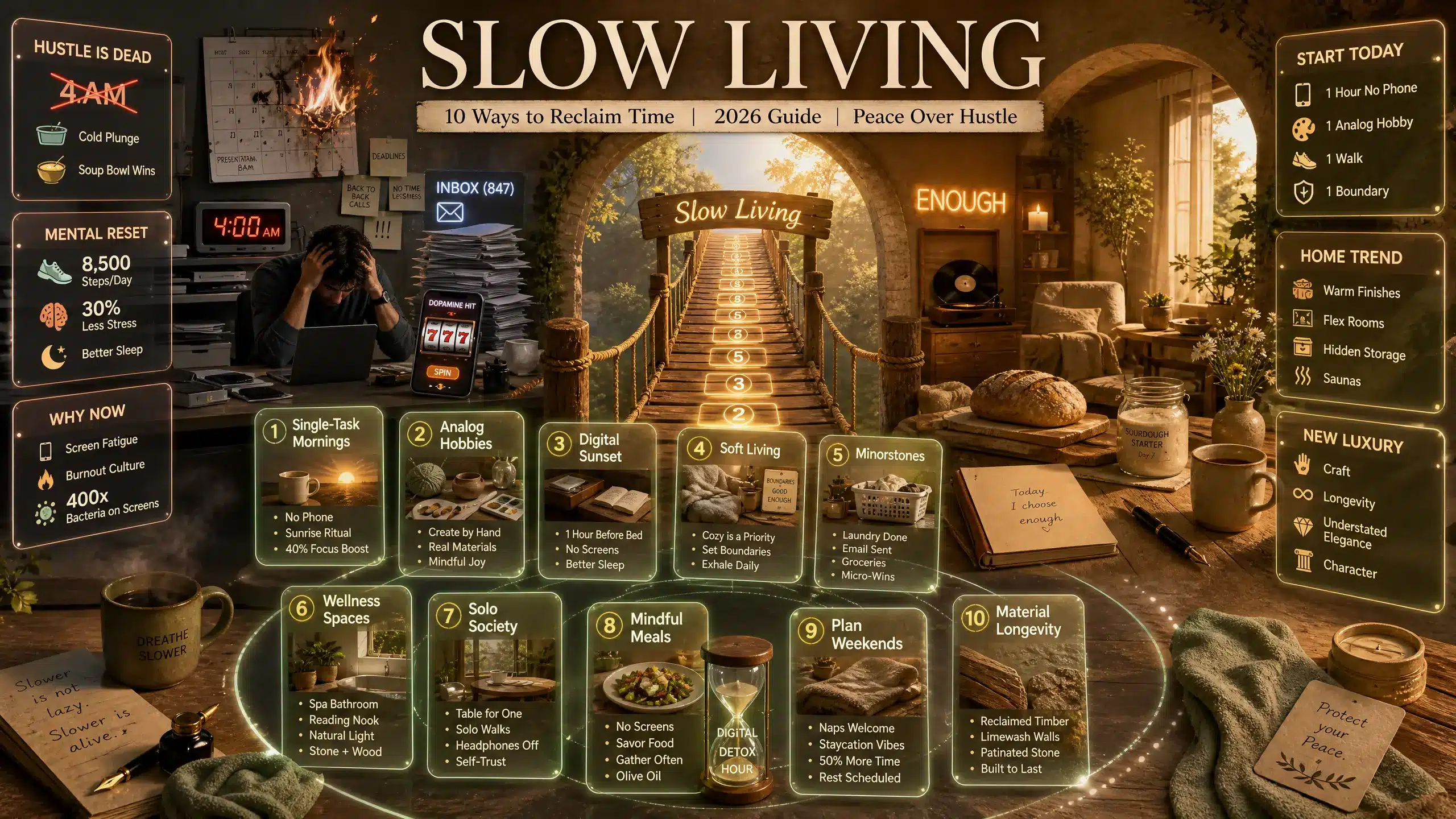
Slow living in 2026 is not laziness. It is a rebellion. After years of hustle culture, 4 AM routines, and productivity guilt, people are choosing presence over pressure. Slow living means doing what matters, at a pace that lets you feel it. It is not about doing less. It is about doing what actually nourishes you instead of depletes you. The slow living movement exploded as screen fatigue, burnout, and “optimization” left us empty. This guide gives you 10 incredible ways to start slow living today.
Global designers, real estate experts, and psychologists confirm the shift. Homes now favor wellness rooms, warm textures, and flexibility over sterile showpieces. Creators who grow fastest are not selling 4 AM cold plunges. They make soup and talk quietly. Slow living is the new luxury. It is choosing enough. And in 2026, enough is radical.
Slow Living: What It Actually Means in 2026
Slow living is not moving to a cabin or deleting all apps. It is intentional. You protect pockets of undisturbed rest, unhurried experience, and real focus. You treat these as non-negotiables, not rewards earned after burnout. The slow living philosophy draws from the broader Slow Movement. It rejects urgency for authenticity.
The goal of slow living is not perfection. It is texture. Uneven edges. Crossed-out words. Evidence that a human was here. It is a sourdough loaf that took 18 hours, not 18 seconds. It is a walk without podcasts. It is a weekend planned for rest, not errands. Slow lving asks: what if life felt good to live inside of?
10 Incredible Ways to Reclaim Your Time
1. Slow Living Starts with Single-Tasking Mornings
Multitasking destroys focus. Slow living begins by dedicating your first hour to one activity. Make coffee and drink it. Do not scroll. Journal one page. Studies show single-tasking boosts focus by 40%. This grounded tone carries through chaotic days. The slow lving rule: no phone for the first 30 minutes. Let your nervous system wake up before the world rushes in.
2. Slow Living Embraces Analog Hobbies
Bookbinding. Bread baking. Embroidery. Watercolor. Pottery. Vinyl records. Hand-lettering. These are slow living anchors. When work is digital and reversible, making something with your hands feels profound. You cannot ctrl-Z a nib pen. That enforced slowness resets an overstimulated nervous system. Craft store sales are up. Library cards are up. People choose formats that require patience because slow lving patience feels good.
3. Slow Living Demands a Digital Sunset
Power down devices one hour before bed. Choose books, stretching, or quiet talk. Slow living protects sleep because sleep protects everything. Screen time is a dopamine slot machine. Block recommended reels. Unfollow accounts that make you feel inadequate. Treat screen time like sugar. “That is enough for today” is not dramatic. It is self-parenting. Slow lving is conscious, not extremist.
4. Slow Living Makes Space for Soft Living
Soft living is slow living’s gentle cousin. It means reducing stress through intentional routines. Prioritize mental health. Set boundaries. Choose ease over overcommitment. Soft living is cooking a simple meal when tired. It is taking a break without earning it. It is letting your day be “good enough.” Slow lving feels like a deep exhale.
5. Slow Living Celebrates Minorstones
Stop waiting for promotions or vacations to feel accomplished. Slow living honors small wins. Laundry finished. Groceries unpacked. Email sent. These micro-celebrations mark progress in inches, not miles. Living well is not a milestone. It is 100 minorstones. Slow lving measures life by moments, not metrics.
Read More:The Definitive Guide to Eco-Friendly Kitchen Swaps 2026
6. Slow Living Designs Wellness-Focused Spaces
Homes in 2026 reduce stress. Think spa-style bathrooms, quiet reading rooms, home gyms, better natural light, saunas. The slow living home uses warm wood tones, earthy colors, stone textures, and natural materials. Cold gray is out. Multi-functional rooms matter more than square footage. A guest room is also an office, nursery, and study. Slow lving favors flexibility. Storage is becoming as important as finishes. Walk-in pantries, mudrooms, and hidden storage create visual calm.
7. Slow Living Chooses Solo Society
Dining alone. Traveling solo. Living for oneself. These are conscious slow lving choices, not transitions. Culture now designs for autonomy. Table for one, by design, not default. Slow lving says your company is enough. It builds self-trust. Plan a solo coffee date. Walk 20 minutes without headphones. Notice birds, not notifications. Regular walkers report 30% lower stress.
8. Slow Living Curates Mindful Meals
Cook simple, seasonal dishes without screens. Chop vegetables mindfully. Share stories at the table. Slow lving turns meals into highlights, not chores. A warm bowl of rice with olive oil beats rushed takeout. Cooking becomes a pause, not a task. It reconnects you to your day. The slow lving kitchen is about nourishment, not perfection.
9. Slow Living Plans Weekends Like They Matter
Rest requires intention. Schedule it like work. If the week was harsh, plan naps. Move errands. Book a staycation. Slow lving adds 50% more time than you think you need. Coffee takes 20 minutes. Coffee plus staring out the window takes 40 and changes everything. Do not let obligations eat your rest. Slow lving protects Saturday.
10. Slow Living Honors Material Longevity
Fast interiors use synthetic composites and high-gloss veneers. They depreciate fast. Slow lving chooses patinated stone, reclaimed timber, artisanal metals. These age with grace. Enduring rooms are layered intentionally over years, not bought in one day. Prioritize atmosphere and flexibility instead of rigid perfection. Textured walls and limewash replace glossy sterility. Slow lving is a home that breathes for decades.
The Death of Hustle Culture
“I’ll sleep when I’m dead” is dead. The hustle aesthetic that dominated the 2020s is replaced by cozy gaming, quiet vlogs, and “slow morning” routines. Creators growing now are not yelling about ambition. They are making soup. Slow lving is not laziness. It is a recalibration of success. A good life feels good to live inside of. Burnout has reached a breaking point. Social media pressure is exhausting. Gen Z and Millennials value freedom over hustle. Slow lving is the answer.
Benefits Backed by 2026 Data
| Benefit | Impact of Slow Living |
|---|---|
| Mental Health | Lower anxiety, better focus, nervous system regulation |
| Physical Health | Better sleep, lower cortisol, 8,500 steps daily aids weight maintenance |
| Relationships | Deeper bonds, 25% less loneliness with quality time |
| Creativity | Analog hobbies provide bilateral stimulation, calm nerves |
| Home Life | Spaces reduce stress, improve light, create calm |
| Productivity | Single-tasking boosts output 40%, reduces errors |
Slow lving is not anti-ambition. It is pro-sustainability. You do not quit. You edit. You keep what matters.
How to Start Today
You do not need to move or quit your job to start slow lving. Begin small:
- One Hour Rule: No phone for the first hour. Read, stretch, or sit.
- One Analog Hobby: Pick knitting, journaling, or vinyl. 15 minutes daily.
- One Mindful Meal: Eat one meal without screens this week.
- One Walk: 20 minutes, phone-free, notice 3 things.
- One Declutter: Clean one drawer. Keep only what sparks joy.
- One Boundary: Say no to one non-essential commitment.
Slow lving compounds. Small shifts create a different life. You are not turning into a moss-covered bench. You are choosing to feel your life while living it.
Slow Living: The New Luxury
The all-white, ultra-minimal showcase home is losing appeal. In its place? Spaces with character, organic warmth, and personalization. This is “slow luxury.” It favors quality craftsmanship, deep comfort, and understated elegance over fleeting trends. Slow living homes are curated mindfully and gradually. They become true reflections of their owners. The goal is a home that breathes and adapts for decades.
Material choices matter. Solid timber and natural stone create grounding, earth-toned palettes. Commitment to authentic materiality lies at the heart of slow lving. Rooms gain character through use, memory, and adjustment. Fresco finishes and limewashed walls replace glossy sterility with soulful depth.
FAQ Section
1. What does slow living actually mean?
It means organizing life around intensity and authenticity instead of velocity. You protect rest, experience, and focus. You do what matters at a pace that lets you be present.
2. Is slow living just for rich people?
No. It is about priorities, not money. Single-tasking, walking, journaling, and cooking simple meals cost nothing. It is choosing time over consumption.
3. How do I start if I have a demanding job?
Start with one hour. No phone first hour of day. One mindful meal. One boundary per week. Small shifts create space. You do not need to quit to slow down.
4. Is slow living the same as being lazy?
No. Laziness is avoidance. Slow living is intentional. You still work, but you stop treating every email like an emergency. You choose rest before burnout.
5. What are easy slow living hobbies?
Knitting, crochet, journaling, bread baking, watercolor, pottery, vinyl records, film photography, gardening. Anything using your hands without screens.
6. How does slow living help anxiety?
Rhythmic hand movements in crafts provide bilateral stimulation. This calms the nervous system. Routines stabilize it. Presence reduces worry about future.
7. Can I do slow living with kids?
Yes. Minorstones help. Celebrate small wins. Plan rest like work. Analog hobbies like baking work for families. Model calm for children.
8. What is the difference between slow living and minimalism?
Minimalism is about less stuff. Slow living is about less speed. You can haveTime ks and art. The point is intention, not emptiness.

Meet Md. Rubel Rana
As a core contributor to Worlddincidents.com, Rubel Rana brings a unique perspective to the world of journalism. Whether it’s deep-diving into historical trivia or covering the latest global headlines, Rubel Rana is committed to delivering high-quality, high-impact articles. Their writing blends meticulous research with a compelling voice, helping readers stay informed and curious about the world around them.