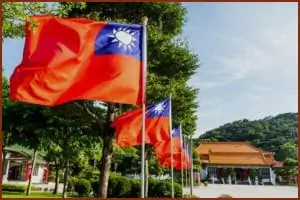
Taiwan's upcoming local elections, frequently termed "nine-in-one elections" due to the simultaneous voting for nine distinct types of offices, are scheduled for late November. In a significant shift from standard procedure, opposition parties the Kuomintang (KMT) and the Taiwan People’s Party (TPP)—who currently hold a combined majority in the legislature—intend to introduce six national referendum proposals to be held alongside the polls. Unlike previous efforts, these parties will not undertake the traditional public campaign to gather signatures, opting instead to initiate the referendums through a chamber resolution.
The six proposals cover a diverse array of topics. One familiar issue is nuclear energy, with the KMT advocating for the reversal of policies intended to create a nuclear-free homeland. Although Taiwan began phasing out nuclear power following the Fukushima disaster and shuttered its final operating reactor in May 2025, the current Lai administration has proposed restarting two reactors. While the government maintains its long-term goal of phasing out nuclear energy, concerns regarding energy security—particularly in the event of an invasion or blockade, and the power demands of the AI-driven semiconductor industry—have prompted this policy shift.
The KMT is also pursuing a referendum on capital punishment. Despite a September 2024 Constitutional Court ruling that limited the application of the death penalty, it remains legal. An execution occurred in January 2025, the first in five years. A previous KMT-led attempt to hold a referendum on the issue was rejected by the Central Election Commission (CEC) in 2025 because the practice remains on the books. Additionally, the KMT has proposed the implementation of caning as a punishment for serious crimes such as fraud, child abuse, and sexual assault. Critics argue this would violate international human rights conventions ratified by Taiwan. Although KMT chair Cheng Li-wun reportedly attempted to remove the caning proposal from the agenda, the party's legislative caucus insisted on its inclusion.
A fourth proposal concerns the legalization of medical euthanasia. While the topic has gained traction in recent years, there is no clear social consensus, and support does not divide neatly along traditional party lines, making the referendum a potential gauge of public opinion. The TPP has introduced the remaining two proposals. The first calls for traffic fines to be earmarked for local road safety improvements and transportation subsidies, a move that may reflect ongoing budget disputes between the pan-Blue controlled legislature and the pan-Green central government. Pan-Green critics argue that such changes could be achieved through standard legislation rather than a referendum.
The final proposal, also from the TPP, addresses absentee voting for national elections. The plan would limit such voting to within Taiwan, specifically excluding overseas voting to avoid concerns regarding potential Chinese election interference or the influence of Taiwanese businessmen residing in China. However, CEC chair Michael You has warned that the proposal could cause administrative chaos. The KMT and TPP have also proposed legislation to consolidate referendum questions onto a single ballot to avoid the long lines and confusion that occurred during the 2018 elections. Whether these parties can successfully leverage these referendums to impact the local elections remains to be seen, as this strategy of initiating ballots without signature campaigns is relatively untested.
Related Articles

Md. Kazi Bijoy is a dedicated tech enthusiast and content creator with a passion for digital innovation. With years of experience in the tech industry, he specializes in breaking down complex topics into easy-to-understand guides. When he isn’t writing, he explores the latest gadgets and researches emerging trends in the digital world.